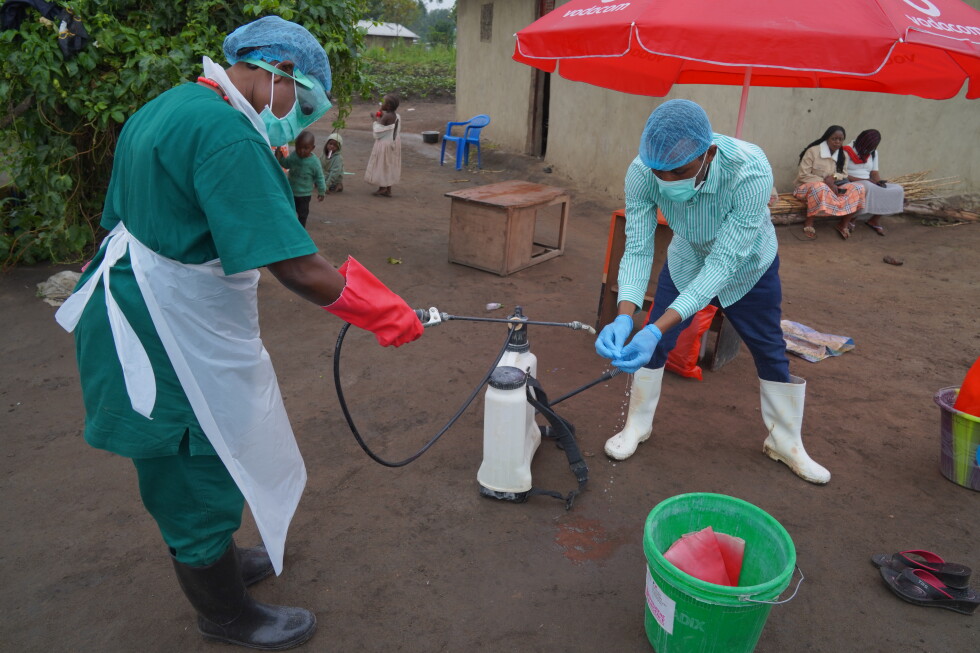
In a stark update on the spiraling public health crisis in eastern Democratic Republic of the Congo, the World Health Organization (WHO) confirmed Monday that the fastest-growing Ebola outbreak in recorded history emerged in February, three full months before it was officially declared to the public on May 15. Responders are now scrambling to contain a virus that has consistently outpaced containment efforts, against a backdrop of systemic and security challenges that make effective intervention nearly impossible.
Dr. Mohamed Yakub Janabi, WHO’s Regional Director for Africa, told reporters that genetic sequencing of virus samples has traced the outbreak’s origin back to February. Early cases of the disease were misdiagnosed as malaria and typhoid, a critical error that allowed the virus to spread undetected through communities for months. Compounding this early delay, initial testing protocols only screened for the more common Zaire strain of Ebola, not the rare Bundibugyo variant driving this outbreak. The Bundibugyo strain has no approved vaccines or targeted treatments currently available, leaving frontline workers with limited tools to slow transmission or improve patient outcomes.
As of the latest official government count, the outbreak has already recorded 4,200 confirmed cases, with more than 1,900 people dead. This current outbreak has killed people faster than any Ebola event in history, outpacing even the devastating 2014-2016 West Africa outbreak that was long considered the worst on record. That 2014-2016 crisis took eight months to reach 1,000 deaths; this outbreak hit that milestone in a fraction of the time.
The crisis is unfolding in one of the most difficult operating environments for global health responders. The affected region, which sits near the borders of South Sudan, Uganda, and Rwanda, has been torn apart by decades of rebel conflict that gutted local healthcare infrastructure long before the first Ebola case emerged. Today, responders face multiple overlapping barriers: strikes by unpaid health workers have left critical facilities understaffed, rebel groups threaten aid teams, and long-traumatized communities often distrust intervention efforts, fueled by widespread misinformation that claims Ebola does not exist at all.
Frontline teams must navigate remote, unpaved roads to reach affected communities and have repeatedly reported critical shortages of personal protective equipment. A large population of displaced people living in informal settlements also lack access to clean water for regular handwashing, one of the most basic measures to slow transmission of the virus, which spreads through contact with infected bodily fluids including blood, vomit, and semen, as well as contaminated surfaces like bedding and clothing. Ebola causes severe organ damage and is fatal in the majority of untreated cases.
Last week, WHO Director-General Tedros Adhanom Ghebreyesus reiterated the urgency of the crisis during a visit to Congolese capital Kinshasa, noting that the virus is spreading faster than response teams can keep up. In some of the worst-affected hot spots, the number of new confirmed cases is doubling at an alarming rate. Health authorities estimate that between 60% and 70% of all new cases are occurring in people who were not on the contact tracing monitoring list, meaning transmission is happening through unrecognized community spread that is nearly impossible to track.
Already fragile access to routine healthcare in the region has become even worse as the outbreak escalates. Pregnant women and people with other acute medical conditions are now avoiding health centers out of fear of contracting Ebola, putting their own lives at unnecessary risk from treatable conditions.
Late declarations of Ebola outbreaks are not unprecedented. The 2014-2016 West Africa outbreak, which killed more than 11,000 people across at least 28,000 confirmed cases, was officially declared in March 2014, but retrospective investigation later found the first human infection occurred three months earlier, in December 2013.