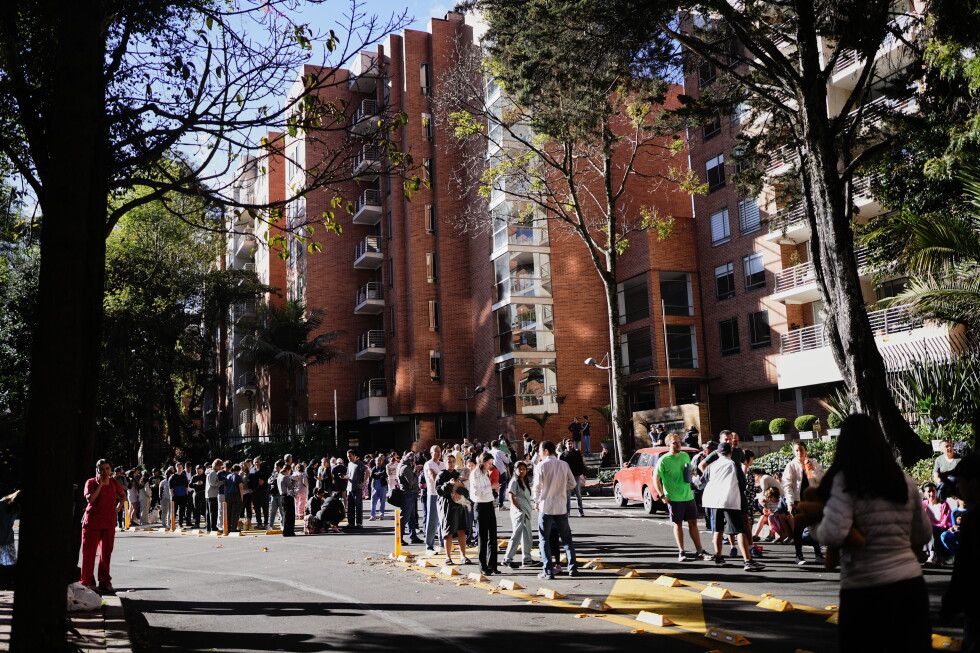
On a Monday morning, a substantial seismic event rattled western Colombia, sending waves of tremors across the South American nation and reaching as far as neighboring Ecuador. The sudden shaking forced thousands of residents to hurriedly evacuate their homes, office buildings and public spaces in search of safe, open ground.
Both the United States Geological Survey (USGS) and Colombia’s national geological institute confirmed the earthquake registered a magnitude of 7.4. Though the tremor packed significant power, it originated at a relatively deep depth below the Earth’s surface, a factor that experts often note can mitigate the worst of surface-level damage. The epicenter was pinpointed to San Jose Del Palmar, a small rural community located roughly 400 kilometers (250 miles) west of Colombia’s capital city, Bogota.
In the immediate aftermath of the quake, emergency management authorities had not yet released any reports of structural damage or human injuries. Response teams have been dispatched to affected regions to conduct damage assessments and check on at-risk communities.
This latest major seismic event comes just one month after a pair of powerful back-to-back earthquakes, measuring magnitude 7.2 and 7.5 respectively, hit neighboring Venezuela in late June. That devastating double earthquake event destroyed hundreds of buildings across the country and ultimately claimed the lives of more than 5,000 people, leaving a widespread trail of destruction and displacement.