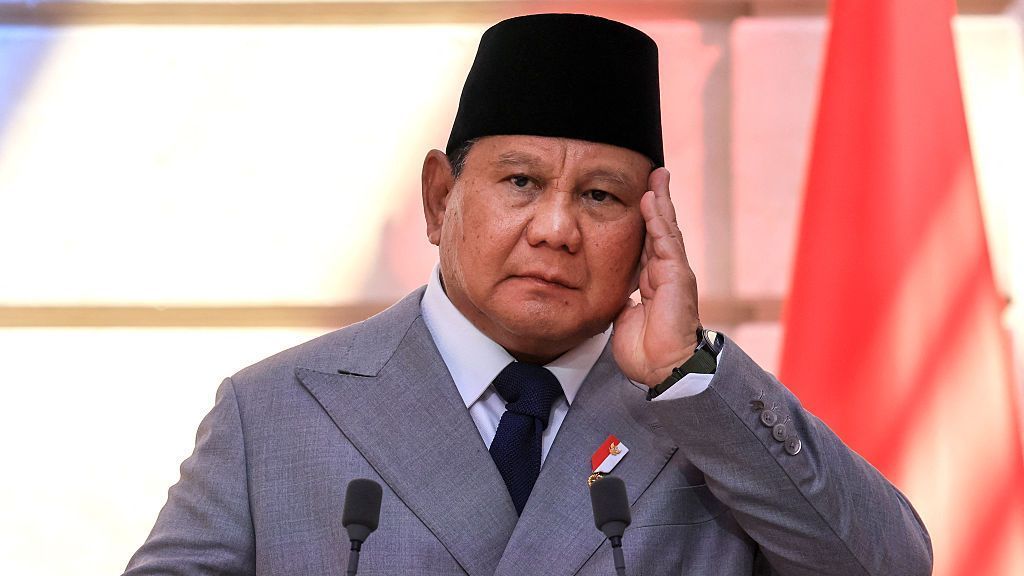
A sweeping unauthorized wiretapping scandal has erupted at the highest echelons of Indonesian power, triggering a formal treason investigation that has sent shockwaves through the country’s political landscape. The explosive case came to public attention this week, when authorities confirmed that President Prabowo Subianto was among dozens of high-profile individuals whose private communications were allegedly intercepted without legal authorization.
At the center of the controversy is Prabowo’s recently appointed chief of staff Listyo Sigit Prabowo — a longstanding ally of former President Joko “Jokowi” Widodo, with no familial relation to the sitting president — who was arrested on Tuesday alongside two senior ranking police officers. A fourth suspect, Slamet Uliandi from the national police’s criminal investigation unit, was named by authorities on Thursday but not detained due to ongoing health complications following a stroke. Investigators allege the four suspects improperly entered hundreds of unvetted phone numbers, including the president’s personal lines, into the national police’s official electronic surveillance system, completely bypassing mandatory legal requirements such as securing formal investigation warrants or filing supporting case documentation. The alleged clandestine operation is believed to stretch back to 2025, when Listyo still held the post of national police chief under Jokowi’s administration, and was only uncovered last week after a whistleblower within the police force submitted a formal tip-off.
The scope of the surveillance extends far beyond the presidential palace: confirmed targets include sitting politicians, prominent journalists, civil society NGO representatives, and leading Indonesian business figures. A spokesperson for President Prabowo stated on Wednesday that the unauthorized interception of sensitive state and personal communications qualifies as a potential act of treason, as the improperly accessed materials contain state secrets that could “endanger the interests and sovereignty of the nation.” Under Indonesian penal code, treason carries a maximum penalty of life imprisonment or capital punishment, though the country has not carried out any state executions for more than a decade. To date, investigators have not publicly identified a clear motive for the alleged wiretapping scheme.
The scandal has laid bare the rapidly unraveling political alliance between Prabowo and his 2024 presidential campaign backer Jokowi, a partnership that once seemed unshakable as it propelled Prabowo and Jokowi’s eldest son, vice presidential candidate Gibran Rakabuming Raka, to a landslide electoral victory. Academic analysts including Made Supriatma, a visiting fellow at Singapore’s ISEAS-Yusof Ishak Institute, note that Listyo has long been considered one of Jokowi’s closest and most trusted confidants, and his high-profile arrest has made it clear the two former political allies are now “going their separate ways.”
The fractures between the two camps have been building for months, long before the wiretapping scandal broke. Since taking office, Prabowo has largely sidelined Jokowi’s signature legacy project: the multi-billion dollar construction of Nusantara, Indonesia’s planned new national capital on the island of Borneo, reallocating large portions of that budget to his own flagship universal free school meal program. A series of high-profile cabinet reshuffles over the past year has also seen many of Jokowi’s long-serving loyalists reassigned to less influential roles, including veteran finance minister Sri Mulyani Indrawati. Vice President Gibran, meanwhile, is currently embroiled in a separate public controversy over the legitimacy of his high school academic credentials, a mandatory eligibility requirement to run for national office, with growing public calls for his formal disqualification from the vice presidency.
National police chief Suyudi Ario Seto sought to downplay political overtones of the investigation on Thursday, telling reporters that the probe is “purely law enforcement and has nothing to do with rivalries or anything else.” Jokowi, when questioned about the scandal outside a court session on Thursday, offered only a brief comment urging the public to “respect the ongoing legal process.” But widespread public and expert consensus frames the wiretapping arrests as the latest and most dramatic escalation of the widening rift between the two former presidential administrations.
The high-stakes scandal unfolds against a backdrop of mounting national crises that have stretched the Prabowo administration thin: the flagship free school meal program faces critical funding shortfalls, large swathes of the country have been hit by the worst wildfire outbreaks in a decade that have blanketed major population centers in toxic haze, and the national stock market is teetering amid widespread allegations of systemic market manipulation. Thousands of Indonesian citizens have staged street protests in recent months to demand government action on the cost of living crisis, rampant official corruption, and life-threatening air pollution from wildfires. Nicky Fahrizal, a researcher at Jakarta’s Centre for Strategic and International Studies, warned that the ongoing political drama is diverting critical government resources and attention from the public’s most urgent needs. “It’s like we’re living in a country on autopilot,” he told local reporters, adding that the current governing dynamic appears to prioritize the narrow interests of competing elite groups over the welfare of ordinary Indonesian citizens.
This is not the first major wiretapping controversy to roil Indonesia’s political class: in 2014, hidden surveillance devices were discovered in Jokowi’s official residence when he served as Jakarta’s governor, and former President Megawati Soekarnoputri publicly claimed in 2024 that she had long avoided using personal mobile phone lines due to repeated targeted surveillance attempts against her.