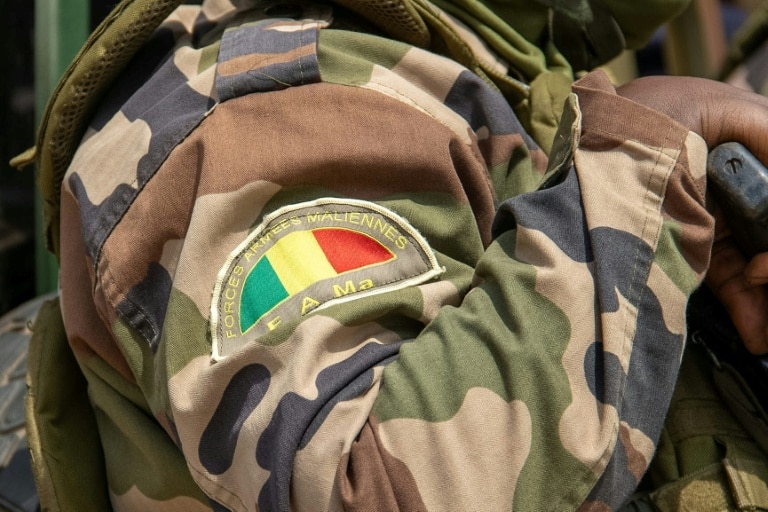
Weeks after a devastating coordinated offensive by insurgent and separatist groups targeting Mali’s ruling military junta, the West African nation is grappling with a sweeping wave of arbitrary detentions, enforced disappearances and a crippling economic blockade that has choked critical supply lines, multiple independent sources have confirmed to Agence France-Presse.
The coordinated April 25–26 attacks, carried out jointly by the Al-Qaeda-affiliated Group for the Support of Islam and Muslims (JNIM) and the Tuareg separatist Azawad Liberation Front (FLA), opened a dangerous new chapter in Mali’s 10-year-long security crisis. Strategic population centers across the country were targeted, including the northern desert hub of Kidal and Kati, a key garrison town just outside the capital Bamako. By the end of the assault, Kidal and multiple other northern towns and villages had fallen to the joint insurgent-separatist force, which subsequently established a blockade of Bamako that remained fully in effect Wednesday.
The offensive has already triggered major upheaval within Mali’s ruling military hierarchy. Days after the attacks, Defense Minister Sadio Camara – the 47-year-old architect of Mali’s controversial military alliance with Russia – was killed in a car bomb attack at his private residence. Junta leader Assimi Goita stepped in to take over Camara’s portfolio immediately after his death. In the latest high-level shake-up announced Wednesday, the junta replaced army chief General Oumar Diarra with his former deputy General Elise Jean Dao, offering no public explanation for the sudden leadership change. A hospital source confirms the cross-country fighting left at least 23 people dead.
In the weeks following the offensive, security, legal and family sources confirm that dozens of opposition figures and active-duty military personnel have been detained or abducted by state-aligned forces. Verifying exact numbers and identities remains a major challenge across Mali, a vast Sahel nation that has been under military rule since a 2020 coup and has endured widespread instability for more than a decade.
Among the high-profile abductees are leading opposition figures Mountaga Tall, Youssouf Daba Diawara and Moussa Djire. Tall, a prominent human rights lawyer, was seized from Bamako by a group of unmarked, hooded men on May 2, his family confirmed. Security and intelligence sources told AFP that Tall stands accused of plotting with other opposition leaders based in Dakar, Senegal to overthrow the junta, and has already been interrogated at least once on charges of “attempted destabilization.” Diawara and Djire face separate accusations of ties to exiled opposition leaders Mahmoud Dicko and Oumar Mariko, respectively, and at least two additional civilian allies of Mariko have been taken into custody, a judicial source confirmed.
On May 1, Mali’s military prosecutor’s office announced it held “solid evidence” of “complicity” among a group of active-duty military personnel, accusing the officers of assisting in the “planning, coordination and execution” of the April offensive. A senior anonymous political source told AFP that the crackdown is widely understood to be a cover for a targeted purge of political dissent within both the opposition and military ranks.
Beyond the political crackdown, the insurgent blockade imposed on April 30 continues to wreak havoc on Mali’s already fragile economy. As a landlocked nation almost entirely dependent on overland truck imports, the closure of key supply routes into Bamako has left critical goods stranded. Road users confirmed Wednesday that while outbound traffic from the capital has resumed to a limited degree, all vehicles attempting to enter Bamako from other regions are still being stopped by jihadist checkpoints. Drivers have refused to make the journey between the western Kayes region near the Senegalese border and Bamako without heavily armed security escorts, leaving hundreds of passengers and tonnes of cargo stuck at border crossings. A customs officer at the Kita border crossing, located roughly 200 kilometers southwest of Bamako, told AFP the facility was nearly deserted Wednesday as trade has ground to a halt.
Global logistics giant Maersk, Denmark’s leading freight transportation firm, announced in a Monday statement that it has suspended all services to Bamako and other regions of Mali from the Senegalese capital Dakar and Ivory Coast’s commercial hub Abidjan indefinitely over security concerns. On the day the blockade was first implemented, JNIM issued a public call for a “united front” to force the removal of Mali’s ruling junta.