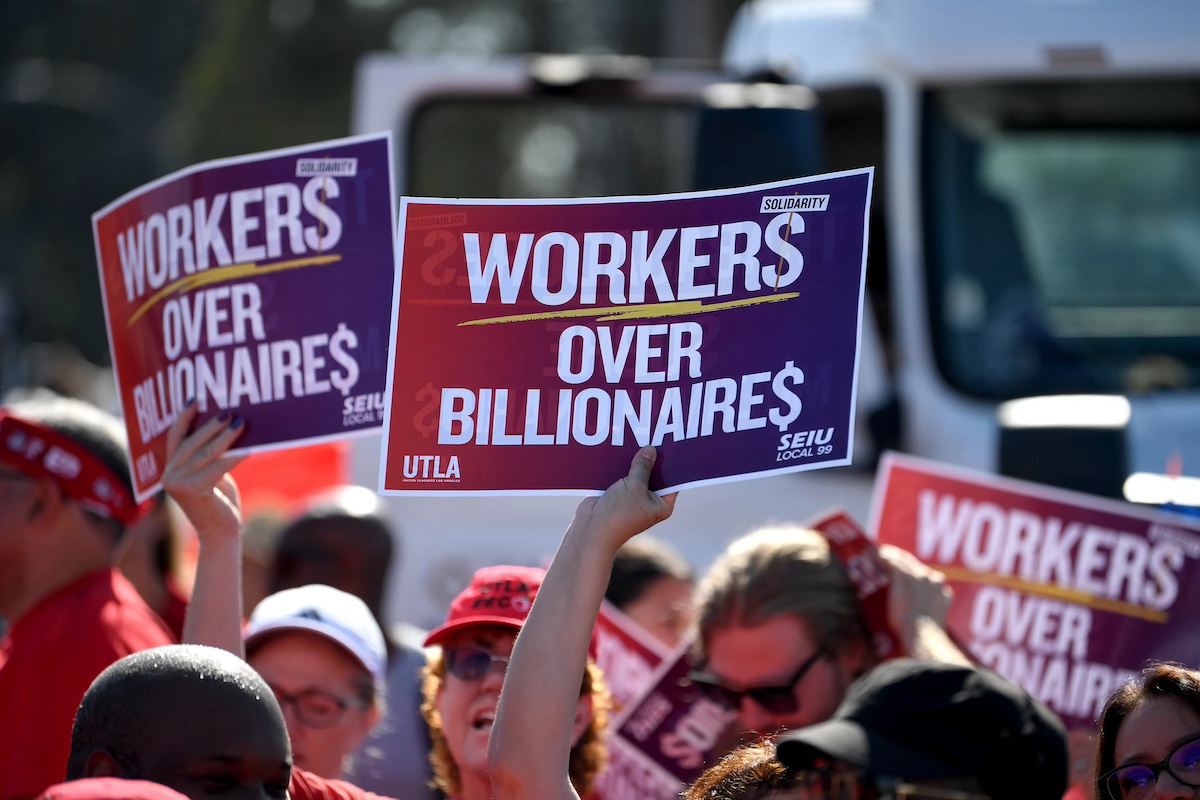
For decades, Wall Street has recorded historic gains in corporate profitability, asset valuations and national productivity, but this prosperity has barely trickled down to the majority of American workers. What was once framed as a strictly domestic U.S. political challenge has evolved into a systemic global economic risk, as sustained erosion of household purchasing power in the U.S. threatens to upend the export-led growth strategies that Asian economies have relied on for generations.
The core of this widening rift traces back to a multi-decade structural shift that prioritizes capital returns over labor compensation. Official data shows labor’s share of U.S. national income plummeted from 65.5% in 1947 to a mere 52.8% in the second quarter of 2026, a downward trajectory that accelerated sharply under Reagan-era supply-side policies in the 1980s and persisted through successive subsequent administrations. The 2025-2026 Trump second term amplified these trends, doubling down on 1980s-style policy playbooks of sweeping tax cuts for the ultra-wealthy, broad regulatory rollbacks and protectionist tariffs, alongside unprecedented anti-immigration restrictions.
Voters delivered a clear rebuke of this agenda in the November 3 midterm elections, ousting Donald Trump’s Republican majority in a wave of backlash against his unqualified embrace of unregulated artificial intelligence, costly overseas conflicts in the Middle East, and soaring living costs. Trump’s full-throated support for Silicon Valley’s “Wild West 2.0” unregulated AI framework, and his promotion of tech billionaires’ promises of an imminent “age of abundance” with universal basic income, landed as profoundly tone-deaf to ordinary households facing spiking utility bills from energy-hungry AI data centers, surging oil and food prices tied to the Iran war, and fears of mass industry displacement from unmanaged AI deployment. Working class voters rejected the MAGA movement’s attempts to frame Democratic candidates as promoters of “radical socialism”, instead casting a clear ballot against unaccountable tech oligarchy, runaway inflation, and endless foreign military engagements.
Federal Reserve data quantifies the staggering scale of U.S. wealth inequality that accelerated during Trump’s second term. While median household net worth rose a modest 2% over the most recent three-year survey period, the top 10% of U.S. households hold an average of 50 times more wealth than the bottom 20%. Between January 2025 and late 2026, households in the top 0.1% of earners gained more than 8,000 times as much new wealth per household as families in the bottom half of the wealth distribution. The 10 richest Americans added a combined $259 billion to their fortunes over that window, averaging $26 billion per person — a sum 22 million times the $1,200 in average wealth gains recorded by households in the bottom 50%. By mid-2026, the share of total U.S. national wealth held by the top 1% hit 31.6%, a new high since the Fed began tracking the metric in 1989, while the bottom half of the population saw their collective wealth share stagnate at just 2.5%.
Independent economic analysis confirms the widening disconnect between productivity gains and worker compensation: the Economic Policy Institute calculates that typical worker pay grew just 33% between 1979 and 2025, even as net national productivity surged 90.2%. New York Federal Reserve research found that Trump’s tariffs alone added 2.9 percentage points to U.S. goods price inflation by February 2026, even before the outbreak of the Iran war pushed energy and food costs higher. For most U.S. voters, inflation has become the defining measure of economic performance, outweighing positive headline job growth data, rising stock markets and modest improvements in housing metrics.
Across the Atlantic, European welfare systems face their own structural strains, with social protection spending now accounting for 19.6% of total EU GDP, representing more than 40% of all government expenditure. These post-war social safety nets were designed for an era of younger populations, stable lifelong employment and consistent high economic growth, conditions that no longer exist in the 21st century global economy. By comparison, Asia-Pacific economies run far more streamlined social safety net frameworks, with average public social spending at roughly one-third of the OECD average, ranging from 25% of GDP in Japan to just 2% in Bangladesh.
For more than two decades, regional economies across East and Southeast Asia have pledged to shift away from over-reliance on Western export markets to build domestic demand-led growth models, a process first proposed in the wake of the 1997-1998 Asian Financial Crisis. But nations from Japan, South Korea and China to Indonesia, Thailand and Vietnam still remain disproportionately dependent on U.S. consumer spending to drive factory output and job creation.
The Trump administration’s economic agenda is largely stuck in a 1985 policy playbook, modeled on the Plaza Accord that forced Japan and European allies to accept a sharp U.S. dollar devaluation to boost American export competitiveness. Today, that outdated framework is being redirected at China, with talk of a proposed “Mar-a-Lago Accord” to force major currency adjustments, even as U.S. Treasury officials prioritize stabilizing the yen to avoid massive sell-offs of the $1.1 trillion in U.S. Treasury bonds held by Japanese investors. This 40-year-old policy framework is completely misaligned with 2026 global economic realities, as China forges ahead with its “Made in China 2025” industrial strategy to dominate next-generation tech sectors, the Global South is building independent economic alliances that do not center U.S. priorities, and global corporations have already restructured global supply chains around shared security and geopolitical priorities.
Even the Biden administration largely retained Trump-era tariffs on Chinese goods, measures that failed to shift fundamental Sino-U.S. trade balances and instead imposed higher costs on American households, disrupted global supply chains and inflicted the most collateral damage on U.S. allies Japan and South Korea. While Biden’s 2022 CHIPS and Science Act allocated $300 billion to boost domestic U.S. tech research and manufacturing capacity, these efforts have not reversed the decades-long erosion of U.S. household purchasing power.
The core takeaway for Asian policymakers is that the era of the reliably free-spending American consumer is over, squeezed by persistent inflation, stagnant wages and an ever-widening wealth gap. Delaying the long-promised transition to domestic demand-driven growth will carry steep economic costs for export-dependent Asian economies as soon as 2027, if regional governments fail to act on long-overdue structural reforms to unlock local consumer spending.