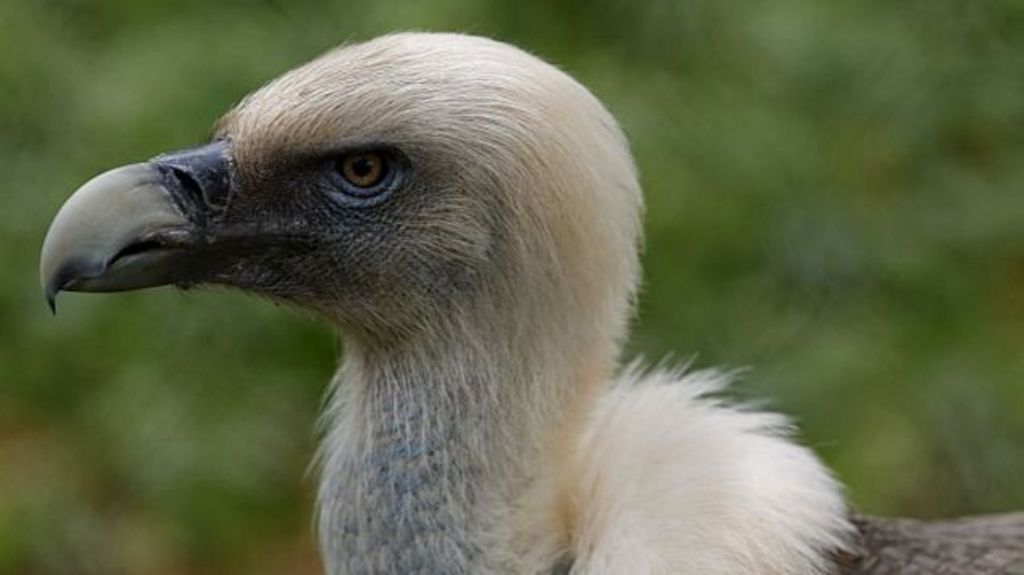
Long stigmatized as symbols of death and decay, vultures across much of Africa have faded from urban skies with little public mourning. But conservationists are now sounding the alarm: driven by illegal hunting, poisonings, habitat destruction, and demand for their body parts in traditional spiritual practices, multiple vulture species across the continent are teetering on the edge of total extinction. And their disappearance could trigger devastating public health and ecological consequences that many people have yet to recognize. One small community in southeastern Nigeria, however, is bucking this devastating trend, proving that community-led conservation can reverse decades of population decline.
In Awka-Etiti, a sacred forest surrounding the Nguma deity shrine has served as a safe haven for vultures for hundreds of years. Though most residents identify as Christian, many continue to uphold long-held traditional beliefs that position vultures as sacred, good omens. Local tradition holds that if vultures appear to feed on ritual sacrifices left at the shrine, it means the deity Nguma has accepted the offering and heard the community’s prayers. Because of this spiritual status, vultures have never been hunted by local residents, and the birds have long lived side-by-side with people in the town, scavenging openly in markets and public spaces.
Chukwuemeka Igwe, a local resident in his 50s who has volunteered with the Nigeria Conservation Foundation (NCF) for six years, has become the public face of the community’s protection efforts, earning him the local nickname Ezeudene, or the Vulture King. “The indigenous don’t hunt vultures,” he explains. Long after he noticed the number of vultures in the area began to drop as outside poachers slipped into the region to hunt the protected birds, Igwe began a grassroots campaign to rally local protection. He travels to markets, bus stations, and public gathering spots to educate residents and visitors about vultures’ critical ecological role, and has worked with community leaders, local organizations, and security teams to block poachers. Local bylaws have now been passed to formalize the birds’ protected status in the area.
While many people still see vultures as unpleasant or sinister creatures, scientists and conservationists emphasize they are one of nature’s most critical natural sanitation systems. By consuming animal carcasses within hours of death, vultures stop rotting remains from becoming breeding grounds for deadly pathogens. Their uniquely powerful stomach acids neutralize dangerous bacteria, allowing them to safely consume infected carcasses and stop the spread of fatal zoonotic diseases such as anthrax and rabies. “In places where the total collapse of vultures has happened, there has been impact of rising zoonotic diseases,” explains NCF conservation biologist Stella Egbe. Without vultures, ecosystems lose a free, highly effective natural defense against disease outbreaks that can spread to humans.
Across the continent, vulture populations have plummeted at an alarming rate. BirdLife International, the leading authority on avian conservation for the IUCN Red List, reports that African vulture populations have dropped between 80% and 97% over the past 50 years. Seven African vulture species are now classified as either Endangered or Critically Endangered. Poisoning is responsible for an estimated 60% of all vulture deaths across Africa, according to BirdLife data, while rapid urban expansion has destroyed much of the tall old-growth trees that vultures rely on for nesting.
The fastest growing driver of decline, particularly in West and Southern Africa, is illegal hunting driven by demand for vultures and their body parts for use in traditional medicine and spiritual practices. Dead adult vultures that once sold for just $18 to $22 in Nigeria now fetch as much as $145 on the black market, Egbe says. Poachers are also increasingly targeting vulture eggs and nests, a catastrophic threat for a slow-reproducing species: vultures do not reach sexual maturity until they are 5 to 7 years old, produce only one chick every 1 to 2 years, and many juvenile vultures do not survive their first year of life. Removing even a single nest or clutch of eggs eliminates an entire year’s reproductive output for a breeding pair, accelerating population collapse. In 2020, more than 2,000 dead hooded vultures were found in Guinea-Bissau, most with their heads removed for use in belief-based practices, highlighting the scale of the crisis.
Nigeria has become a key hub for illegal vulture trafficking, in part due to its rich biodiversity and porous national borders. Nigerian Customs Service spokesman Abdullahi Maiwada says the agency has made cracking down on wildlife smuggling a priority, seizing protected species and supporting prosecutions of traffickers to meet the country’s commitments under the Convention on International Trade in Endangered Species (CITES), which bans cross-border trade in endangered vulture species. But Maiwada acknowledges that enforcement alone cannot solve the crisis. “We may not be able to do it without the cooperation or understanding of members of the community,” he says. “If people understand why these species should be preserved, then our enforcement will only be complementary to those who decide to be recalcitrant.”
That community-centered approach is exactly what has driven success in Awka-Etiti. After years of coordinated protection and local outreach, the results are already encouraging: in 2017, just 20 vultures were recorded in the town’s monitoring surveys; today, that number has climbed to more than 160. “The missing vultures are almost back. If you go to the marketplace now, you see vultures. At one time they disappeared, but now they are coming back,” Igwe confirms.
Egbe says the Awka-Etiti model offers a blueprint for vulture conservation across the continent. “What we’ve done in Awka-Etiti is one very good example of a success story where people have taken charge of what’s going on in their environment. That makes us happy,” she says. Later this year, conservation researchers from across West Africa will gather in Abuja to review and update the 2022 West African Vulture Conservation Action Plan, where threats from poaching and the role of community-led conservation will top the agenda.
For Igwe, every returning vulture to Awka-Etiti is a small victory, but he knows the fight to save African vultures extends far beyond his town’s borders. “I’m fighting to make nature exist the way it’s supposed to be,” he says.