Millions of Brazilian voters are set to cast their ballots this Sunday in a historic, fiercely contested presidential runoff that will decide the direction of Latin America’s largest economy for decades to come. The two contenders present a stark ideological divide: 80-year-old left-wing incumbent Luiz Inácio Lula da Silva, who is vying for his fourth non-consecutive term in office, and 45-year-old right-wing federal senator Flávio Bolsonaro, the eldest son of disgraced former far-right president Jair Bolsonaro.
The elder Bolsonaro is currently serving a 27-year sentence under house arrest on coup-plotting convictions, stemming from his attempt to overturn the 2022 election result that ousted him from power. Flávio Bolsonaro enters the runoff as the clear frontrunner, after securing the largest vote share in the 4 October first round – a result that former U.S. President Donald Trump publicly hailed as a “very big” victory. No Brazilian presidential candidate in modern electoral history has ever managed to erase a first-round deficit to claim a runoff win, a statistical trend that heavily favours the younger Bolsonaro heading into polling day.
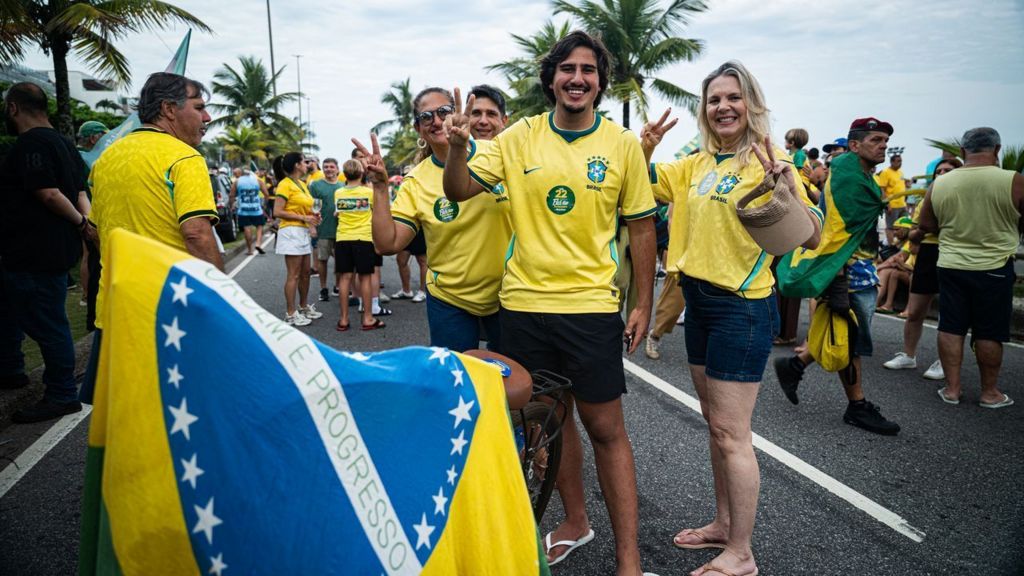
Tens of thousands of Bolsonaro loyalists packed streets across major cities on the eve of the vote, draped in Brazil’s iconic green and yellow national colours, brimming with confidence that their candidate will deliver on core campaign pledges. His policy platform centres on a no-holds-barred crackdown on transnational organised crime and narco-trafficking that has terrorised large swathes of the country, paired with sweeping tax cuts and public spending austerity measures to rein in runaway national expenditure. He held his final pre-election rally in Belo Horizonte, the capital of Minas Gerais – a populous battleground state that every successful Brazilian presidential candidate has carried since the return to civilian rule in the 1980s. In a viral social media address to supporters, he declared, “The time is almost here. There are only a few hours left before we shape the future of our nation for the next 30 or 40 years.” A top campaign promise from the senator is to secure the release of his ailing father from house arrest immediately after taking office. One Rio de Janeiro voter attending a pro-Bolsonaro rally told BBC reporters, “Brazil needs change, and Flávio is the person that represents that today, after so many years of the Left destroying the economy and the country.” Another attendee highlighted his pledges to stamp out widespread gang violence, dismantle terrorist networks, and slash sky-high central bank interest rates as the key reasons for her support.
On the opposing side, Lula’s Workers’ Party has mounted a relentless nationwide mobilisation campaign in the weeks since the first round, aiming to drive up turnout after more than 33 million eligible voters skipped casting a ballot earlier this month. At a massive rally stretching across Rio de Janeiro’s iconic Copacabana Beach on Saturday, Lula framed the election as an existential fight for Brazilian national sovereignty. “We are choosing between the leader who kisses the Brazilian flag, and the one who kneels to kiss the American flag,” he told a roaring crowd. His campaign has repeatedly alleged unauthorised U.S. interference in the electoral process – a claim that U.S. state department officials have dismissed out of hand as completely baseless. “We’re going to win the election for one simple reason: it’s true that the people want change, but they want to move forward,” Lula told supporters. “They don’t want to go backward.” Many of his backers have adopted a defiant posture, reclaiming the famous yellow and green Brazilian national football jersey that Bolsonaro supporters had co-opted as a symbol of their movement in recent years. One Lula supporter named Roberta told BBC News, “This movement is to show we have strength. We’ve woken up, we’re coming to the street to make a difference and turn the vote around.”
The Workers’ Party has cast the entire electoral contest as a “battle for the survival of Brazilian democracy”, arguing that Jair Bolsonaro’s proven coup plot is concrete evidence that the broader “Bolsonarismo” movement poses an existential threat to the country’s post-1988 democratic institutions. Ties between Lula’s administration and Donald Trump have remained deeply fraught throughout his latest term, with Lula repeatedly asserting that Brazil “does not fit into anyone’s backyard” – a direct rebuke of Trump’s self-declared “Donroe Doctrine”, a national security framework that asserts unchallenged U.S. dominance over the entire Western Hemisphere. Flávio Bolsonaro, by contrast, argues that deepened security cooperation with Washington will give Brazilian law enforcement the tools to dismantle powerful criminal syndicates that control vast swathes of national territory, and restore full state sovereignty to gang-held regions. He has also relentlessly hammered the Workers’ Party over decades of high-profile corruption scandals that eroded public trust in left-wing governance for millions of voters.
On election night, Lula will monitor vote tallying from the country’s economic hub of São Paulo, while Flávio Bolsonaro will watch results roll in from the national capital Brasília, where his father remains under house arrest ahead of the final vote count.
Voters in Brazil to choose between Lula and Bolsonaro’s son