In a recent online press briefing, the deputy head of US Africa Command, Lieutenant General John Brennan, issued a public advisory to Madagascar, cautioning the Indian Ocean island nation against deepening its existing defence and security alignment with Russia, pointing to the underwhelming outcomes of similar partnerships between Russian forces and military-led administrations across West Africa’s Sahel region.
Brennan emphasized Madagascar’s geostrategic significance as a critical node along key Indian Ocean global shipping lanes, noting that the island’s proximity to high-traffic maritime routes makes its stability a priority for international trade security. The senior US military official specifically flagged what he termed the “Sahel model” of Russian security cooperation, a framework that has been adopted by three Sahel states under military rule: Mali, Burkina Faso, and Niger. All three nations severed long-standing security and diplomatic ties with Western partners in recent years, turning to Moscow for military hardware, training, and operational support to combat spreading jihadist insurgencies. Despite this shift, Brennan noted that violent extremist attacks have not abated across the three Sahel countries, and the arrangement has instead contributed to broader regional instability, rather than delivering the promised security gains.
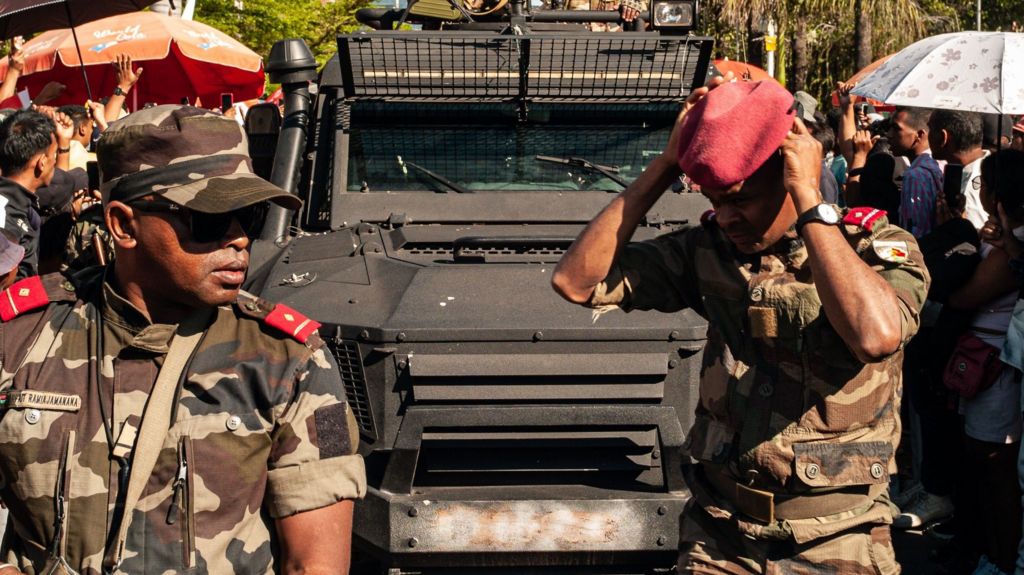
Since a military junta seized control of Madagascar in a 2025 coup, Russian-Malagasy defence cooperation has expanded rapidly, with Moscow delivering weapons systems and deploying military instructors to the island state. The alignment accelerated further at last month’s Russia-Africa Summit, where the two nations signed a suite of formal bilateral agreements spanning defence, tourism, and cross-border trade. The coup’s leader, current Malagasy President Michaël Randrianirina, made his first official state visit to Moscow in February, marking the first high-level official trip by a Malagasy head of state to Russia in almost half a century. Randrianirina has since repeatedly voiced his public support for strengthened cross-continental partnerships between Russia and African nations.
Brennan also extended his warning to Mozambique, another Indian Ocean coastal state targeted for expanded Russian engagement, highlighting the security risks facing the Mozambique Channel: a narrow, high-traffic maritime corridor that separates Madagascar and Mozambique from the African mainland, and carries a large share of global commercial shipping traffic. Citing a recent uptick in piracy incidents along Mozambique’s northern coast, he noted that Islamist State-affiliated militant groups operating in northern Mozambique are actively evolving their operational tactics, including building up enhanced maritime capabilities that threaten to disrupt commercial navigation in the channel. While acknowledging that sovereign nations retain the right to select their own international partners, Brennan urged Madagascar and Mozambique to fully evaluate the long-term destabilization risks associated with replicating the Sahel model of Russian security cooperation, rather than viewing it as a quick fix for domestic and regional security challenges. As of the time of reporting, the Malagasy government has not issued any formal public response to Brennan’s remarks.