On Thursday, the U.S. State Department announced plans to formally label two of Brazil’s largest and most violent criminal syndicates — the First Command of the Capital (PCC) and Red Command (CV) — as official Foreign Terrorist Organizations, a decision that has ignited immediate accusations of foreign political meddling in Brazil’s upcoming October presidential election. The designation, scheduled to take full effect on June 5, reclassifies the gangs as Specially Designated Global Terrorists until the formal designation enters into force. The move aligns with an aggressive counter-narcotics strategy first popularized by the Trump administration, which has prioritized military tactics including lethal boat strikes against groups labeled “narcoterrorists” across the Caribbean Sea and Eastern Pacific Ocean. This approach carries forward a policy that has previously resulted in 199 recorded fatalities, with multiple survivors still unaccounted for in recent strike operations.
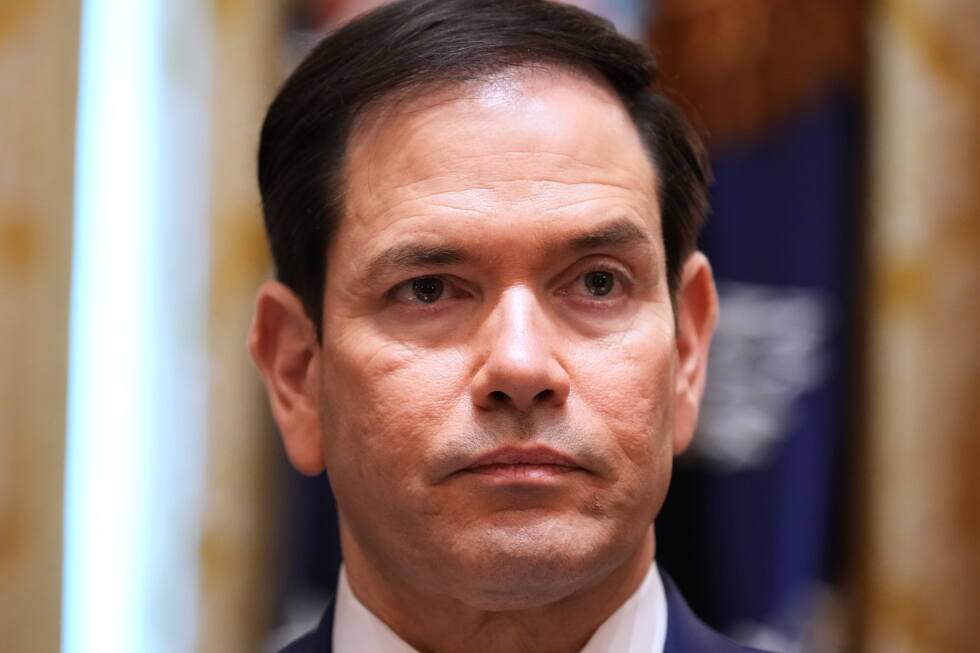
In a formal statement announcing the decision, U.S. Secretary of State Marco Rubio emphasized the security threat posed by the two organizations. “CV and PCC are two of the most violent criminal organizations in Brazil. Together, they command thousands of members and have orchestrated brutal attacks against Brazilian police officers, public officials, and civilians,” Rubio said. “Their influence and illicit networks extend far beyond Brazil’s borders, across our region and into our country.” He added that the designation underscores the Trump administration’s “unwavering commitment to dismantling cartels and criminal organizations in our region and ensuring the safety of the American people.”
Industry experts estimate the two criminal groups have a combined membership of more than 50,000 people, with most of their transnational criminal connections rooted in Europe rather than North America. Despite their well-documented status as major players in international drug trafficking and organized crime, the timing of the U.S. announcement has become the center of a heated political firestorm in Brazil, where incumbent president Luiz Inácio Lula da Silva — who is running for reelection — has repeatedly warned that any such designation would be interpreted as outside interference designed to boost his far-right opponent, Sen. Flávio Bolsonaro, son of former Brazilian president Jair Bolsonaro.
Flávio Bolsonaro, handpicked by his father as the family’s political heir in this year’s race, and his political allies have spent months lobbying U.S. officials for the terrorist designation, claiming Lula has failed to take aggressive action against the two gangs. Former President Jair Bolsonaro is ineligible to run for office this cycle, as he is currently serving a 27-year prison sentence for convictions related to orchestrating a coup attempt following Brazil’s 2022 general election.
The controversy comes as Brazilian law enforcement is already ramping up its own crackdown on the criminal syndicates. Earlier on the same day as the U.S. announcement, Brazilian federal prosecutors launched a large-scale operation targeting fraud, money laundering, and tax evasion tied to both the PCC and CV as part of an ongoing multi-year investigation. Brazilian officials notched a major victory against the PCC in August last year, when they dismantled a sprawling money laundering network fronted by legitimate businesses including gas stations, perfume retail shops, and a registered financial services firm located on one of São Paulo’s busiest commercial corridors. The operation, codenamed Hidden Carbon, uncovered that the network had laundered at least 6 billion Brazilian reals, equal to roughly $1.1 billion, over the course of its operation.
Brazilian officials have pushed back against the U.S. move, affirming support for cross-border cooperation to combat organized crime while rejecting any framing of the decision as legitimate intervention in Brazil’s domestic affairs. “Public security is a key topic for social economic development. Organized crime is an evil that must be fought. International cooperation is welcome, especially in matters of money laundering and arms trade,” said Celso Amorim, Lula’s top foreign policy advisor and former Brazilian foreign minister, in his immediate response to Rubio’s announcement. “(But) pretext for intervention is unacceptable.”
Independent political analysts agree that the timing is no coincidence, arguing that the designation is a direct response to lobbying from Flávio Bolsonaro during a recent trip to Washington D.C. “Flávio Bolsonaro’s campaign was hit by his problematic businesses with a corrupted banker, he came to the Trump administration to ask for some help and he got this one,” said Thomas Traumann, a leading Brazilian political analyst. Traumann noted that Lula previously saw a significant boost in polling after the Trump administration imposed tariffs on Brazilian exports, which allowed Lula to rally voters around a narrative defending national sovereignty. “It is likely he will do it again,” Traumann added.
Experts have noted that neither Lula’s administration nor the previous Bolsonaro government can claim major success in dismantling the two long-standing criminal groups, despite repeated law enforcement raids and operations targeting their networks over recent years. As of Thursday evening, Lula had not responded to requests for comment from the Associated Press, and Flávio Bolsonaro had not issued any public statement on the U.S. decision. Public security policy is widely expected to emerge as a defining wedge issue that separates the two leading candidates in the coming election cycle.