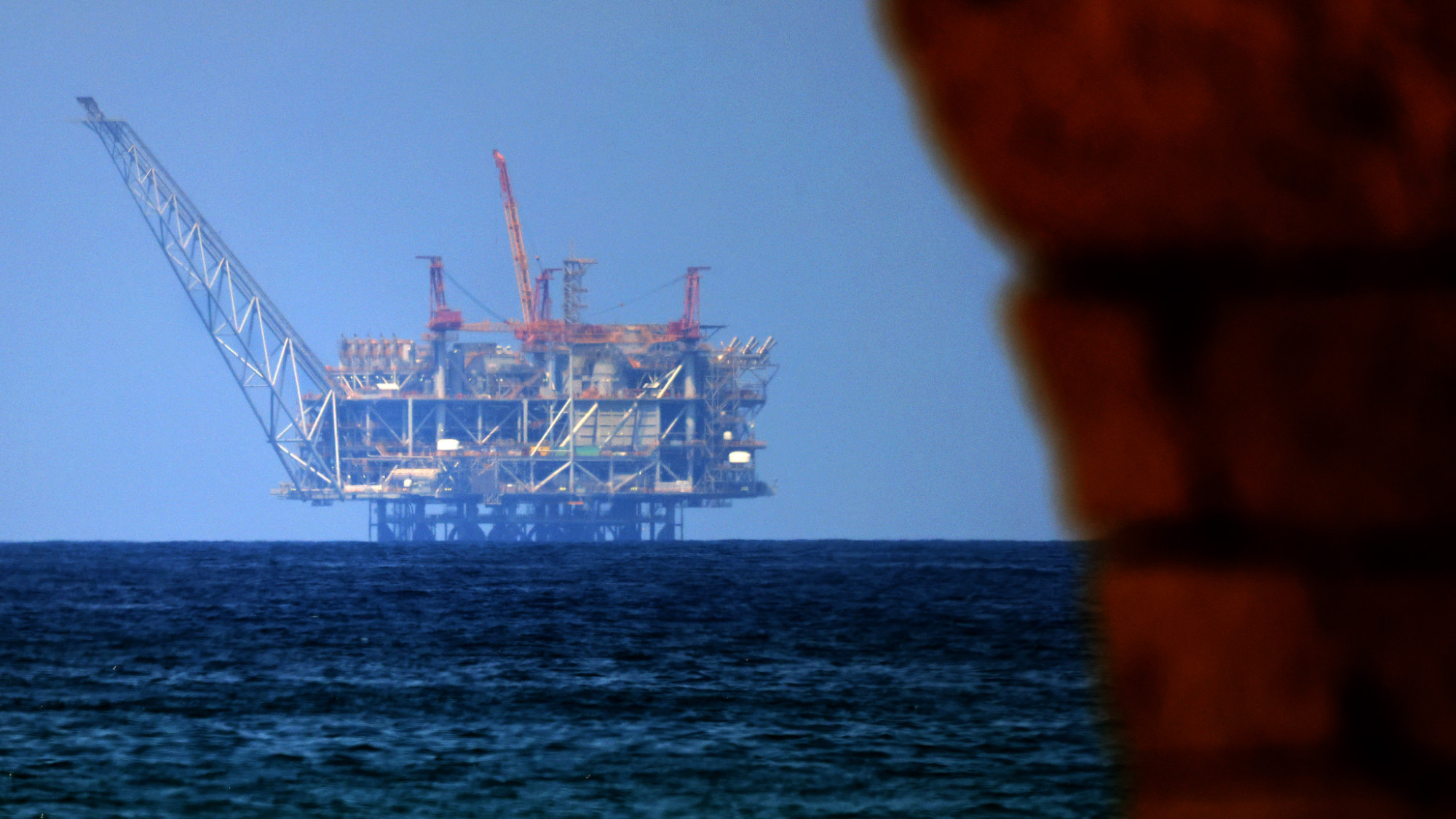
Israel’s latest push for natural gas exploration off the coast of the Gaza Strip has sparked sharp criticism from Palestinian rights organizations and environmental campaigners, who argue the initiative violates international law, undermines Palestinian sovereignty, and poses unnecessary threats to marine ecosystems and the global climate.
In February 2024, Israeli Energy Minister Eli Cohen formally approved the country’s fifth round of offshore gas licensing in the Mediterranean Sea. Per official documentation from Israel’s Ministry of Energy and Infrastructure, the auction opens up roughly 8,600 square kilometers of Mediterranean waters for exploration, split across six distinct exploration blocks.
Adalah, a Haifa-based legal organization that advocates for Palestinian rights, has revealed that two of these six blocks sit within internationally recognized Palestinian maritime territory off Gaza’s shore. This is not the first time Israeli licensing rounds have encroached on Palestinian waters: the group notes that the previous offshore auction also extended into waters claimed by the State of Palestine.
Last month, Adalah submitted an official letter to both Cohen and Israeli Attorney General Gali Baharav-Miara challenging the legality of the new licensing round. The correspondence, which has been shared with independent news outlet Middle East Eye, argues that the plan is unlawful because approximately 1,000 square kilometers of the proposed exploration area lies in waters over which Palestine claims full sovereignty. Adalah emphasizes that Israel holds no legal authority to conduct resource activities in these Palestinian maritime areas, noting that any exploration here would violate both Israeli domestic legislation and binding international law.
The organization rejects Israel’s ongoing military occupation of Palestinian territories as a valid justification for denying the inherent sovereign rights of the State of Palestine and the Palestinian people. It further points out that the drilling plans directly contradict the 1993 Oslo Accords, the landmark agreement signed between Israel and the Palestinian Liberation Organization that laid out frameworks for Palestinian self-governance in occupied territories. Under international humanitarian law, Adalah notes, occupying powers are explicitly prohibited from exploiting natural resources in occupied territories for their own benefit—a rule the new exploration plan clearly violates.
Suhad Bishara, Adalah’s legal director, framed the gas plans as an inseparable component of a broader accelerating Israeli policy aimed at formalizing annexation and permanent control over all Palestinian land and natural resources. “This is not merely a violation of international law,” Bishara explained in a public statement. “It is a deliberate attempt to entrench permanent Israeli control over Palestinian territory and resources, directly undermining the Palestinian people’s fundamental right to self-determination.”
To date, the Israeli energy ministry has not publicly released the results of the licensing round since the tender was first announced, and Middle East Eye’s request for comment on the allegations went unanswered as of the original publication of this report.
Adalah’s investigation also connects the new exploration round to a long-standing pattern of Israeli restrictions that have systematically denied Palestinian access to their own offshore energy resources. Since the early 2000s, Israel has blocked the Palestinian Authority from developing the Gaza Marine gas field, which independent experts estimate holds up to 30 billion cubic meters of natural gas. Development of this field would generate an estimated $4 billion in revenue for the Palestinian Authority, according to industry projections. The organization also notes that Israel already exports billions of dollars worth of natural gas to Egypt via the Ashkelon-Arish pipeline, which traverses Palestinian maritime territory without any consent from Palestinian authorities.
Joining the condemnation are Israeli environmental advocates, who warn that the exploration plan carries severe ecological risks and runs counter to global efforts to transition away from fossil fuels. Yuval Arbel, a policy specialist with the Zalul Environmental Association, an Israeli group focused on protecting marine and freshwater resources, argues that Israel already holds sufficient domestic gas reserves to meet all its current and future energy needs. “There is no justification for expanding gas production,” Arbel told Middle East Eye. “Our policy priority should be accelerating the transition to renewable energy, not opening new fossil fuel exploration blocks.”
Arbel warned that offshore drilling carries inherent major risks to delicate Mediterranean marine ecosystems, and that expanded gas production will only worsen climate change by increasing global greenhouse gas emissions. He noted that while the energy ministry justifies new exploration on the grounds that renewables alone cannot meet future Israeli energy demand, the policy is primarily driven by the pursuit of short-term profit. “Even if extraction moves forward, production will not begin for another six to 10 years,” Arbel pointed out. “No one can accurately predict what global gas demand will look like in 10 or 15 years. There is no tangible public benefit for Israel in extracting more gas—this is solely about generating extra export revenue for the state.”
These claims are backed by recent official revenue figures: in 2024, the Israeli energy ministry reported record revenues from domestic gas production, with the state collecting 2.3 billion shekels (roughly $640 million) in royalties, an increase of more than 8% from the previous year. Israel’s offshore gas sector has been a major source of state revenue since it was privatized in 2015, and currently hosts operations from a range of international and domestic energy firms, including UK-based Energean and U.S. energy giant Chevron. Just one year prior, BP and Azerbaijan’s state-owned energy firm SOCAR won bids in Israel’s fourth licensing round, which was also widely criticized for violating Palestinian maritime sovereignty.
Arbel emphasized that even a low probability of a catastrophic oil or gas spill is unacceptable given the irreversible damage it would cause to Gaza’s and Israel’s Mediterranean coastlines. “The potential damage from drilling is so severe that even a small risk of disaster is not worth taking,” he said.
Over the past decade, natural gas has become Israel’s dominant source of electricity generation, displacing coal as the country’s top fuel. Knesset data shows that gas accounted for just 49% of Israeli electricity production in 2014; a decade later, that share has jumped to more than 70%, with coal and renewable energy each contributing roughly 14% of total generation.
The gas exploration plan off Gaza aligns with a broader aggressive policy agenda pursued by Minister Cohen since he took office in 2024, which centers on consolidating Israeli control over occupied Palestinian territories in line with demands from the Israeli settler movement. Just last week, Cohen announced plans to expand natural gas infrastructure into the occupied West Bank, explicitly framing the move as an exercise in de facto Israeli sovereignty. The project will extend Mediterranean gas supplies to Israeli settlements in the West Bank, and earlier this week Cohen told Israeli outlet Channel 14 News that new power plants and gas pipelines across the West Bank are “the economic key on the path to one million settlers” living in the occupied territory.
The push for new fossil fuel exploration comes as Israel’s ongoing military campaign in Gaza has already had extreme climate and energy impacts. Research published last year by the Social Science Research Network found that the carbon footprint generated in the first 15 months of military operations in Gaza exceeded the total annual emissions of more than 100 countries combined. Since October 2023, Israel has systematically destroyed Gaza’s already fragile energy infrastructure, leading to near-total nationwide electricity blackouts throughout 2024, according to the United Nations Office for the Coordination of Humanitarian Affairs (OCHA).
Before the current war, Gaza residents received an average of just 10 hours of electricity per day, with the entire occupied Palestinian territory relying almost entirely on energy supplies from Israel. Pre-war data from the Institute for Palestine Studies shows that Palestinians sourced 87% of their total electricity from Israel, with the remaining 13% coming from Egypt, Jordan, and small-scale local solar generation projects.