In an unexpected announcement posted to social media Thursday, former U.S. President Donald Trump revealed that the Israeli and Lebanese national governments have reached an agreement for a 10-day ceasefire set to go into effect the same evening. Alongside the ceasefire reveal, Trump stated he will invite Lebanese President Joseph Aoun and Israeli Prime Minister Benjamin Netanyahu to the White House for talks aimed at forging a more durable long-term truce between the two neighboring nations.
The announcement comes weeks after Israel launched a sweeping military campaign of intensive airstrikes and a ground incursion into Lebanon that has already killed and injured thousands of people and forced more than one million Lebanese civilians from their homes. But despite the optimistic framing of the deal from Trump, experts have highlighted critical gaps that cast serious doubt on the ceasefire’s ability to hold: the agreement was struck solely between the two national governments, and does not include Hezbollah, the primary Lebanese political and militant group that has been the main target of Israel’s military operations.
Nicholas Grossman, an international relations professor at the University of Illinois, pointed out a fundamental flaw in the negotiated arrangement. “A ceasefire between Israel and Lebanon is a weird thing to tout, since Lebanon isn’t a combatant,” he explained, noting “there is no Lebanese fire for the Lebanese government to cease.”
The announcement also sparked internal friction in Israel: Amichai Stein, diplomatic correspondent for Israeli outlet i24News, reported that multiple members of Netanyahu’s Cabinet expressed outrage during a closed-door meeting, criticizing Trump for publicly announcing Israel’s consent to the ceasefire before the Israeli Security Cabinet granted formal approval.
Diplomatic context further complicates the situation: Iran has repeatedly stated that a ceasefire between Israel and Lebanon is a non-negotiable precondition for continuing nuclear and security negotiations with the U.S. – talks that stem from Trump’s unauthorized February military action against Iran, launched without congressional approval.
Even as the ceasefire was being announced, a group of 24 United Nations independent experts issued a harsh condemnation of Israel’s ongoing military assault on Lebanon Wednesday, describing the campaign as “a blatant violation of the UN Charter, a deliberate destruction of prospects for peace, and an affront to multilateralism and the UN-based international order.”
The experts, which included UN special rapporteurs Farida Shaheed (right to education), Ben Saul (right to food), and Francesca Albanese (occupied Palestinian territories), emphasized that Israel launched its largest coordinated wave of airstrikes on Lebanon since 1980 even as ceasefire negotiations were being finalized. “We are witnessing the continuing utmost contempt for the international legal order, for diplomacy, and above all for the lives of civilians and the environment in Lebanon,” the group said, rejecting Israeli claims that the operation is an act of self-defense: “This is not self-defense.”
The experts also drew a parallel between the situation in Lebanon and the humanitarian crisis in Gaza, noting that Israel’s blanket evacuation orders and systematic destruction of civilian housing align with patterns of “domicide” first seen in the Gaza campaign. “Forced displacement of a civilian population constitutes crimes against humanity and is a war crime under international law,” the statement added.
On-the-ground humanitarian data underscores the severity of the crisis. Since Israel escalated its offensive in early March, more than one million people – over 20 percent of Lebanon’s entire population – have been displaced. UNICEF USA confirmed Thursday that at least 600 children have been killed or wounded in Israeli attacks since March 2, with more than 390,000 children displaced by the violence. “Nowhere is safe for children in Lebanon,” the organization warned.
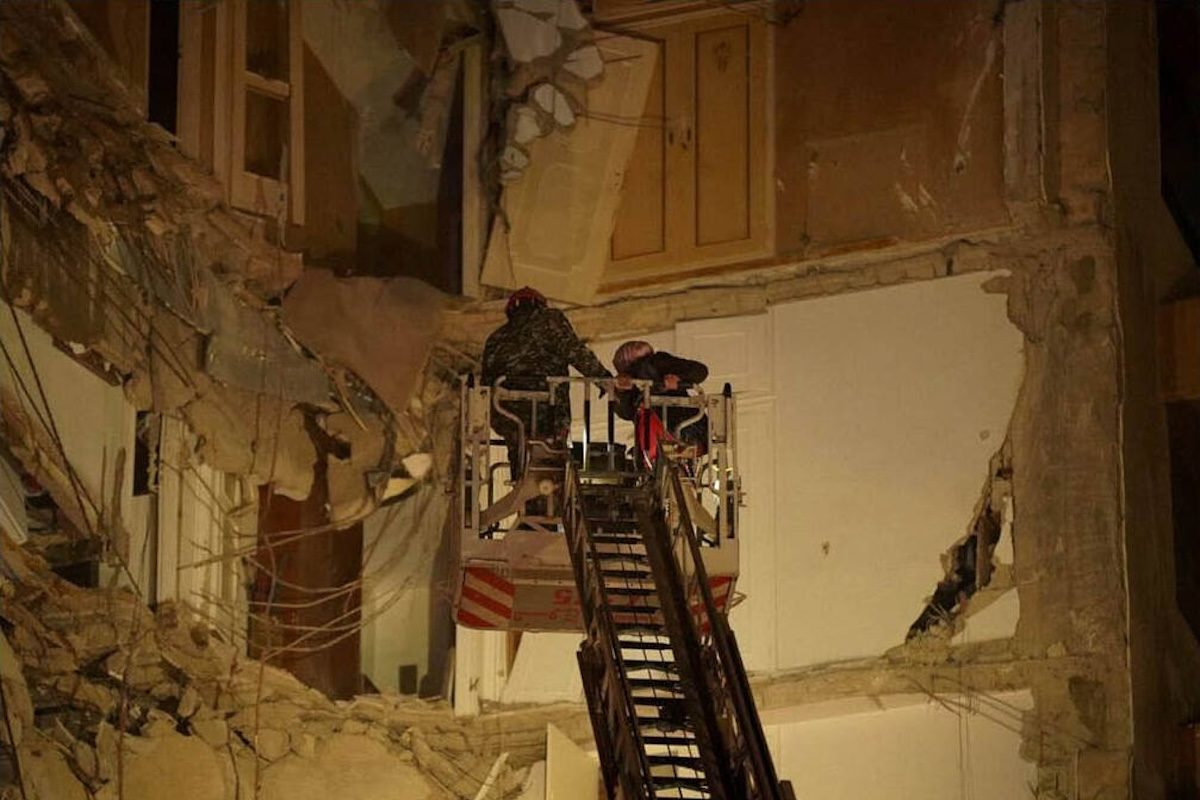
As of Wednesday, Israeli military forces continued to carry out intensive bombing campaigns across southern Lebanon, leveling entire towns, destroying civilian infrastructure including homes and schools, and killing non-combatants. Lebanese officials reported that an Israeli triple-tap airstrike on the southern Lebanese town of Mayfadoun Wednesday killed three paramedics responding to earlier strikes.
In their formal demand, the UN experts called on Israel to “immediately cease all military operations in Lebanon” and urged the United States – Israel’s closest ally and primary supplier of military arms – to leverage its considerable influence to force an end to the bombing campaign.