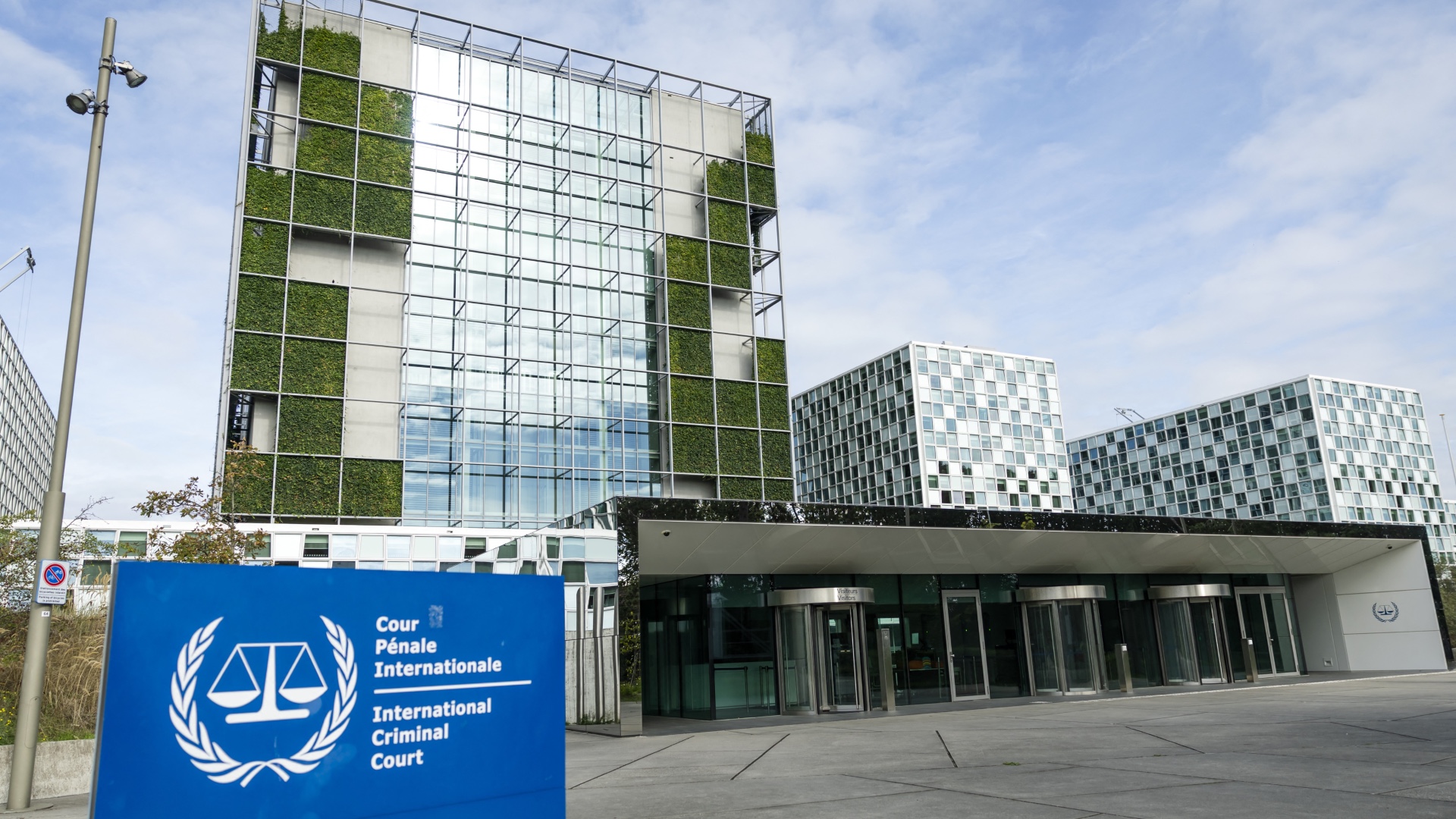
A federal jurist based in New York’s Southern District handed down a landmark permanent ruling this Monday that prohibits the Donald Trump-led administration from taking punitive action against civil society organizations and individual U.S. residents that engage in collaborative work with the International Criminal Court. The legally binding order applies to all people holding U.S. citizenship, far beyond the two original organizational plaintiffs that launched the legal challenge. Presiding Judge Jesse Furman had first rolled out a temporary restraining order blocking the policy one month prior, and this week he rejected the U.S. government’s formal motion to revisit that earlier preliminary ruling, stating in his official 32-page opinion that the administration’s request held no factual or legal merit. Furman explicitly noted that the so-called Services Prohibition embedded in the Trump-era executive order qualifies as a content-specific restriction on protected free speech, and that the policy fails to meet the strict legal standard of being narrowly calibrated to advance any compelling national state interest. The class-action lawsuit that triggered this ruling was originally filed in July by Democracy for the Arab World Now (DAWN), a prominent human rights organization founded in memory of slain journalist Jamal Khashoggi, who was a long-time columnist for Middle East Eye. A second allied non-profit, the Taxpayer Alliance Against Genocide (TAAG), joined DAWN as a co-plaintiff in the case. Back in October, Judge Furman issued a preliminary temporary block that prevented the Trump White House from imposing any civil penalties or criminal charges against the two plaintiff groups for any of their ongoing collaborative projects with the ICC. Prior to this week’s permanent ruling, any U.S. person found violating the Services Provision faced a maximum sentence of 20 years in federal prison alongside civil fines reaching as high as $1 million, DAWN outlined in a public statement released on Tuesday. The organization emphasized that the Trump administration had interpreted the vague, broadly defined term “service” in the executive order to cover nearly any action that could be framed as providing a benefit to a sanctioned party, meaning ordinary Americans were at risk of criminal prosecution for acts as basic as submitting verified evidence of potential war crimes to the ICC, sharing information with Palestinian human rights advocacy groups, or participating in joint policy campaigns with UN Special Rapporteur for the Occupied Palestinian Territories Francesca Albanese. Albanese herself has been targeted with formal Trump administration sanctions since 2025. DAWN’s leadership highlighted that the newly finalized permanent injunction strips the Trump administration of one of its most sweeping enforcement tools: the authority to detain U.S. citizens or impose ruinous financial penalties against them for supporting ICC operations, or for partnering with civil society groups that were sanctioned solely for demanding formal accountability for alleged atrocity crimes committed by U.S. and Israeli officials. This ruling comes barely weeks after the Trump administration took the unprecedented step of sanctioning the entire institutional leadership of the International Criminal Court. The human rights group added that the court’s decision formally enshrines every U.S. resident’s constitutional right to advocate for justice for Palestinian communities without fear of government retaliation. Both DAWN and TAAG confirmed in a joint public statement that they will immediately resume all suspended collaborative ICC-related work, and re-establish close operational partnerships with Special Rapporteur Albanese as well as three sanctioned Palestinian civil society organizations: al-Haq, al-Mezan, and the Palestinian Centre for Human Rights. Just two weeks prior to the ruling, TAAG hosted an official press conference at the ICC’s headquarters in The Hague, where it submitted a formal petition calling on the court to open a full investigation into President Donald Trump and his top diplomatic envoy Marco Rubio for their alleged roles in aiding and abetting genocide, war crimes, and crimes against humanity tied to Israeli military operations in Gaza. The controversial policy at the center of the legal challenge was first signed by Trump in the opening weeks of his current presidential term, roughly 18 months prior, as Executive Order 14203. The order granted sweeping new powers to U.S. federal officials to impose punitive sanctions on any foreign individual or entity that supports ICC investigations targeting U.S. or Israeli nationals for alleged war crimes, crimes against humanity, or acts of genocide. It also reclassified the act of providing any unspecified “service” to, or receiving any service from, a sanctioned party as a federal criminal offense. The Trump administration has repeatedly justified the policy by claiming that ongoing ICC investigations into U.S. and Israeli wartime personnel constitute an unlawful “national emergency”, arguing that the international court lacks all legitimate jurisdiction over crimes committed by American or Israeli citizens during armed conflicts. This stance represents a sharp break from earlier U.S. policy: Washington played an active collaborative role in the initial drafting and formation of the International Criminal Court, and former President Bill Clinton formally signed the founding Rome Statute in 2000, though the White House never submitted the treaty to the U.S. Senate for formal ratification due to longstanding congressional concerns that the ICC could attempt to prosecute U.S. military service members and government officials for alleged wartime offenses linked to operations in Afghanistan and Iraq. Trump himself has repeatedly made unvarnished public statements confirming that the ICC sanctions regime was explicitly designed to penalize the court for prioritizing investigations that target Israeli government personnel. Since signing Executive Order 14203, the Trump administration has formally sanctioned multiple sitting ICC prosecutors and judges, in addition to the three leading Palestinian human rights organizations. This report is sourced from independent editorial coverage produced by Middle East Eye, which delivers unrivaled news and analysis across the Middle East, North Africa, and surrounding global regions.
US judge permanently bars Trump from punishing rights groups who liaise with ICC