In a late Thursday announcement, the White House confirmed that U.S. Vice President JD Vance has scrapped his scheduled trip to Switzerland, triggering a last-minute postponement of a critical new round of direct U.S.-Iran negotiations meant to flesh out this week’s landmark bilateral deal.
The cancellation comes just 24 hours after the United States lifted its naval blockade of Iran under the terms of the new 14-point Memorandum of Understanding, a sweeping agreement designed to end open conflict between the two nations. But even as negotiators prepared for technical discussions at the luxury Burgenstock resort overlooking Lake Lucerne, renewed violence in southern Lebanon has thrown the entire diplomatic process into disarray.
Hours before the White House confirmed Vance’s withdrawal, Hezbollah-aligned Lebanese media had already reported the talks would be suspended over ongoing Israeli air operations in Lebanon. White House officials emphasized that logistical planning for the high-stakes meeting had never proven “simple or predictable,” and stressed that Washington had not yet finalized formal arrangements for the gathering. Administration officials added that the U.S. remains eager to launch the scheduled technical discussions at the earliest possible opportunity.
Switzerland’s Federal Department of Foreign Affairs later corroborated the postponement, noting that pre-negotiation preparations are still moving forward despite the schedule change. Security forces, including Swiss military personnel and police, had already deployed to the secluded mountain resort, and a dedicated media center had been constructed to accommodate international journalists covering the talks. The negotiations were expected to focus on rolling out the terms of the new MOU and opening preliminary discussions on long-standing sticking points, most notably Iran’s nuclear program.
The 14-point agreement signed earlier this week includes landmark provisions: the reopening of the strategic Strait of Hormuz, a formal Iranian commitment to never develop nuclear weapons, a $300 billion international reconstruction plan for the Iranian economy, and the full termination of all U.S. sanctions on Iran. The deal also requires both parties to reach a comprehensive final agreement within 60 days, a timeline that can be extended if both sides give their mutual consent.
Iran’s Supreme Leader Mojtaba Khamenei confirmed he had approved the deal despite holding personal “different views” on the agreement, claiming former President and current U.S. leader Donald Trump leveraged extreme pressure to force the deal out of desperation. Khamenei emphasized that future in-person talks between Tehran and Washington do not equate to acceptance of what Iran frames as U.S. aggression, stating “this will not mean acceptance of the enemy’s position.” Trump for his part has said he expects a full ceasefire to take hold across all active conflict zones, including the border between Israel and Hezbollah in Lebanon, a requirement explicitly written into the agreement’s text.
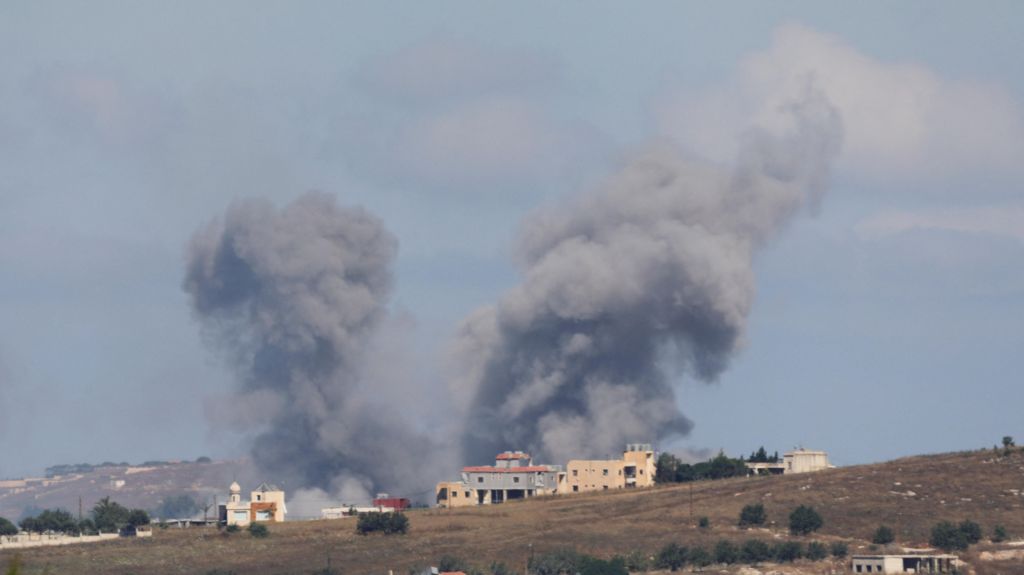
Yet violence has continued unabated in southern Lebanon even after the deal was announced. Early Friday, Lebanese health authorities confirmed that new Israeli air strikes overnight killed at least 18 people and wounded 33 more, with multiple civilian buildings damaged in the bombardment. Lebanon’s state news agency described the overnight attack as one of the most intense of the entire conflict. The Israel Defense Forces (IDF) said its strikes targeted Hezbollah infrastructure and operatives, the Iran-backed militia that has operated out of southern Lebanon for decades. Four IDF soldiers were also killed in retaliatory Hezbollah attacks this week.
The deadly violence has sparked fierce rhetoric from Israeli hardliners. Far-right Israeli National Security Minister Itamar Ben-Gvir wrote on social media platform X that “all of Lebanon must burn,” adding, “With all due respect to the Americans, Israel must make it clear to the entire world that the blood of our sons and the security of our citizens are not up for bargaining.” Vance had publicly pushed back against hardline Israeli cabinet members including Ben-Gvir earlier Thursday, telling reporters Israel should “wake up and smell the reality” of the current diplomatic opening.
Lebanon was drawn into the broader U.S.-Iran conflict shortly after it began, when Hezbollah launched rocket strikes into northern Israel in retaliation for an Israeli strike that killed Iran’s previous supreme leader. Israel responded with a massive cross-border bombing campaign and a ground incursion into southern Lebanon, launched to push Hezbollah fighters back from Israel’s northern border. To date, Lebanese health authorities report that more than 3,900 people, including large numbers of women and children, have been killed in Israeli attacks across the country. Israeli officials confirm at least 30 soldiers and four civilians have been killed on the Israeli side of the border during the same period.