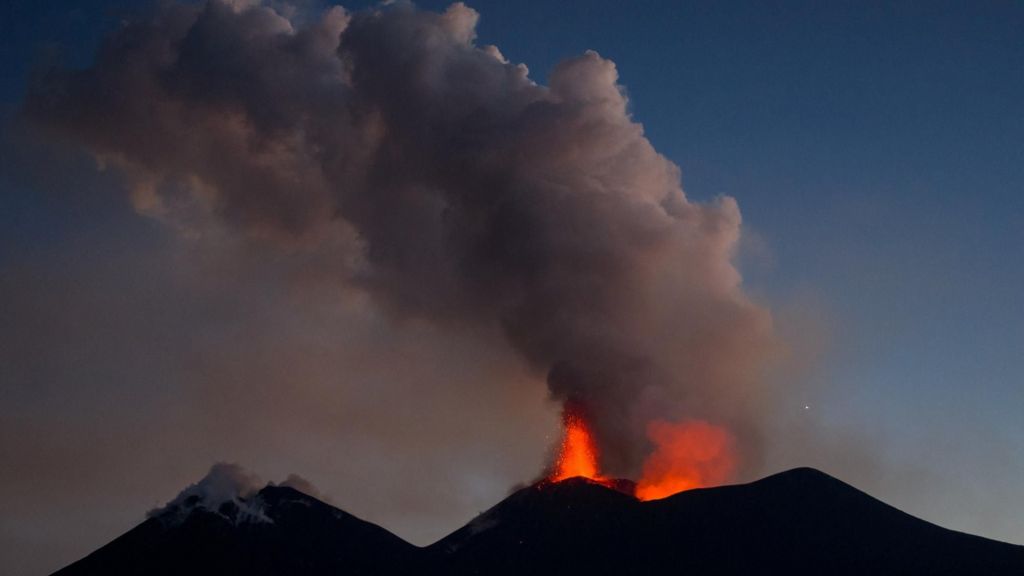
Europe’s most consistently active volcano, Mount Etna on Italy’s Sicily island, has become the site of a tragic tourist death following a sudden lightning strike, as a surge of visitors drawn by recent volcanic activity clashes with repeated official safety warnings.
The victim, a 30-year-old U.S. citizen whose identity has not been released by Italian authorities, was hiking on the volcano Sunday when an unexpected thunderstorm rolled across the mountain’s upper slopes, according to local Italian media reports. First responders from the local fire department and emergency response teams located the hiker around 8 p.m. local time (6 p.m. GMT) in a restricted access zone. This off-limits area is regularly used by adventurous visitors seeking unobstructed views closer to Etna’s smoking summit.
When first responders arrived, the hiker was already in cardiac arrest. He was airlifted via emergency helicopter to Cannizzaro Hospital in the nearby Sicilian city of Catania, but medical teams pronounced him dead upon his arrival at the facility.
The tragedy unfolds against a backdrop of intensifying volcanic activity at Etna over the past several weeks. A string of consecutive eruptions has sent plumes of thick ash across the skies of eastern Sicily, forcing widespread disruption to air travel at Catania International Airport. Hundreds of commercial flights were canceled or diverted over the past week due to the ash cloud hazard, and aviation authorities only downgraded the official alert level from the highest red rating to orange this past Saturday.
Despite the disruptions and growing risks, the recent dramatic eruptions have drawn large numbers of curious tourists to the volcano’s slopes, echoing a long-running trend where volcanic activity boosts visitor numbers to the site. Mount Etna draws roughly 1.5 million visitors to its slopes annually, making it one of Sicily’s most popular natural tourist attractions.
In response to the heightened volcanic activity, local authorities have already implemented strict restrictions on access to large sections of the mountain, particularly the upper slopes above the tree line, where there is almost no natural or built shelter for visitors caught in sudden storms. Italy’s national civil protection agency has repeatedly warned visitors that the combination of ongoing volcanic instability and fast-changing, unpredictable weather at higher elevations creates extremely dangerous conditions that can turn deadly in minutes.