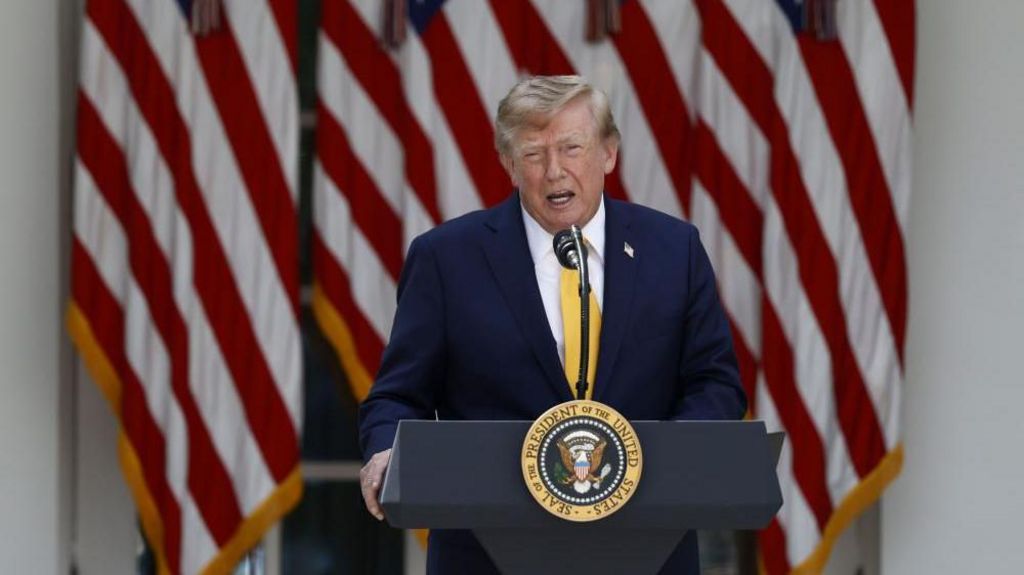
A fresh and dramatic escalation in cross-border trade tensions between the United States and Canada has sent shockwaves through North American economic and political circles, after former President and current U.S. leader Donald Trump threatened to double existing tariffs on Canadian-made automobiles and auto parts early next year. The aggressive move comes just days after high-stakes trade negotiations between the two neighboring nations collapsed in acrimony late last week, with both sides trading blame over last-minute demands that derailed what had appeared to be a path toward a new agreement.
In a public statement issued Monday, Trump confirmed that he plans to raise the current 25% U.S. tariff on imported Canadian passenger vehicles, trucks and auto components to 50%, with the new rate set to take effect on January 1 of 2026. Trump repeated his longstanding criticism of Canadian trade policy, claiming the country has “ripped America off” for decades through unfair trade practices that disadvantage U.S. manufacturers and workers.
Canadian Prime Minister Mark Carney responded to the threat with measured defiance, noting that the new tariff announcement was hardly unexpected given the sudden breakdown of negotiations late Friday. Carney accused Trump of deliberately targeting Canada’s $500 billion auto industry with the aim of undermining its global competitiveness, but added that the Canadian government remains open to restarting discussions if U.S. negotiators arrive at the table with a constructive, good-faith “right attitude.”
The collapse of talks came mere moments before a U.S.-imposed deadline that would have triggered a 50% tariff on nearly $20 billion worth of Canadian imports across multiple sectors. Just days earlier, both sides had signaled cautious optimism that a updated bilateral trade deal could be finalized, making the sudden breakdown a sharp and unexpected reversal of momentum. Canadian officials have pushed back against U.S. claims, saying Washington introduced unacceptable last-minute demands, including a controversial clause that would have restricted Canada’s ability to sign independent free trade agreements with other third-party countries. On the U.S. side, U.S. Trade Representative Jamieson Greer told CNBC Monday that it was Canadian negotiators that walked away after pushing for unplanned last-minute changes to the draft agreement, saying “they wanted more” than what was on the table.
Carney has already confirmed that Canada will retaliate to any new U.S. tariffs with reciprocal measures that match American levies “dollar for dollar,” with the first round of Canadian retaliatory tariffs set to enter into force on September 8. Beyond immediate retaliatory measures, the Canadian prime minister announced a C$11 billion investment to construct six new heavy and medium icebreakers for the Canadian Coast Guard at a Quebec shipyard, a project designed to replace the country’s aging current fleet and open new year-round Arctic and Atlantic shipping lanes to diversify Canada’s trade routes away from its historic overreliance on the U.S. market.
The most fiery response to Trump’s threat came from Doug Ford, the outspoken premier of Ontario—Canada’s heartland of auto manufacturing, which accounts for the vast majority of the country’s vehicle production. Ford fired back at Trump, telling the U.S. president to “kiss my ass,” and suggested Canada should add new surcharges on U.S. imports of Canadian crude oil, natural gas, electricity and critical minerals, all of which are critical to U.S. energy and manufacturing security. Canadian federal data shows that Canada supplies 60% of all U.S. crude oil imports and nearly 100% of U.S. natural gas imports, giving Ottawa significant leverage in the escalating conflict.
Trump quickly hit back at Ford in a post on his Truth Social platform, dismissing the Ontario premier’s comments as empty “bluster” and warning that “Someone should get these clowns to ‘fall in line’ or, the consequences for Canada will be far WORSE!”
Business leaders on both sides of the border have already sounded the alarm over the escalating trade war, with many small and large manufacturers warning that higher tariffs will raise costs for consumers, disrupt tightly integrated North American supply chains, and force layoffs on both sides. Many companies say that half of their cross-border revenue could be wiped out if the new tariffs go into effect.
Beyond the immediate auto tariff fight, the collapse of talks has thrown the future of the existing U.S.-Mexico-Canada Agreement (USMCA), the landmark North American trade bloc signed by Trump during his first term, into serious question. The trade deal, which underpins $1.6 trillion in annual cross-border trade across the continent, is currently undergoing a mandatory 10-year review. Over the summer, both Canada and Mexico submitted formal requests to extend the existing agreement for an additional 16 years, but the U.S. has already refused to renew the deal in its current form.
Economic analysts with Oxford Economics warned Monday that the risk of the entire USMCA unravelling has risen sharply amid escalating tensions. While a full collapse remains an unlikely outcome, the firm’s lead Canada economist Tony Stillo and senior economist Michael Davenport warned that dissolving the trade pact would plunge Canada into a full recession and lock the country into a permanently lower long-term growth trajectory.