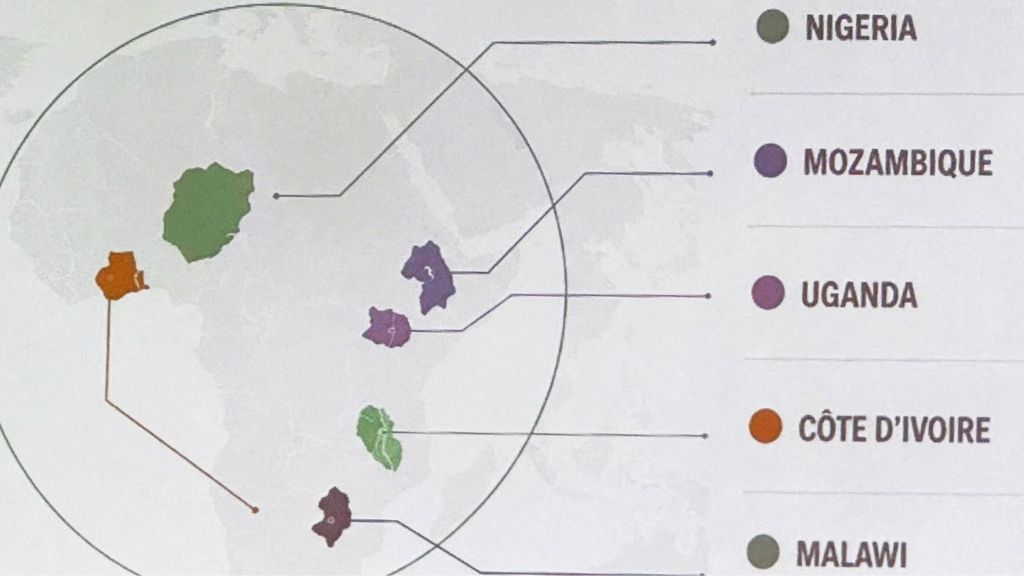
A major cartographic blunder, involving an AI-generated map filled with critical geographic errors for key African nations, has thrown the U.S. State Department into the center of diplomatic controversy following a presentation at the 26th International Aids Conference in Rio de Janeiro, Brazil. The flawed map, which appeared in a slide deck discussing U.S. funding for global HIV response initiatives, included wildly incorrect positioning and unrecognizable shapes for six African countries central to Washington’s flagship HIV program, the President’s Emergency Plan for Aids Relief (Pepfar).
Among the most striking errors, the map incorrectly labeled Nigeria — Africa’s most populous nation — as a landlocked country, when it in fact holds extensive coastlines along the Gulf of Guinea. Ivory Coast was mislocated to East Africa rather than its actual position in West Africa. Three of the six highlighted nations — Nigeria, Mozambique, and Ivory Coast — were placed entirely wrong geographically. While Malawi and Uganda sat in roughly correct regional positions, their shapes were heavily distorted, and Cameroon was referenced in the presentation but not marked on the map at all.
The mistake was first brought to public attention by HIV/AIDS expert Emily Bass, who shared a photograph of the flawed slide via her Substack newsletter, quickly sparking widespread backlash across social media and diplomatic circles. A subsequent analysis by Reuters confirmed the map carries an artificial intelligence watermark, confirming it was generated using AI tools. OpenAI has confirmed it is investigating the incident in response to the reports.
The presentation was delivered by a senior U.S. official tasked with overseeing Pepfar, which has been a core component of U.S. global health engagement for decades. In its official response, the State Department acknowledged the incident as “an unfortunate error”, explaining it occurred when a team member “hurriedly altered” the slide deck in preparation for the conference. The department took full responsibility for the confusion and misrepresentation the mistake caused for attendees, including African partner nations participating in the event.
Critics across the political spectrum have slammed the error, linking it to broader shifts in U.S. foreign policy and staffing under the second Trump administration. Democratic Senator Jeanne Shaheen, ranking member of the U.S. Senate Foreign Relations Committee, wrote on X: “What an embarrassment. This is what happens when [the State Department] fires career experts and tries to have AI conduct diplomacy.” Former State Department official Cameron Hudson echoed the criticism, calling the mistake “stupid and embarrassing” and attributing it to “too junior staff performing work under-supervised.”
The controversy comes at a sensitive moment for U.S. global health policy, arriving as the 26th International Aids Conference opens against the backdrop of deep cuts to U.S. foreign aid implemented after President Donald Trump returned to the White House last year. The Trump administration has overhauled U.S. global health assistance, implementing sharp across-the-board cuts to foreign aid spending. While core life-saving HIV treatment programs under Pepfar have largely resumed operations, Washington has scaled back funding for prevention and disease surveillance initiatives, and announced plans to phase out the Pepfar program entirely in South Africa.
Despite the public backlash over the map error, the State Department maintained that discussions at the conference remained “substantive and constructive”, and reaffirmed the U.S.’s long-stated commitment to combating HIV/Aids across Africa and the rest of the world.