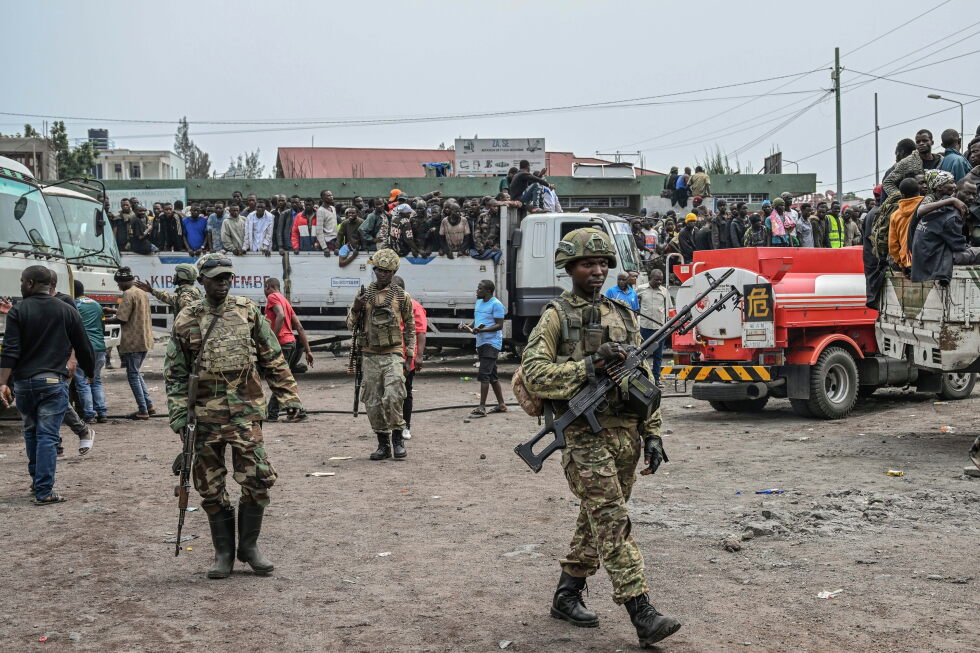
In a newly published UN expert report obtained exclusively by the Associated Press in Dakar, Senegal, all belligerent parties involved in the escalating conflict in eastern Democratic Republic of the Congo (DRC) have been found to systematically breach the terms of a regional peace agreement and perpetrate widespread human rights abuses across the volatile region.
The December 2020 accord, brokered by the Trump administration, was designed to de-escalate a conflict that has stretched across decades in the mineral-rich eastern DRC. However, the UN panel of experts confirms that every major faction has failed to meet their core commitments under the agreement.
On one hand, the Congolese national army has continued its long-running collaboration with the Democratic Forces for the Liberation of Rwanda (FDLR), a Hutu rebel group whose ranks include perpetrators of the 1994 Rwandan genocide who fled across the border into the DRC after the mass killings. Under the terms of the December peace deal, the Kinshasa government explicitly pledged to cut all operational ties with the rebel faction.
On the opposing side, Rwandan military forces continue to deploy thousands of troops inside the DRC to back the M23 rebel movement, despite repeated denials from Kigali. Rwanda has long justified its cross-border military activity by claiming it is targeting FDLR fighters to protect Rwandan national security, a narrative that the DRC government and the U.S. have rejected. Both accuse Rwanda of using counter-insurgency as a cover to seize control of the eastern DRC’s vast reserves of valuable minerals, including gold, coltan and tin that power global tech supply chains.
M23, which launched a lightning offensive in early 2023 that captured the major eastern city of Goma and multiple other urban centers, also failed to honor its agreement to withdraw from occupied territories. Instead of drawing down, the rebel group has repositioned its forces tactically and retained its core goal of toppling the national government in Kinshasa.
Today, M23 controls large swathes of territory across the DRC’s North and South Kivu provinces, and the report identifies the Rwanda-backed movement as the leading perpetrator of conflict-related sexual violence in the region. The UN panel estimates that between 14,000 and 18,000 Rwandan military personnel remain deployed inside the DRC as of late 2024, with no indication of a meaningful drawdown in violation of the 2020 accord. Rwanda maintains full operational control over the M23 insurgency, the experts added.
The illicit smuggling of Congolese minerals from occupied mining areas continues to fund the conflict, the report confirms. M23 operates a parallel shadow economy in territories it controls, where minerals extracted from sites like Rubaya in Masisi territory are smuggled across the border into Rwanda and exported by Rwandan-affiliated companies.
In recent diplomatic developments, the DRC last week filed a formal case against Rwanda at the International Court of Justice (ICJ), holding Kigali legally responsible for the widespread violence that has displaced millions of people and created what the UN has described as one of the world’s worst and most long-running humanitarian crises. Hours after the report’s findings emerged, the U.S. imposed new sanctions on Rwanda-based Gasabo Gold Refinery, accusing the facility of being part of an illicit network operating in coordination with M23. U.S. officials noted the sanctions are aligned with ongoing peace efforts led by the U.S. and Qatar to resolve the conflict.