On Sunday, Russian authorities confirmed that Ukraine had continued its intensifying campaign of long-range drone attacks across Russian territory, igniting a major blaze at a key southern oil refinery and leaving at least two civilians dead.
This latest wave of strikes forms part of Kyiv’s expanding strategic campaign targeting Russian fuel logistics and military supply chains, a push Ukrainian officials frame as a deliberate effort to force the Kremlin to engage in meaningful peace negotiations. According to Veniamin Kondratyev, governor of Russia’s Krasnodar Krai—located east of Moscow-occupied Crimea—falling debris from intercepted Ukrainian drones sparked the fire at the Slavyansk-na-Kubani refinery. Regional officials confirmed one fatality in Slavyansk-na-Kubani itself, with a second person injured in a neighboring rural settlement. Visuals shared across Russian social media platforms showed thick plumes of black smoke billowing from the facility, though the Associated Press has not yet been able to independently verify the authenticity of these images.
Ukrainian President Volodymyr Zelenskyy publicly claimed responsibility for the coordinated strikes, confirming that a second Russian refinery in the Yaroslavl region, roughly 430 miles northeast of the Ukrainian border, was also hit in the overnight operation. In a post on the Telegram messaging platform, Zelenskyy framed the attacks as part of what he calls Ukraine’s “long-range sanctions” campaign against Russian war capacity. “Each strike means a reduction in the resources that fuel the Russian war machine, and another step toward peace,” he wrote.
Over the past several months, Ukraine has dramatically ramped up the frequency and scale of long-range strikes targeting Russian military industrial sites and energy infrastructure. The strategic goal of this campaign is twofold: to cut into Moscow’s revenue generated from energy exports that fund its full-scale invasion, now in its third year, and to bring the realities of the war home to the Russian public. Western officials familiar with the battlefield situation note that the campaign has already helped slow Russian offensive momentum on front lines in Ukraine and put sustained domestic and international pressure on the Kremlin.
The Slavyansk-na-Kubani refinery ranks among the largest oil processing facilities in southern Russia, with an annual crude processing capacity of nearly 4 million tons, per data published by its operating company. It also serves as a critical hub for petroleum product exports bound for global markets through Russian Black Sea ports, supplying fuel oil, naphtha, and marine fuel to international buyers.
Russian officials have not yet released any official confirmation of damage to the Yaroslavl region refinery. However, regional governor Mikhail Evraev announced Sunday morning that multiple key highways connecting Moscow to the regional capital city of Yaroslavl were temporarily shut down in response to what he described as “an enemy attack by Ukrainian drones.” Russia’s federal civil aviation authority also confirmed that Yaroslavl’s main airport temporarily suspended operations overnight, joining a number of other airports across southern and western Russia that implemented temporary flight ground stops during the assault.
The strikes were not limited to energy infrastructure deep inside Russian territory. In Russia’s Belgorod region, which shares a border with northeastern Ukraine, acting governor Alexander Shuvayev confirmed Sunday that a separate Ukrainian drone strike killed one civilian and injured a second.
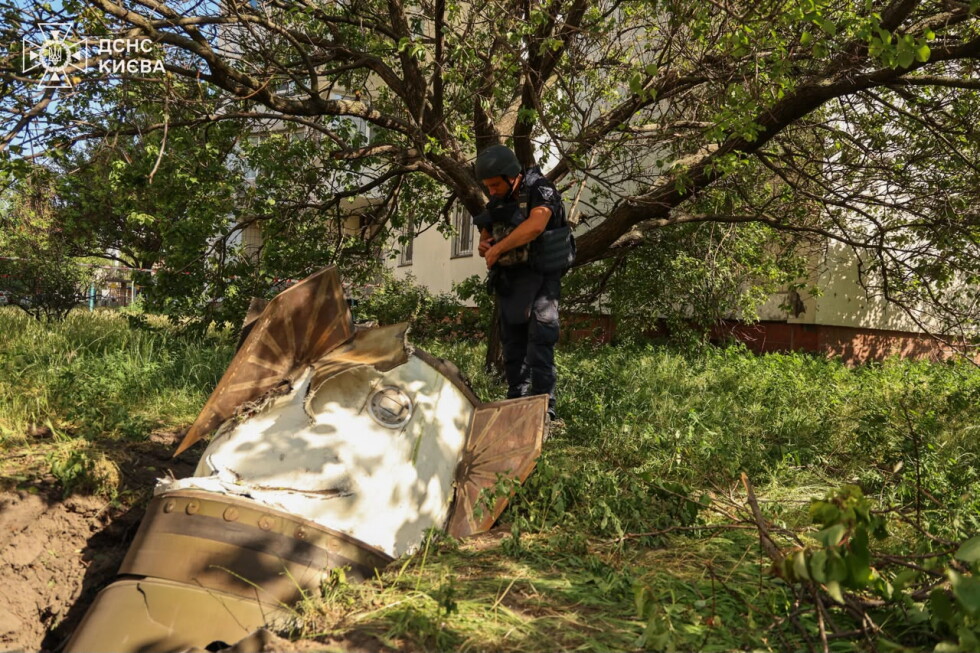
Russia’s Defense Ministry claimed that its air defense systems intercepted and destroyed 213 Ukrainian drones launched during the overnight wave of attacks, with intercepts reported over Russian mainland territory, occupied Crimea, and the Black and Azov seas. In a reciprocal escalation, the Ukrainian Air Force reported that Russia launched its own massive overnight assault on Ukraine, deploying 142 long-range attack drones and eight short- and long-range missiles. Ukrainian air defenses successfully intercepted 125 of the drones and seven of the missiles, the service confirmed.
Coverage of the ongoing Russia-Ukraine conflict is updated continuously on the Associated Press’ dedicated hub.