On Saturday, a Ukrainian drone assault targeted an oil terminal in Russia’s second-largest city of St. Petersburg, Russian regional officials confirmed, marking the latest escalation in Kyiv’s sustained campaign of strikes against Russian energy infrastructure amid the ongoing full-scale invasion that has stretched into its fifth year.
Regional Governor Alexander Beglov reported that the attack targeted the Kirovsky district of St. Petersburg, which sits along the Baltic Sea coast. He added that Russian air defense systems intercepted and downed 72 Ukrainian drones across the city and its surrounding region. This is not the first time the district has come under attack: it was previously struck in June, just ahead of Russia’s high-profile St. Petersburg International Economic Forum.
Ukrainian President Volodymyr Zelenskyy framed the strike as part of Kyiv’s deliberate “long-range sanctions” strategy targeting Russian war capacity. In a Telegram post, he confirmed that Ukrainian defense forces not only hit the St. Petersburg oil terminal infrastructure, which generates revenue that funds Moscow’s invasion, but also struck a key military target on the island of Kronstadt, located just off St. Petersburg’s coast.
The intensified, near-daily long-range assaults on Russian oil and fuel facilities across occupied and Russian territory have triggered widespread fuel shortages, creating a domestic supply crisis that has piled growing political pressure on the Kremlin. The Crimean Peninsula, which Russia illegally annexed from Ukraine in 2014, has faced particularly severe strike activity, forcing Moscow-installed local authorities to suspend civilian gasoline sales. In a separate Saturday attack on Crimea, the Kremlin-appointed Governor Sergei Aksyonov reported that one person was killed and three others injured, including a 10-year-old child.
Alongside the St. Petersburg strike, another major Ukrainian attack left the border city of Belgorod, a frequent target of Kyiv’s drone campaign, almost entirely without power on Saturday, according to local Russian media reports.
Russian President Vladimir Putin has attempted to downplay the impact of Ukraine’s energy infrastructure strikes, dismissing the damage as “not critical” and insisting his full-scale invasion will continue until he achieves his stated war goals. Putin has claimed the strikes are a Ukrainian tactic to distract from what he says are advances on the front line, though independent military analysts note that Russian territorial gains have been effectively stalled in recent months.
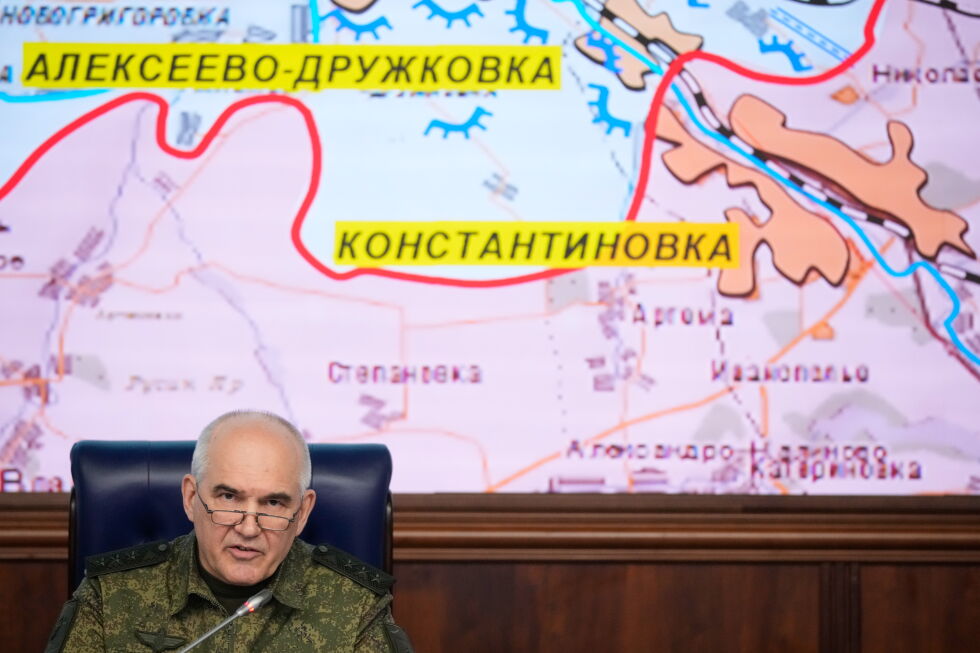
The day before the St. Petersburg attack, Putin visited the Russian military command center overseeing the invasion and was briefed on what Russian officials claim is the capture of Kostyantynivka, a key transport and industrial hub in Ukraine’s Donetsk region. Following weeks of intense urban street fighting, Putin described the seizure of Kostyantynivka as a critical milestone toward capturing Sloviansk and Kramatorsk, the last major heavily fortified Ukrainian-held strongholds in the Donetsk “forest belt” region. Speaking in televised remarks while wearing military fatigues, Putin emphasized that the city’s capture holds major strategic importance for Russia’s campaign.
Ukrainian officials have immediately refuted Moscow’s claims, dismissing the announcement as outright disinformation. Andriy Kovalev, a spokesperson for Ukraine’s General Staff, told local outlet Ukrainska Pravda that Russian forces have not secured full control of the city and their capture claim is false.
Despite Putin’s public efforts to downplay the impact of the strikes, the sustained campaign of drone attacks has brought the reality of the war directly to ordinary Russians across much of the country, shattering the Kremlin’s long-held narrative that the conflict is a distant operation that does not impact daily life inside Russia. Even as Putin projects confidence that the domestic fuel crisis will not erode his political authority or public support for the war, the strikes have created new domestic challenges for the Kremlin three and a half years after the full-scale invasion began.
The escalation on Saturday was not one-sided: Ukrainian authorities in the southeastern Zaporizhzhia region reported that a Russian strike on residential buildings wounded eight people, including two children.