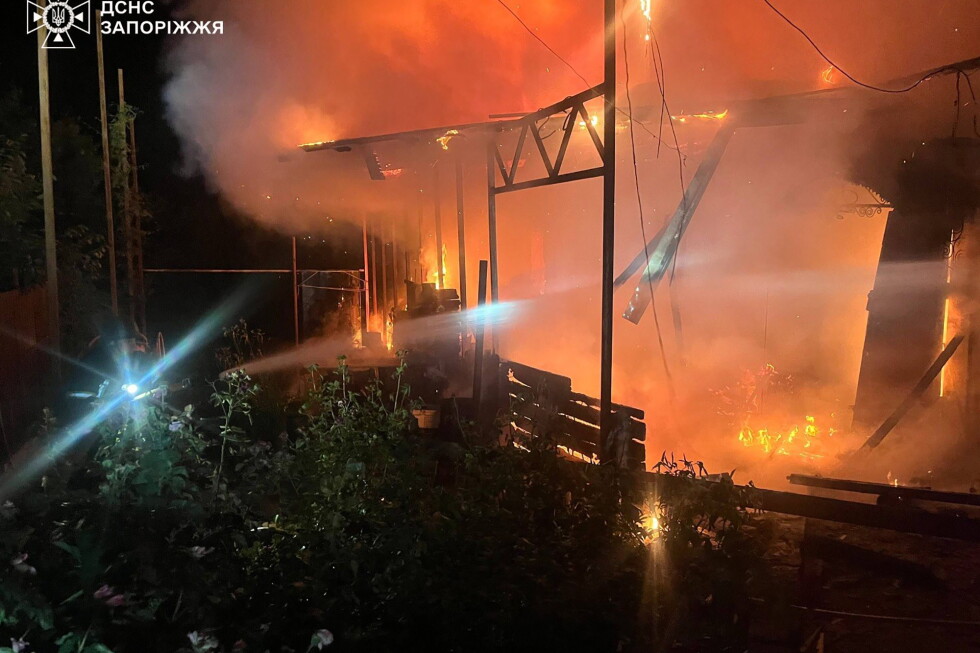
As the Russia-Ukraine conflict stretches into its fourth year, Ukrainian military forces have launched a new wave of coordinated drone strikes against critical infrastructure across Russia-occupied Crimea, part of Kyiv’s expanding campaign to cut off logistical access to the strategically vital peninsula.
Announced by Ukrainian defense officials this week, the attacks hit a series of high-value targets: an oil storage facility at the Kerch thermal power plant in eastern Crimea, a western regional electrical substation, and a liquefied natural gas distribution hub in Simferopol, Crimea’s second-largest urban center. In a separate operation, Ukraine’s Special Operations Forces — working alongside local Crimean resistance groups — confirmed they destroyed a key railway bridge spanning the North Crimean Canal near the village of Rozdolne. Ukrainian military spokespersons said the bridge served as a core logistics route for supplying Russian troops deployed in southern Ukraine. Initial drone strikes between Sunday and Monday collapsed a section of the structure, while a follow-up attack early Tuesday targeted repair crews and the bridge’s remaining intact segments, according to a post on the military’s official Telegram channel.
Independent verification of Ukraine’s claims remains unavailable as of Tuesday. Still, local energy suppliers in Crimea confirmed widespread power outages across multiple regions of the peninsula, though the Russian-appointed administration attributed the blackouts to unspecified “technical malfunctions” and said full service would be restored within 24 hours. The strikes have already created acute civilian disruptions: Russian authorities in Crimea have suspended retail gasoline sales to local residents, a disruption that comes amid the peak summer tourist season, when demand for fuel and energy typically surges.
The targeting of Crimea’s infrastructure aligns with Kyiv’s publicly stated strategy to fully isolate the peninsula, which Russian forces illegally seized and annexed from Ukraine in 2014. In comments to a popular blogger’s YouTube channel last week, Ukrainian Defense Minister Mykhailo Fedorov framed the campaign in stark terms: “We are isolating Crimea with drones. It looks like in the nearest time, Crimea will become an island. This could lead to some very unexpected consequences for Russians.” This month alone, Ukraine has also expanded its long-range strike capacity to hit targets near the Kremlin in Moscow and across Russia’s second-largest city, St. Petersburg, demonstrating Kyiv’s growing ability to strike deep inside Russian territory.
Western military analysts and diplomatic officials note that Ukraine’s stepped-up long-range campaign comes at a moment when large-scale Russian ground advances across eastern Ukraine have slowed to a near standoff. The strikes not only inflict tangible damage on Russian military capabilities and critical revenue streams — they also ramp up political and military pressure on the Kremlin. On Tuesday, Ukrainian defense officials added that since the start of 2024, Ukrainian drones have struck more than 800,000 Russian targets, and 95% of all drones deployed by Ukraine’s armed forces are now manufactured domestically, highlighting the rapid growth of Ukraine’s domestic defense tech sector.
These tactical successes have lifted morale across Ukrainian front lines, where troops have used advanced drone technology to hold back Russian attrition assaults that have proven costly for both sides since Russia’s full-scale invasion in February 2022. Medium-range drones have consistently disrupted Russian frontline supply chains, while long-range strikes have repeatedly damaged Russian oil facilities — a core source of state revenue that funds Moscow’s war effort. President Volodymyr Zelenskyy has repeatedly reaffirmed that Ukraine remains committed to its defense, backed by sustained international support.
Addressing the U.N. Security Council on Monday, Ukrainian U.N. Ambassador Andrii Melnyk said Kyiv remains open to direct negotiations with Moscow to reach a “just and lasting peace” aligned with the U.N. Charter, but warned that Ukraine’s willingness to compromise has limits. “A ceasefire along the current front line already represents a major concession,” Melnyk said, adding that Russia must withdraw completely from all occupied Ukrainian territory. He also noted that recent Ukrainian strikes have shifted the overall dynamics of the conflict, stressing: “This is just the beginning.”
For its part, Moscow has moved to reinforce its alliance with neighboring Belarus. In comments Tuesday to Russian news agency Interfax, Russian Foreign Minister Sergey Lavrov said the Kremlin is prepared to “ensure the security” of its close ally, after Zelenskyy recently demanded that Minsk remove drone signal relay equipment from its territory that Kyiv says Russia uses to guide attacks on Ukrainian targets. Lavrov accused Kyiv of attempting to draw Belarus directly into the open conflict, a notable development given Russia originally launched its full-scale 2022 invasion from Belarusian territory.