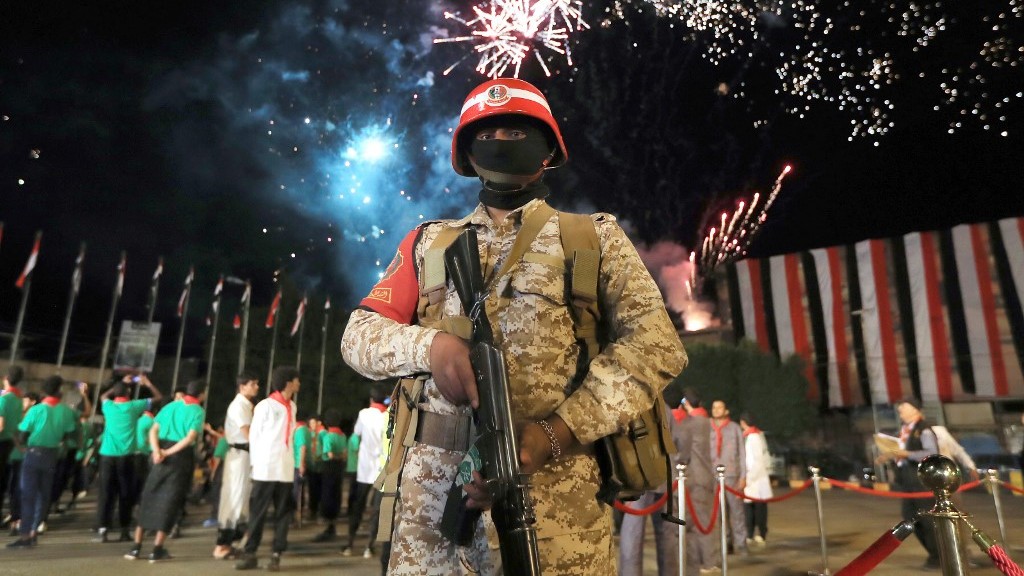
Escalating regional tensions in Yemen have prompted the United Kingdom to announce new military support for Saudi Arabia, as Houthi forces make rapid territorial gains and step up cross-border attacks on the kingdom. The latest round of fighting, which resumed earlier this month after a period of relative calm, has created a rapidly shifting security landscape, with the UK stepping in to answer a Saudi request for assistance.
UK Defence Secretary Luke Pollard confirmed that the Royal Air Force will deploy a Voyager air-to-air refueling aircraft, operating from the UK’s military base in Cyprus, to support Saudi air operations. Speaking to Sky News, Pollard framed the decision as critical to British national interests, stating, “We’re doing it for national security reasons in support of our own national security. In dangerous times, good friends stand together.”
Pollard emphasized that the UK’s military backing would adhere fully to international humanitarian law, while a Ministry of Defence statement clarified that the deployment is intended to support Saudi defensive operations and back Yemen’s internationally recognized legitimate government. The statement added that the Houthis pose a significant threat to Middle East regional stability, and checking their advance aligns with the UK’s core national security and economic interests. This air support deployment follows the earlier movement of UK air defense equipment and military personnel to Saudi Arabia in recent weeks.
The Houthi advance has been swift: the group has seized large swathes of Yemen’s Red Sea coastline in a lightning offensive, giving it control over the strategically vital Bab al-Mandab strait, a key chokepoint for global oil shipping. In response to the decade-long Saudi blockade of Yemen, the Houthis have stepped up drone and missile attacks on Saudi cities, oil infrastructure, and Red Sea commercial shipping. The group has offered to halt all attacks on Saudi territory and Red Sea oil exports in exchange for an end to the blockade.
The resumption of fighting has triggered a severe humanitarian displacement crisis, the United Nations Refugee Agency (UNHCR) confirmed this week. UNHCR spokesperson Babar Baloch announced at a Geneva press briefing that more than 130,000 people have been displaced within Yemen since fighting resumed in early September, and an additional 3,000 have fled across the border to Djibouti. In the coming months, these numbers are projected to rise to 230,000 displaced people inside Yemen and 10,000 refugees in Djibouti, all of whom will require urgent life-saving humanitarian assistance, per UNHCR projections.
Despite increased intelligence and targeting support from the United States for Saudi forces, multiple US sources told CNN that Riyadh has still been unable to reverse Houthi territorial gains. Anonymous US officials told the network that American intelligence has warned for months that the Houthis could attempt to close off this key commercial shipping waterway, echoing Iran’s earlier closure of another critical strategic waterway this year. Despite a decade of Saudi claims that it has effectively trained Yemeni pro-government forces to combat the Houthis, US intelligence assessments still conclude that Saudi-led forces lack the capability to push back the Houthi offensive.
The UK’s long-standing support for Saudi Arabia’s military campaign in Yemen has long been controversial. The original 2015 Saudi-led air intervention into Yemen sparked a war that has killed more than 150,000 people to date, drawing widespread international criticism over civilian casualties and humanitarian harm.