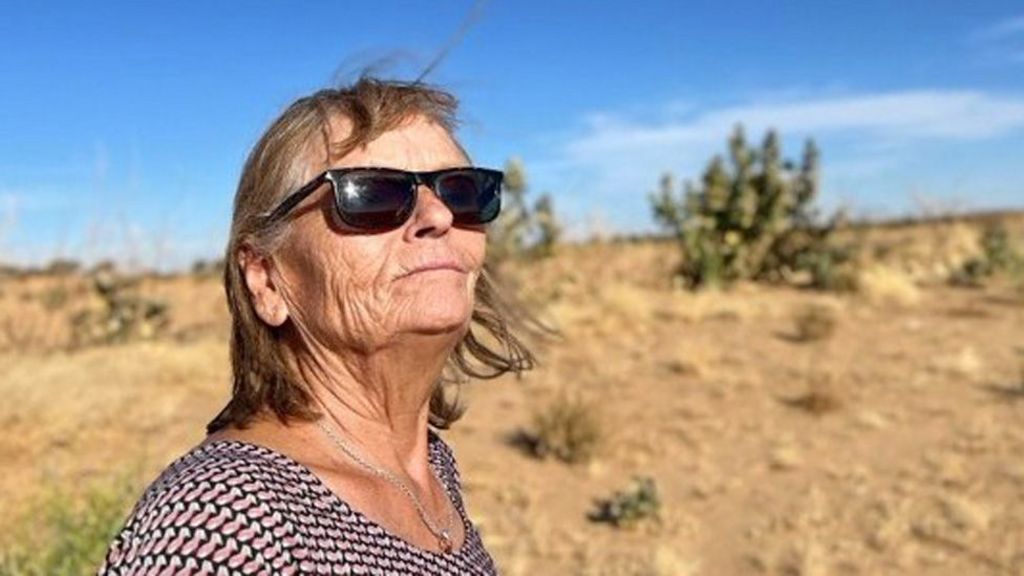
After more than 12 months held captive in Niger, two elderly European women have been released and transferred to Libyan government representatives in the eastern port city of Benghazi. The two hostages, 76-year-old Swiss national Eva Gretzmacher and 69-year-old Austrian national Claudia Abbt, were abducted separately in Agadez, a major city in northern Niger, in two separate incidents that took place in January and April of 2023 respectively.
Public details around the kidnapping and subsequent release remain heavily limited. Authorities have not confirmed the identity of the groups that held the two women, nor have any demands connected to the captivity been made public. Multiple unofficial reports have previously connected the abductions to fighters aligned with the Islamic State militant network, and no information has been shared about the specific conditions that paved the way for the pair’s release.
Footage broadcast by Libya’s local al-Masar TV captured the two women entering a vehicle matching the description of a medical ambulance, before receiving preliminary check-ups and care from a licensed health worker. Speaking through an interpreter in French, the pair publicly expressed gratitude to Khalifa Haftar, the top military commander who controls much of eastern Libya, and his son Saddam Haftar, for overseeing their safe release.
Gretzmacher is no stranger to the region: she worked for years as an international aid worker and built a decades-long life in Niger prior to her kidnapping. Abbt, similarly, had resided and worked as a community outreach worker in Agadez for multiple years before her abduction. According to independent local news outlet Air Info Agadez, a repatriation flight was scheduled to depart Benghazi on Thursday, with an initial stop in Vienna to hand Gretzmacher over to Austrian officials before the aircraft continues to Switzerland to deliver Abbt to her home country’s authorities.
The release comes against a backdrop of long-running instability across both Libya and the broader Sahel region. Libya has been locked in a fragmented political landscape since a 2011 NATO-backed uprising removed longtime authoritarian ruler Muammar Gaddafi from power. The country is currently split between two competing governing authorities: an eastern administration based in Tobruk, which is backed militarily by Haftar’s forces, and a unity government based in the western capital of Tripoli led by Prime Minister Abdulhamid Dbeibah.
For its part, the Sahel region that spans across central West Africa, including Niger, has faced a surging wave of jihadist insurgent violence for more than a decade. Militant groups aligned with both al-Qaeda and Islamic State have carried out thousands of deadly attacks and targeted kidnappings of foreign nationals and local residents across the region. Niger itself also entered a new period of political uncertainty in 2023, when General Abdourahmane Tchiani led a military coup that deposed the country’s democratically elected president, Mohamed Bazoum, placing the nation under full military rule.