As the July 7-8 NATO summit approaches, the Turkish capital of Ankara is bracing for the arrival of leaders from all 32 alliance member states, with host nation Turkey rolling out unprecedented strict security measures and preparing to showcase its dual role as both an independent and core member of the transatlantic bloc. The summit, which will gather global defense leaders including U.S. President Donald Trump at a time of growing rifts within the alliance, comes as Turkey has signaled a deliberate shift back toward closer alignment with its NATO partners after years of unorthodox independent foreign policy.
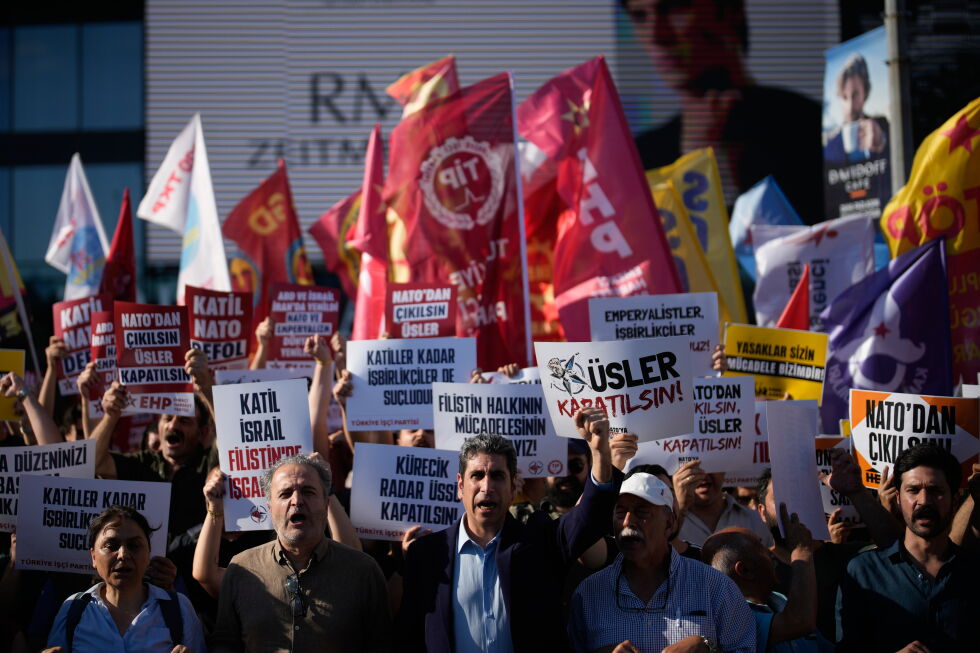
To guarantee the safety of summit attendees and delegations, Turkish authorities have deployed tens of thousands of police officers, placed national air defense systems on high alert, and imposed sweeping restrictions on public activity. All public gatherings, demonstrations, concerts and even graduation ceremonies within the capital have been banned for the duration of the summit, while non-essential public sector workers have been granted administrative leave to reduce traffic and crowd congestion. Major access controls are in place across key city arteries, the presidential complex (where summit meetings will be held), delegation hotels, and both existing and new aviation facilities.
In a pre-summit security sweep, law enforcement officials have detained more than 200 individuals alleged to have ties to extremist organizations including the Islamic State, according to official statements. However, the operation has also drawn criticism after independent reports confirmed that several political activists, lawyers and a local academic were swept up in the detentions. Additional controversy has emerged over restrictions on press and expression: a Turkish court has ordered internet service providers to block access to websites critical of the NATO summit and alliance policy on public order and security grounds, and multiple journalists aligned with Turkish opposition media outlets have been denied official press accreditation to cover the event. Media rights organizations and opposition political figures have decried these measures as excessively restrictive, with former Turkish ambassador and main opposition lawmaker Namik Tan noting that “in the history of the organization, we have never witnessed security measures as stringent and suffocating in a host city for a summit as we are seeing this time in Ankara.”
As part of pre-summit infrastructure upgrades, Turkey has completed conversion of a former military airfield into a purpose-built VIP airport exclusively designed to accommodate arriving heads of state and senior delegation members. Officials confirmed the facility will remain a dedicated VIP airport after the summit concludes and will not open to commercial civilian traffic. Local media has also reported city-wide beautification efforts, including repainting building facades along the motorcade route from the new airport to central Ankara.
For Ankara, a city of nearly 6 million residents with long experience of tight security in response to persistent terrorist threats, the current measures represent an extraordinary expansion of security controls that have significantly disrupted daily life. While some residents have adjusted to the new rules – like personal trainer Selin Karakoc, who expressed relief that her July 5 wedding falls just before restrictions take effect – the sweeping limits on public assembly and expression have sparked debate over the balance between security and civil liberties.
Beyond the immediate security preparations, the summit holds major strategic significance for both NATO and host Turkey. The core agenda for the two-day meeting centers on shoring up alliance unity amid growing tensions between the United States and European NATO members, stoked by Trump’s repeated threats to withdraw from the alliance, cut U.S. troop levels in Europe, and criticism of European allies for failing to back U.S. policy toward Iran and efforts to reopen the Strait of Hormuz. Defense spending commitments and the long-term future of the alliance’s transatlantic bond are also expected to feature prominently in discussions.
Fatih Ceylan, a former Turkish ambassador to NATO and current security analyst at the Ankara Policy Center, noted that the key metric for the summit’s success will be progress in reducing transatlantic rifts. “The important aspect of the meeting is to what extent the rift between the United States and Europe can be healed or narrowed during the summit,” he said. “We should not expect miracles, but nonetheless if there is a convergence of ideas emphasizing the importance of NATO, that should be seen as a success.”
Turkey’s role as summit host is widely credited with securing Trump’s attendance, a point the U.S. president himself acknowledged after a meeting with NATO Secretary General Mark Rutte at the White House, saying “Well, except for the fact that it was being held in Turkey by President Erdogan, I don’t think I would have gone to it.” Trump has long maintained a close personal rapport with Turkish President Recep Tayyip Erdogan, who has positioned the summit as a landmark moment for Turkey’s standing in the alliance.
Erdogan has framed Turkey as a reliable, responsible NATO ally that shoulders unique responsibility on the alliance’s strategically critical southeastern flank, saying he is working to ensure the Ankara summit “will stand as a reference point in NATO’s history.” As a NATO member since 1952, Turkey boasts the alliance’s second-largest standing military after the United States, a rapidly expanding domestic defense industry, and a one-of-a-kind strategic location at the intersection of Europe, the Middle East, the Black Sea and the Caucasus.
Yet Turkey has long walked an independent path within NATO, a track record that has frequently frustrated other alliance members. Ankara has refused to join Western sanctions on Russia, maintains ongoing territorial disputes with fellow NATO member Greece, and purchased a Russian S-400 air defense system that resulted in its expulsion from the U.S.-led F-35 stealth fighter program in 2019. Turkey also delayed the accession of Finland and Sweden to NATO for more than a year, only dropping its opposition after securing major concessions on counter-terrorism cooperation and the lifting of European arms export restrictions. It has also previously blocked senior NATO leadership appointments over unmet policy demands.
But Turkish analysts point out that this independent streak has also allowed Turkey to play a unique mediating role in regional conflicts, most notably brokering the 2022 Black Sea Grain Initiative that allowed critical grain exports to leave Ukrainian ports amid Russia’s full-scale invasion, and supporting recent diplomatic efforts to de-escalate tensions in the Middle East.
Ankara has itself long expressed frustration with NATO allies, particularly over what it views as insufficient alliance solidarity during the 2016 failed coup against Erdogan, and over arms export restrictions imposed after Turkey’s military intervention in northern Syria. Murat Aslan, an analyst with Ankara-based think tank SETA, argued that Turkey’s history of tense relations with the U.S. and Europe forced it to develop an independent approach to alliance politics – a model that could now help bridge current transatlantic tensions, as European powers also push for their own strategic autonomy from the U.S. “Turkey can help NATO navigate U.S.–Europe tensions by showing how to ‘balance’ independence with alliance commitments,” Aslan said.
In recent months, Turkey has signaled a clear shift back toward closer alignment with NATO. The strategic value of the alliance was underscored earlier this year when NATO missile defense systems intercepted four missiles launched from Iran that crossed into Turkish territory during the Iran war. In a sign of alliance solidarity, Italy and Germany deployed additional air defense systems to Turkey in the weeks leading up to the summit to bolster security against potential regional threats.
Hamish Kinnear, principal Middle East and North Africa analyst at risk intelligence firm Verisk Maplecroft, wrote in a recent research note that “Turkey wishes to distinguish itself as a foreign policy actor that is independent of NATO and the West. While Turkey is not abandoning its balancing approach, it is tilting closer to the West, primarily because of NATO.”
For the alliance, the Ankara summit will test whether members can put longstanding rifts aside to present a unified front at a time of global uncertainty – while for host Turkey, it is an opportunity to cement its role as a core, indispensable member of the transatlantic alliance even as it retains its independent foreign policy voice.