In the weeks following the July NATO summit held in Ankara, Turkish government officials have privately concluded that an Israeli intelligence report warning of an Iranian plot to assassinate then-U.S. President Donald Trump during the event was a deliberate fabrication designed to disrupt ongoing U.S.-Iran negotiations, multiple sources familiar with the internal discussions told Middle East Eye.
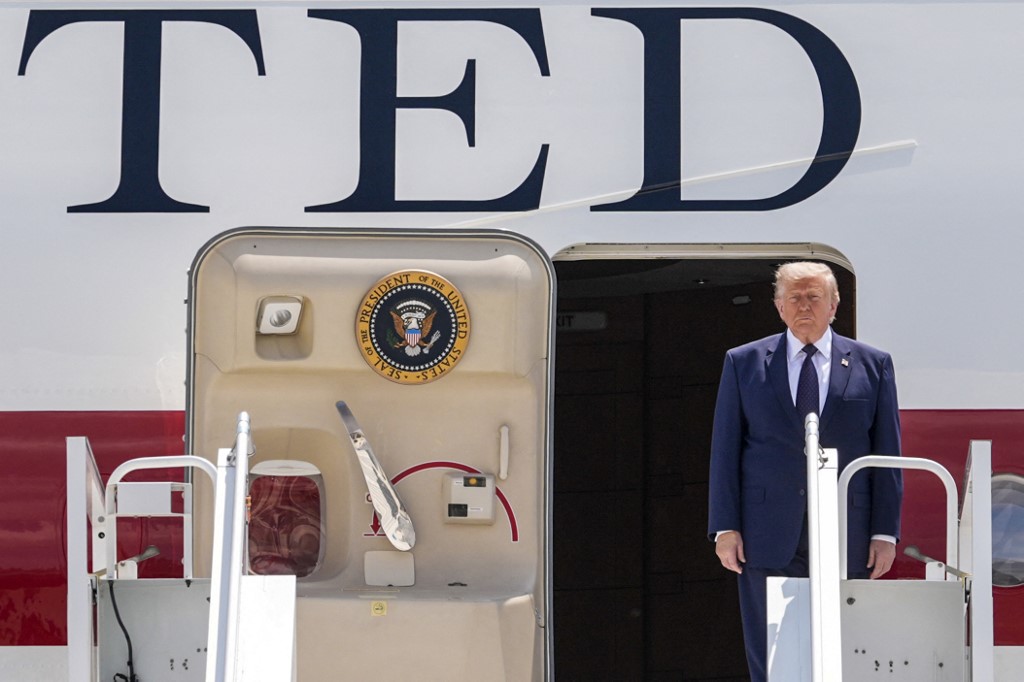
The high-stakes summit, held on 7 and 8 July, put Ankara on total security lockdown. The Turkish government rearranged civilian schedules, granting all public servants a full week of administrative leave to clear city streets, blocked major roadways and pedestrian corridors, and repurposed the military-controlled Etimesgut Air Base (dubbed Ankara Airport for the summit) to cut travel time for visiting heads of state from the tarmac to the summit venue to just 10 minutes. On 8 July, around 2:00 p.m., reporters on the ground already noted an unusual increase in security deployments around the airbase, where Trump’s presidential aircraft was parked.
It was shortly after this visible buildup that U.S. intelligence officials shared the Israeli-originated threat assessment with their Turkish counterparts: the report claimed an Iranian covert operations unit planned to target Trump’s new Air Force One with Man-portable air-defense systems (Manpads) fired from within a 1-kilometer radius of the runway. Unlike Ankara’s main international hub Esenboga Airport, the repurposed Ankara Airport is ringed by civilian residential and commercial buildings, some sitting as close as 500 meters from the runway, creating an immediate vulnerability that pushed security teams to act fast.
The U.S. Secret Service, which already viewed the threat as credible amid two prior alleged Iranian plots targeting Trump, moved quickly to revise security arrangements. First, officials shifted Trump’s departure point from Ankara Airport to Esenboga Airport, where civilian structures sit much farther from airport perimeters. They then swapped the new, unprotected Air Force One for the older model, which is outfitted with integrated air defense systems. According to reporting from The Washington Post, the Secret Service went a step further: after Trump boarded the older Air Force One, he was secretly moved to an accompanying U.S. government C-32 transport plane via a borrowed Turkish catering vehicle, a movement captured in a viral social media post from journalist John Hudson.
Turkish officials, who coordinated last-minute landing approvals for the extra C-32 and accommodated the abrupt schedule changes, told MEE that the chaotic last-minute shifts immediately raised red flags in Ankara. The threat arrived at an unusually sensitive moment for regional diplomacy: Trump was actively engaged in negotiations with Iran to end the ongoing war and reopen the strategically critical Strait of Hormuz, a position that ran directly counter to the agenda of Israeli Prime Minister Benjamin Netanyahu, who had publicly pushed for a resumption of full hostilities against Iran, including expanded strikes on Iranian energy infrastructure and a renewed campaign of targeted assassinations against Iranian leadership.
During Trump’s pre-summit meeting with Turkish President Recep Tayyip Erdogan, sources present told MEE that Trump repeatedly stated the war with Iran was effectively over and expressed optimism about the outcome of ongoing negotiations. Trump also signaled he was prepared to roll back U.S. sanctions imposed on Turkey over its 2019 purchase of Russian-made S-400 air defense systems, and move forward with a long-delayed sale of F-35 fifth-generation fighter jets to Ankara – a move Netanyahu has repeatedly opposed, arguing it would erode Israel’s decades-held Qualitative Military Edge in the Middle East.
Turkish assessments of the Israeli intelligence report conclude it was likely a deliberate ploy by Netanyahu’s government to position itself as a trusted ally warning Trump of danger, derail the nascent U.S.-Iran negotiations, and damage the warming relationship between Trump and Erdogan. While Turkish security teams took the threat seriously and coordinated fully with U.S. counterparts to implement new precautions, senior Turkish officials quickly became convinced the plot could not be real.
Ankara’s skepticism is rooted in decades of regional security dynamics: though Iran has targeted exiled dissidents on Turkish soil with small-scale attacks using simple firearms, it has never attempted a complex, high-profile operation involving heavy weaponry like Manpads in Turkish territory. Pulling off such an attack would require moving man-portable missiles through multiple layers of NATO summit security checkpoints and roadblocks, establishing safe houses and covert transit routes in a city under total lockdown – a feat that Turkish intelligence views as functionally impossible. Any successful attack would also force Turkey into an open conflict with Iran, a neighbor with which Ankara has maintained stable diplomatic relations throughout the war, and for which Iran has already thanked Turkey for refusing to back what it calls a Western-backed Kurdish insurrection in western Iran.
An Ankara-based security insider added that the timed leak of the Secret Service’s emergency security operation just one month after the summit only reinforced Turkish suspicions. “I guess they need heroes for an attack that never happened and, most likely, was never planned,” the insider told MEE.
Middle East Eye has reached out to the White House and Israeli Foreign Ministry for comment on the allegations, and had not received a response at the time of publication.