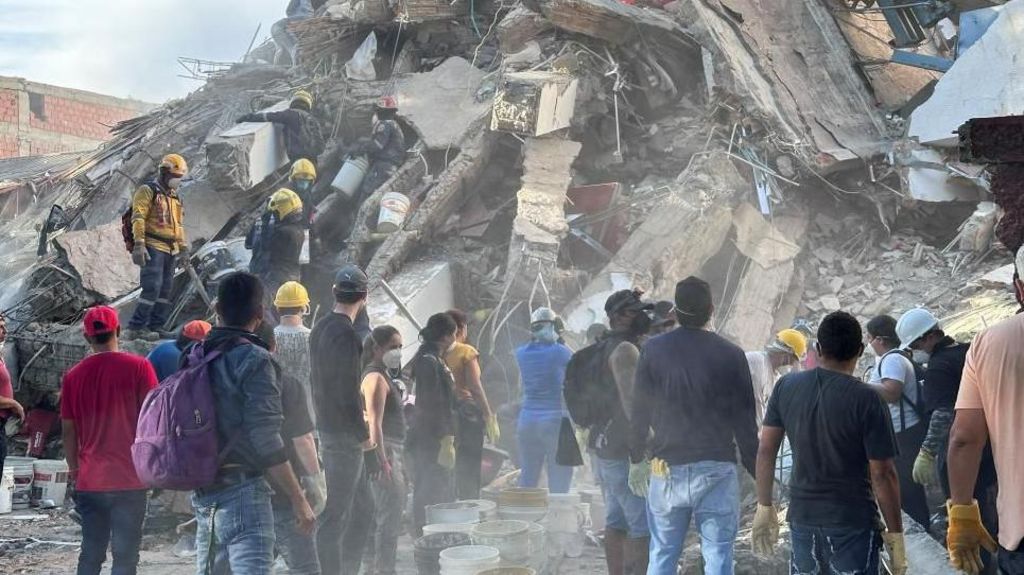
A catastrophic 7.4-magnitude earthquake struck western Colombia early Monday morning, triggering a massive race against time for rescue teams working to pull trapped survivors from collapsed buildings and rubble piles across the hardest-hit regions.
The powerful tremor hit at 7:34 a.m. local time (12:34 GMT), with shaking felt across hundreds of miles of Colombian territory. As of Tuesday, more than 70 aftershocks have already been recorded by Colombia’s geological service, including two 3.6-magnitude tremors that struck early Tuesday in San José del Palmar and Santander, leaving communities on edge and disrupting early recovery efforts.
Discrepancies have emerged in official casualty counts: the national confirmed death toll stands at 181, but aggregated data from local authorities puts the fatalities higher, at more than 240. Nearly 2,600 people have been confirmed injured across the country, and almost 200 people remain unaccounted for. The disaster has also left a massive trail of infrastructural damage: more than 1,100 homes have been completely destroyed, and an additional 8,000 have suffered partial damage. Thousands of residents spent Monday night camping outdoors in affected cities including Cali and Pereira, either because their homes were destroyed or out of fear of additional structural collapses driven by aftershocks.
The worst damage has been concentrated in two major cities: Cali, a population center of 2.2 million, has recorded 95 fatalities, while nearby Pereira has reported 79 deaths. In Cali, local authorities have established a unified command center to coordinate inter-agency rescue efforts. Mayor Alejandro Eder confirmed that as of Tuesday, 239 people remained trapped in rubble, 949 residents had been injured, and 45 structures across the city had fully or partially collapsed. One of the most tragic incidents unfolded at a city hospital, where several upper floors — including units dedicated to pediatric care — caved in, trapping multiple patients. In the northern Cali neighborhood of Calima, a section of the local Gimnasio Calima school collapsed, killing four children and seriously injuring dozens more; 30 children in total were transferred to emergency care centers. To prevent looting amid the chaos, Mayor Cadavid of the municipality has implemented an overnight curfew that runs from 8 p.m. local time through 6 a.m. Wednesday.
In Pereira, the second hardest-hit city, officials have declared a car-free day to clear streets for unimpeded search-and-rescue operations, with hundreds of volunteer responders joining professional rescue teams to clear rubble. A resident of the city’s Parque Industrial neighborhood described widespread chaos and shock to BBC Mundo, saying, “It’s impossible to get around the city center. In Bolívar Square, at least one building collapsed. Furthermore, there are structures where buses and trucks are trapped, and people are afraid those structures will collapse as well. We’re all in shock. It was really awful.”
Smaller casualties and damage have been recorded in other nearby municipalities: Manizales Mayor Jorge Eduardo Rojas confirmed five deaths and 60 partially or fully collapsed buildings. Rojas urged residents to avoid spreading unconfirmed chain messages and social media posts from unknown sources, warning that false information could stoke unnecessary public panic amid ongoing aftershock risks.
In response to the disaster, Colombian President Abelardo de la Espriella has declared a national state of emergency, and toured the hardest-hit area of Pereira on Tuesday to deliver an official update on the response. The international community has already begun offering support: UN Secretary-General António Guterres issued a statement expressing solidarity with the Colombian people and government, confirming UN teams are working to support national response efforts. The U.S. administration, which backed President de la Espriella’s election earlier this year, has announced a $15.5 million emergency donation to support recovery. Spain’s Foreign Ministry confirmed that 164 Spanish citizens remain unaccounted for, though there are no confirmed reports of Spanish fatalities or injuries. Offers of assistance have also been extended by neighboring countries including Ecuador, Brazil, El Salvador, and Venezuela.