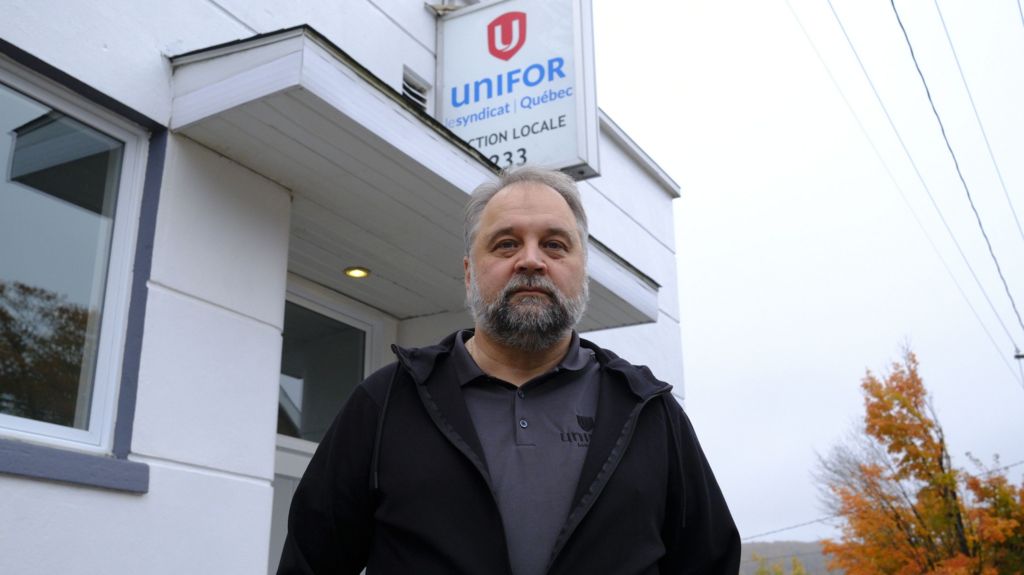
Nestled along the Ottawa River’s Quebec shore, the small, forest-ringed municipality of Témiscaming was literally built around its sprawling pulp and paper mill more than 100 years ago, anchored by the region’s dense stands of pine, birch, spruce, and fir. For generations, the facility served as the town’s unshakable economic backbone — until a collapse in Canada-US trade negotiations and the sweeping 50% tariffs imposed by the Donald Trump administration on $28 billion worth of Canadian goods last August pushed its American owner, Rayonier Advanced Materials (RYAM), to announce an indefinite “economic shutdown” in early October. All 360 mill employees were abruptly put out of work, kept temporarily afloat only by partial income disbursements from federal government tariff-relief programs. What began as a sudden layoff quickly unspooled into an existential crisis for the entire community. Property values plummeted virtually overnight, “For Sale” signs now line the yards of most modest middle-class homes, and residents fear the cascading collapse of local services: grocery store staff, hospital personnel, and other essential workers could soon flee the vanishing local economy, leaving Témiscaming a desolate ghost town. For lifelong local resident Nadine Suley, the closure is far more than a lost job. A self-described non-urban dweller who joins dozens of townspeople each fall for the short moose hunting season to stock up on free, sustainable meat for the winter, she describes the US tariffs as a “personal attack” on her community’s very way of life. “It’s not just a job. It’s our home,” she explains. National economic data paints a deceptively steady picture of Canada’s performance amid the ongoing US trade war: the national unemployment rate has hovered around 6.5%, paired with slow but consistent GDP growth. But beneath that aggregate stability lies acute, concentrated pain for sectors directly targeted by steep US duties: steel, aluminum, automotive, and the forestry, pulp, and paper industries that define towns like Témiscaming. Local union leader and third-generation mill worker Stéphane Lefebvre points out that a 10% job loss in major metro areas such as Toronto, Montreal, or Vancouver would spark wall-to-wall national media coverage and overwhelming political pressure for swift intervention — but rural forestry communities have been largely sidelined as the federal government prioritizes support for higher-profile tariff-hit industries. The ripple effects are already spreading far beyond the mill gates: one local independent contractor has already laid off 13 employees, and sawmills, regional trucking firms, and other forestry-linked businesses face cascading collapse. This is not the first time Témiscaming has stared down total erasure. In 1973, a previous American mill owner threatened permanent closure, prompting a historic grassroots mobilization: workers and local managers coordinated a voluntary 10% pay cut to collectively purchase the facility, rebranding it as Tembec, a proudly Quebec-owned international enterprise that expanded operations across North America and into France. Now, the current generation of residents is hoping history will repeat itself, organizing a broad local coalition to raise funds and buy the mill back from RYAM, which acquired the facility in 2017. “We’re hoping that lightning will hit twice,” Lefebvre says from the town’s packed union hall. But local leaders emphasize the grassroots effort cannot succeed without targeted, substantial support from Prime Minister Mark Carney’s federal government and the provincial Quebec government, in the form of expanded tariff relief, low-interest financing, or targeted industry grants. Suley notes Carney ran and won on a public platform prioritizing “buy local” policies and support for Canadian blue-collar workers, and backing Témiscaming’s community buyout would be a tangible, high-impact way to deliver on that campaign promise. RYAM has declined all public comment on potential sales of the facility or prospective buyers, per a statement shared with the BBC. Témiscaming Mayor Alain Gauthier places no blame on RYAM for the shutdown, framing the US tariffs as a deliberate “bomb to shut down our Canadian manufacturing capacity.” He has called on Ottawa to impose retaliatory duties on currently tariff-free US wood panel imports entering the Canadian market, criticizing the federal government’s response as drastically underpowered. “Politicians keep saying we are in an economic war with the US, but in reality we see absolutely no evidence of war measures being taken,” he argues. “We feel we showed up to a fight with kid’s water guns.” The gap in policy focus is starkly visible in recent federal spending announcements: the Carney government rolled out a nearly C$9 billion support package for Ontario’s steel and automotive sectors last week, earmarked for facility modernization, expanded domestic demand, and new overseas market development, while Industry Minister Mélanie Joly publicly threatened major Canadian steel producer Stelco with financial penalties or forced asset sales if it followed through on planned layoffs of 500 workers amid tariff pressure. Bloc Québécois MP Sébastien Lemire, who represents the Témiscaming riding, has publicly voiced deep alarm over what he describes as federal inaction to protect the town and Quebec’s broader forestry industry. A spokesperson for Minister Joly pushed back on those criticisms in an official statement, noting the government has already allocated C$400 million in targeted support for remote and rural forestry operations, plus new cash-flow support programs for tariff-impacted businesses pivoting away from overreliance on US markets. The statement added that officials “are actively working with all parties involved to find a viable solution to the issues facing the company, while responsibly managing Canadians’ dollars.” The Témiscaming mill produces food-grade paperboard for frozen food packaging and the scratch-off card stock used in convenience store lotteries across North America, with roughly 75% of its total output exported to the United States. The Trump administration has repeatedly defended the steep 50% tariffs as a policy tool to revitalize domestic US manufacturing and protect American blue-collar jobs, even as the measures cause widespread collateral damage to cross-border communities. Eighty-something Frank Dottori, the retired former Tembec CEO who was a lead organizer of the 1973 community mill buyout, knows this crisis firsthand. He recalls being “politely ejected” from the office of the then-Quebec premier when he first sought public support for the seemingly impossible worker-led purchase, before the coalition prevailed with backing from the union and a charismatic, seasoned ex-industry executive. Dottori argues the current generation of organizers will need that same level of bold, decisive leadership to pull off a repeat victory, while also stressing that near-term relief from US tariffs is non-negotiable to restore the mill’s long-term operational viability. Many local residents are clinging to cautious hope that upcoming US midterm elections will force Trump — whose public approval ratings have slipped in recent national polls — to roll back some of the Canadian import duties, after successful lobbying from Maine Republican Senator Susan Collins (facing a tight re-election race) led to narrow, targeted tariff carve-outs for some Canadian goods last week, though none apply to the Témiscaming mill’s product lines. Residents are racing to reach a resolution before the harsh Quebec winter sets in, when sub-zero temperatures could freeze and crack idle plant equipment, causing millions in avoidable damage that would make reopening the facility functionally impossible. For Lefebvre and his fellow organizers, the fight is already in its final stretch. “We’re in Game Seven right now,” he says. “We’re gonna play till the last whistle.”
Trump’s tariffs could shutter this Canadian town – its residents are fighting to save it