A coalition of six plaintiffs comprising veteran journalists, free speech advocates, and constitutional scholars, represented by the Knight First Amendment Institute and Yale Law School’s Media and Information Access Clinic, has filed a formal civil lawsuit against the Trump administration in a New York federal court, challenging a series of selective press access restrictions implemented since Donald Trump took office for his second presidential term in January 2025. The legal action follows a wave of high-profile conflicts between the White House and established mainstream U.S. news outlets, stemming from the president’s longstanding public accusations that many legacy media organizations disseminate so-called “fake news.”
Court documents submitted as part of the new legal challenge argue that the White House’s targeted revocation and restriction of press credentials directly violate core protections enshrined in the First Amendment of the U.S. Constitution, which guarantees broad safeguards for freedom of speech and a free independent press. The six plaintiffs state in their filings that without unfettered access to official briefings, events, and information distributed through the White House press operation, they can no longer fulfill their professional obligations to deliver accurate, timely public interest reporting to their audiences. The policy, they emphasize, not only harms journalistic work but systematically deprives the general public of critical, unfiltered information about government activities. The filing further warns that the arbitrary nature of the restrictions creates a pervasive chilling effect: reporters covering the Trump administration are forced to self-censor critical coverage out of fear that even a single offhand or unflattering remark about the president could lead to their press access being summarily revoked without due process, distorting the integrity of all White House-related news coverage.
Unlike many civil litigation cases, the new lawsuit does not seek financial damages for the plaintiffs, only a formal judicial ruling that the administration’s selective press ban policy is unconstitutional, a permanent injunction blocking the White House from continuing to enforce such arbitrary access restrictions, and an order requiring the administration to cover the plaintiffs’ legal fees if the case is decided in their favor. The BBC has reached out to the White House for an official statement on the new lawsuit, but no response has been issued as of press time.
This legal action is the latest in a string of escalating disputes between the second Trump administration and mainstream U.S. media. Last month, the White House moved to fully bar reporters from CNN, Politico, and MSNOW from White House premises, a move that prompted dozens of other news organizations to temporarily pause participation in official White House press pools in a coordinated protest. The three affected outlets filed their own separate legal challenge, arguing the White House was illegally discriminating against their journalists purely based on the editorial content of their coverage. A federal judge subsequently issued a temporary restraining order mandating the White House restore full press credentials to the affected reporters while that lawsuit proceeds, and the journalists were allowed back on White House grounds shortly after the ruling.
Despite that preliminary court order, the administration has continued to enforce selective, targeted access restrictions against other outlets, drawing widespread condemnation from U.S. press freedom advocacy groups. CNN has publicly warned it will pursue additional legal action after its reporters were repeatedly denied boarding privileges on Air Force One to cover presidential travel. Just last week, the White House banned a correspondent from UK-based outlet The Independent from traveling with the presidential delegation to cover Trump’s official trip to Iowa, after the president publicly berated the reporter during an open press conference.
The administration has simultaneously expanded press access for conservative bloggers, social media influencers, and other non-traditional “new media” figures, framing the policy shift as an effort to introduce more diverse perspectives into White House press coverage. In February 2025, the White House also seized direct control of the long-running White House press pool — the small rotating group of journalists granted exclusive close access to the president for events not open to the full press corps — breaking with a more than 100-year-old precedent that had delegated pool management to the independent White House Correspondents’ Association. That same month, the administration restricted Associated Press journalists from entering high-security limited-access spaces including the Oval Office and Air Force One, in retaliation for the outlet’s editorial decision to use the standard geographic term “Gulf of Mexico” instead of the rebranded “Gulf of America” the Trump administration has mandated. The AP has filed its own separate First Amendment lawsuit over that restriction, which remains active in the courts.
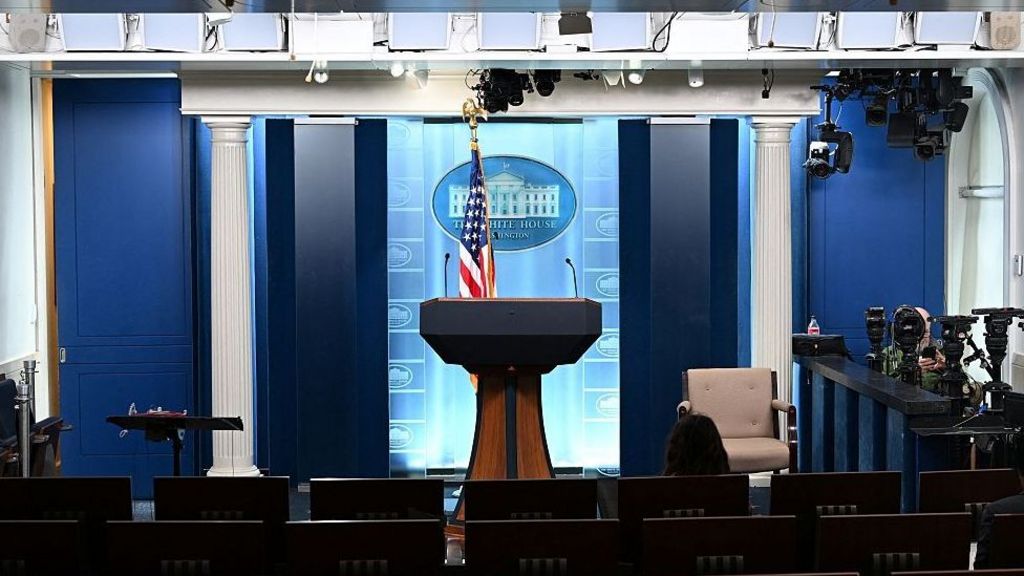
Most recently, Trump confirmed via a post on his Truth Social platform that he is actively evaluating a plan to relocate the entire White House press corps off the main White House grounds, citing a need to repurpose the space currently occupied by the James S. Brady Press Briefing Room to rebuild a long-shuttered swimming pool underneath the facility.