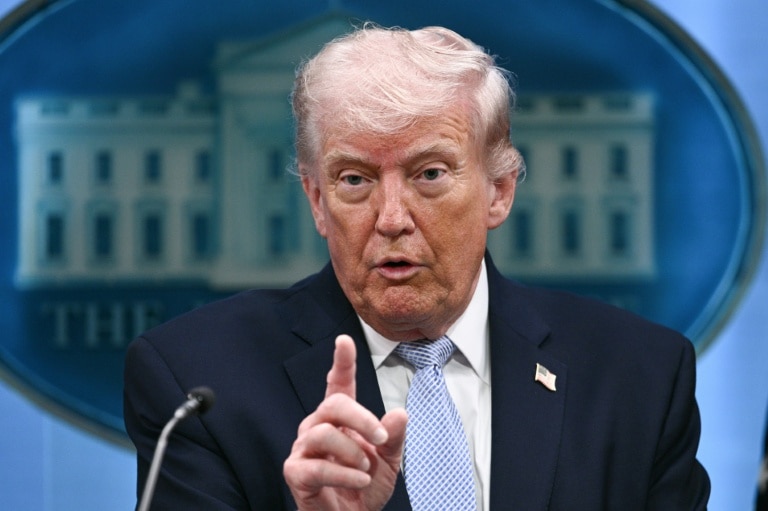
Just hours after a last-minute ceasefire agreement between the United States and Iran was announced, U.S. President Donald Trump sat down for an exclusive brief telephone interview with Agence France-Presse (AFP), where he framed the two-week truce as an unqualified win for Washington. The deal came together barely 60 minutes before Trump’s self-imposed deadline for devastating military strikes against Iran was set to expire, pulling the two nations back from the brink of full-scale conflict after more than a month of joint destructive attacks by the U.S. and Israel.
When asked directly whether he could claim victory following the truce, Trump responded firmly to AFP: “Total and complete victory. 100 percent. No question about it.” The upbeat assessment from the Republican leader comes even as Iranian officials have publicly framed the ceasefire as a victory for their own side, and lingering public uncertainty remains over the exact terms both nations have committed to. One major point of ambiguity centers on the future of the Strait of Hormuz, a critical global chokepoint for oil shipments that has seen major disruption during the conflict. Despite the open questions, Trump asserted that the agreement lays solid groundwork for a more durable long-term settlement.
“We have a 15 point transaction, of which most of those things have been agreed on. We’ll see what happens. We’ll see if it gets there,” Trump told reporters. He had previously outlined on his Truth Social platform that Iran had submitted a 10-point proposal that he deemed “workable.” When pressed on whether he would revive his earlier threats to destroy Iran’s civilian infrastructure — including power plants and critical bridges — if the ceasefire collapses, Trump declined to confirm or deny the position, saying only “You’re going to have to see.”
Another core unresolved issue is the fate of Iran’s existing stockpile of enriched uranium, a key flashpoint that Trump has previously cited as a central motivation for the conflict, with the White House aiming to ensure Iran can never develop a nuclear weapon. While the president offered no concrete details on how the material will be handled under the new deal, he insisted the issue would be resolved appropriately. “That will be perfectly taken care of, or I wouldn’t have settled,” Trump said.
The ceasefire, brokered in part through diplomatic mediation by Pakistan, caps weeks of escalating tensions that drew global concern over regional stability. Trump credited Chinese diplomatic pressure for helping convince Tehran to come to the negotiating table, telling AFP “I hear yes” when asked if Beijing had played a role in pushing its long-time ally Iran to pursue talks.
The confirmation of Chinese involvement sets the stage for a highly anticipated bilateral summit between Trump and Chinese President Xi Jinping, scheduled for mid-May in Beijing. The meeting was originally planned for early April, but Trump postponed it, citing a need to remain in Washington to oversee U.S. military operations related to the Iran conflict. China maintains complex regional ties: it is one of Iran’s closest international partners, the largest buyer of Iranian crude oil (most of which transits the Strait of Hormuz), while also holding deep economic connections to Gulf Arab states and repeatedly condemning Iranian attacks on those nations in recent months.