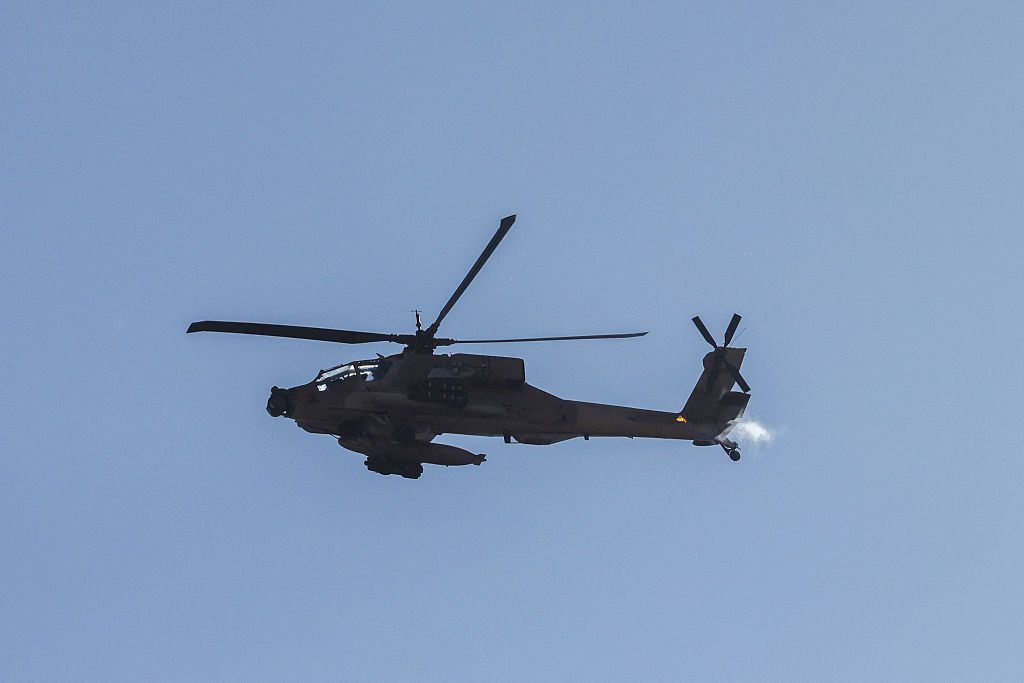
In a sharp escalation of tensions between Washington and Tehran, former President Donald Trump has publicly blamed Iran for shooting down a U.S. Army AH-64 Apache attack helicopter operating near the Strait of Hormuz, pledging a U.S. military response would follow out of what he called “national necessity.”
Both crew members on board the downed aircraft survived the incident and were pulled from regional waters unharmed in a rescue operation led by an uncrewed American surface drone, senior U.S. military officials confirmed to the BBC. U.S. Central Command (Centcom), the U.S. military’s regional command overseeing operations across the Middle East, released a formal statement Tuesday confirming the pair of soldiers had been safely extracted roughly two hours after the helicopter went down off the coast of Oman during a routine maritime patrol.
“There were two pilots involved, both are safe and uninjured,” Trump wrote in a post Tuesday to his Truth Social platform. “Nevertheless, the United States must, of necessity, respond to this attack.”
The downing marks the first complete loss of a U.S. Apache helicopter since open conflict between the U.S. and Iran began, and it comes at a critical diplomatic juncture: just days prior, Trump stated that Washington was in “the final throes” of negotiating a new deal with Tehran to end the ongoing regional standoff.
Centcom’s official account of the incident confirmed the timeline, noting the rescue was completed at 19:33 EDT (23:33 GMT) Monday, with the operation led by U.S. Naval Forces Central Command and the 82nd Airborne Division, backed by additional support from U.S. Air Force, U.S. Navy, and 5th Fleet Task Force 59 units. A Centcom spokesperson later clarified that the actual recovery of the two crew members was carried out by an unmanned surface drone operated by Task Force 59, a Bahrain-based special unit launched in 2024 that specializes in integrating unmanned systems with human operators to strengthen maritime security across the Middle East.
Minutes ahead of Trump’s public statement on the incident, Iran’s top nuclear and diplomatic negotiator Mohammad Baqer Qalibaf posted a stark warning on his own social media channel, signaling Tehran’s rejection of any Western diplomatic coercion. “We prefer the language of diplomacy, but we speak other languages far more fluently,” Qalibaf wrote. “Break your commitments, and we’ll switch to what we speak best. You ride the horse you saddled!”
As of Tuesday, the White House has not released any details on what form a U.S. response to the incident could take, leaving regional allies and global markets bracing for further escalation in one of the world’s most critical energy transit chokepoints.