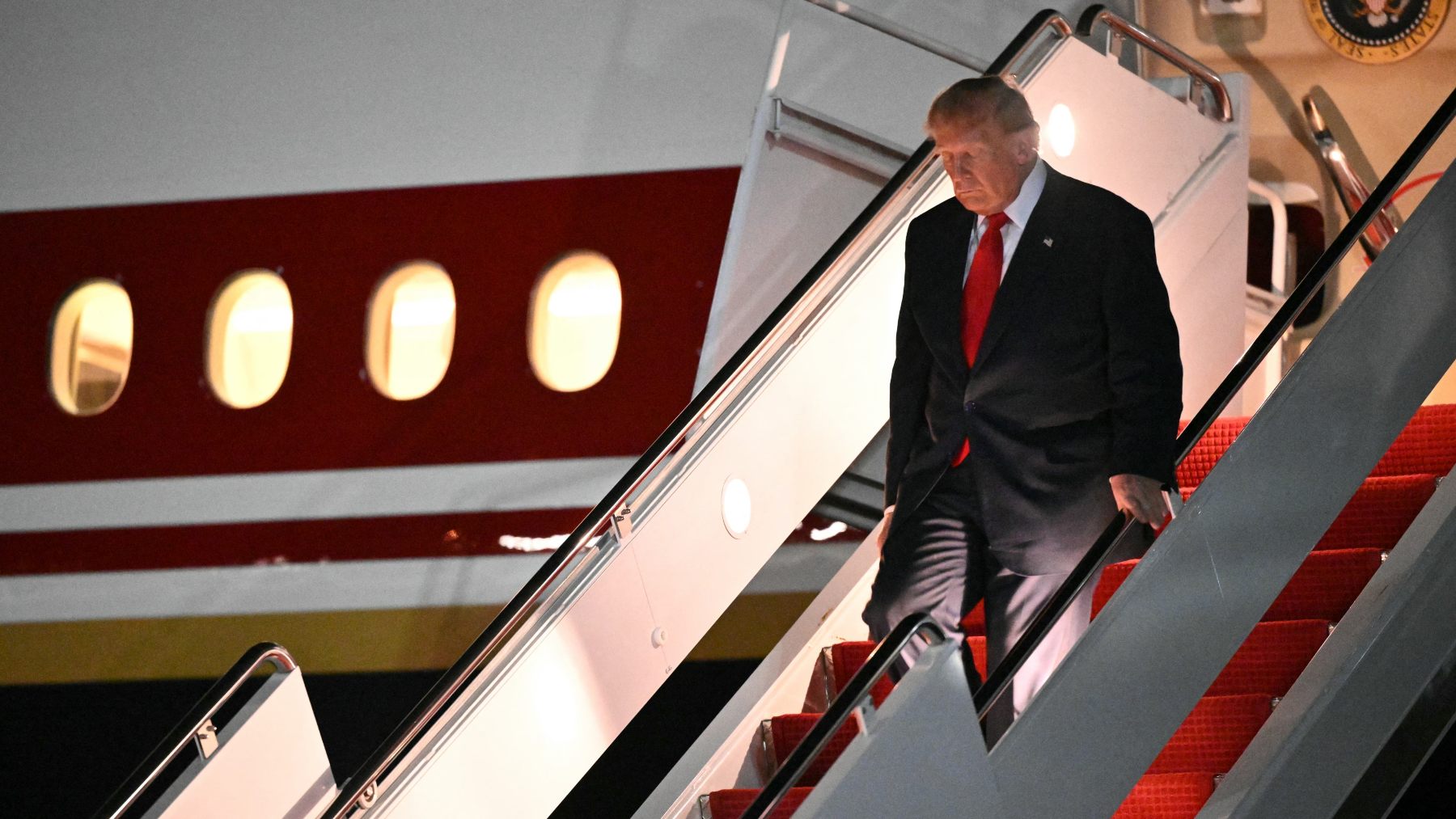
In a press briefing held October 9, former US President Donald Trump has kept the possibility of additional military action against Iran on the table, as escalating clashes in Yemen and a wave of Houthi attacks targeting Saudi Arabia have triggered a sharp new surge in regional hostilities. When pressed by reporters on whether any potential military strike against Iran would be delayed until after the November 3 midterm elections, Trump offered a guarded, ambiguous response, avoiding a clear commitment to either an immediate operation or a post-election timeline.
“We’ll see,” Trump told reporters, adding that “they’re failing badly. Their country is failing badly. The military is defeated. They have no navy, they have no air force. They have 300 percent inflation, and Iran is in very bad shape.”
The former president’s comments, documented in the official press briefing transcript, contained no concrete timeline for any potential US action, nor any specifics on what form such military intervention could take. This update comes amid already elevated tensions, following the February 28 launch of joint military operations against Iran by the United States and Israel. Tehran has responded to the offensive with a wave of missile and drone strikes across the Middle East, while disruptions to commercial shipping traffic through the Strait of Hormuz have put global energy markets at severe risk.
The conflict has spilled beyond Iran and Israel into Yemen, where Houthi forces have carried out repeated attacks on commercial navigation through the strategically critical Bab al-Mandeb Strait, a key chokepoint for global trade. Trump issued a formal condemnation of Houthi attacks targeting Saudi Arabian territory, specifically reacting to a recent strike on Riyadh’s King Khalid International Airport by saying “It’s not good. It’s not a good thing.”
According to Saudi Arabia’s General Authority of Civil Aviation, three Saudi citizens were killed in two separate attacks targeting King Khalid International Airport and a commercial Saudia aircraft on Thursday. While Saudi authorities have not officially named the perpetrator, Yemen’s Houthi movement claimed responsibility for the airport missile strike, the Associated Press reported. This attack marked the latest in a series of strikes on Saudi aviation infrastructure this week, which have also hit Abha International Airport. Combined, the incidents have left three civilians dead and 36 others injured, Al Jazeera reported, citing Saudi officials.
In response to the escalating Houthi attacks, Yemeni government forces aligned with the Saudi-led coalition have launched a major new offensive as part of their ongoing “Dawn of Yemen” campaign. On Thursday, Yemeni government officials announced they had carried out “precise targeting operations” against Houthi military positions across multiple front lines. The Saudi-led coalition, which backs Yemen’s internationally recognized government, confirmed Friday it had conducted a large-scale joint operation against Houthi-held territory, claiming it had destroyed 136 separate military targets in areas controlled by the group.
Brigadier General Majed Abdullah al-Nadhib, a spokesman for the Yemeni military, reported that government forces conducted more than 2,750 individual targeting strikes against Houthi positions over the 24-hour period ending Thursday. He claimed that more than 1,400 Houthi fighters had been “neutralized” in the operations, and more than 250 military vehicles and pieces of Houthi equipment were either destroyed or damaged.
The current escalation of fighting follows a renewed push by pro-government forces to recapture strategic territory along Yemen’s western coast and near the Bab al-Mandeb Strait. The United Nations’ special envoy for Yemen issued a stark warning Friday that the country has now returned to full-scale, widespread conflict, with active fighting spreading across multiple front lines, according to the UN Department of Political and Peacebuilding Affairs.
Saudi Arabia has formally called on the UN Security Council to intervene to address the escalating violence, warning that Houthi attacks on civilians and civilian infrastructure, paired with repeated threats to international maritime navigation, could create destabilizing spillover effects that extend far beyond Yemen’s borders.