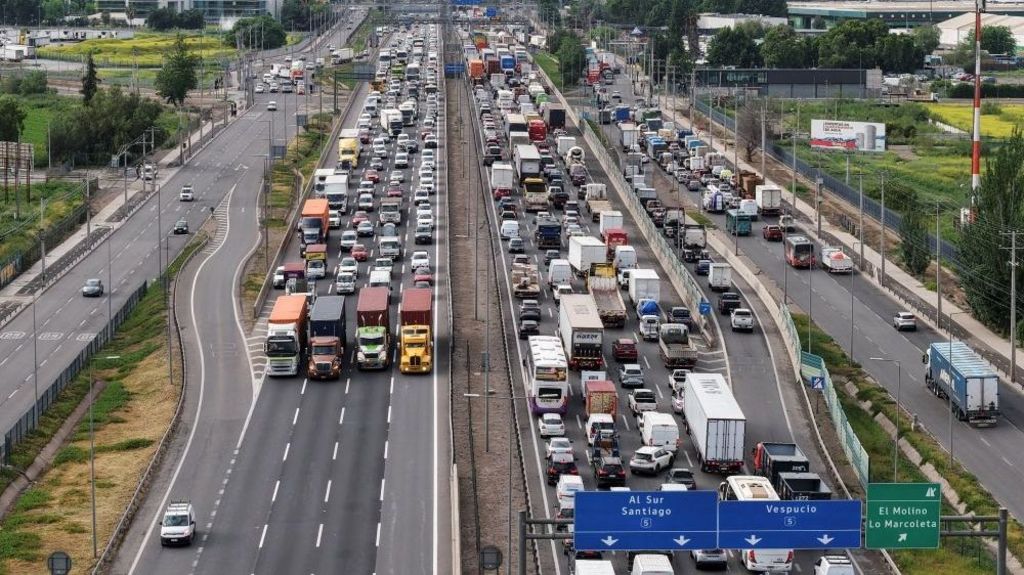
Snarled traffic and miles-long queues have paralyzed critical highway corridors across Chile, as hundreds of lorry and bus operators stage coordinated rolling blockades to demand urgent relief from skyrocketing diesel costs that have pushed many small transport businesses to the brink of collapse. The wave of industrial action kicked off on Tuesday, with convoys of heavy goods vehicles and intercity buses occupying key traffic lanes to bring major cross-country routes to a near standstill. The demonstrators are organized by two leading groups: Fuerza del Norte, the trade union that represents roughly 80% of Chile’s lorry driver workforce, and the grassroots No+TAG civic movement, which advocates for fair transport-related costs for road users. The root of the unrest is a 74% surge in average diesel prices recorded since March, a spike that organizers link to broader global market volatility stoked by ongoing geopolitical tensions stemming from the conflict in Iran. Initial talks between senior government representatives and protest leaders on Tuesday ended without any mutually acceptable compromise, prompting organizers to confirm the strike action will continue indefinitely. “There is no common ground with the government that offers a viable path to fair solutions for all affected parties,” Andrés Alarcón, a spokesperson for No+TAG, announced immediately after negotiations collapsed. Economy Minister Daniel Mas issued a dual appeal later Tuesday, calling for all parties to return to the negotiation table for a follow-up meeting scheduled for Wednesday, while delivering a firm warning that authorities would not allow the national highway network to remain blocked indefinitely. Mas emphasized that the ongoing blockades are already causing cascading harm to domestic commercial activity and Chile’s critical export supply chains, stressing that the administration’s top priority is to restore full national mobility as quickly as possible. The administration of President José Antonio Kast has faced mounting public anger over soaring fuel costs for months, with transport operators bearing the brunt of the price hikes. Juan Cornejo, head of the Association of Intercity Bus Owners that represents 14 mid-sized transport firms, told AFP that operators have already hit their financial breaking point. “We have been operating at a loss for more than a month straight, there is no more buffer left to absorb these costs,” he explained. Claudio Elguezabal, a 47-year-old lorry driver who joined a demonstration on the outskirts of the capital Santiago early Tuesday, described the daily reality for independent operators. “Right now I earn zero profit on every run I complete. On some trips, I have to dip into my own personal savings just to cover the costs to fulfill my client’s delivery contract,” he said, noting the current financial model for his work is completely unsustainable.
Transport workers in Chile block highways in protest over surging fuel prices