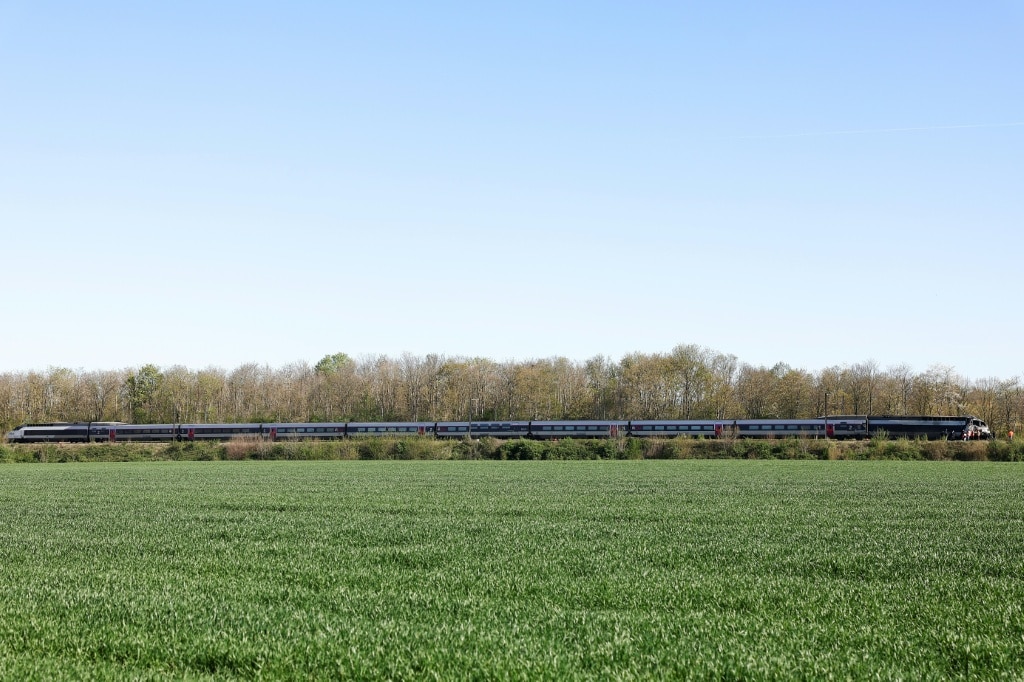
A deadly collision between a French TGV high-speed passenger train and a truck carrying military equipment at a northern France level crossing has left the train’s driver dead and multiple passengers and crew injured, according to French local and national officials. The incident unfolded shortly after 7 a.m. local time on Tuesday, as the train, en route from the northern coastal city of Dunkirk to Paris with 243 people on board, struck the lorry in the town of Bully-les-Mines. In an updated casualty report, the regional prefecture confirmed the train driver was killed, two people remain in critical condition, and 11 others have been treated for minor to moderate injuries, revising an earlier preliminary count that had reported 27 injuries. The truck driver, who survived the crash, is currently in police custody as judicial authorities open an investigation into the incident. Hundreds of emergency personnel have been deployed to the crash site, including 88 firefighters, 10 police officers, and dozens of technical and support staff. Footage and on-site reporting show emergency and investigative teams examining the crumpled, mangled front nose of the TGV, which sustained heavy damage in the impact. French Transport Minister Philippe Tabarot announced via social media platform X that he was traveling to the crash site alongside the CEO of SNCF, France’s national state-owned railway operator, to oversee the response. The Sud-Rail railway workers union, which has released a statement following the accident, said frontline railway staff have been left reeling from the tragedy. “Railway workers are in shock following this tragic accident,” the union posted on X, adding that it is demanding full transparency from authorities and a firm commitment to investigate all contributing factors to the crash. Fabien Villedieu, a representative for Sud-Rail, also noted that this incident marks the second time in one week a heavy vehicle has become stranded at a French level crossing, a pattern that has raised alarm among rail worker representatives. The crash has already disrupted regional rail services: SNCF confirmed that all services between the northern towns of Bethune and Lens will be suspended through late Tuesday while investigators work to clear the site and conduct their examination. As of Tuesday morning, neither SNCF nor regional authorities have released a definitive account of how the collision occurred, including whether the truck was stranded on the tracks for mechanical reasons, failed to stop at warning signals, or if any other mechanical or human error contributed to the incident. Tuesday’s collision is the latest in a string of level crossing accidents involving heavy vehicles across France in recent months. Just last week on March 25, a regional passenger train collided with a truck at a crossing in the southeastern coastal town of Saint-Raphael, killing the 60-year-old truck driver. In an incident near the northern town of Arras in March 2025, two French soldiers died when their military vehicle was struck by a regional train at a level crossing. While serious accidents on France’s high-speed rail network are far less common than on conventional regional and local lines, the country has seen rare fatal high-speed incidents in recent decades. The deadliest TGV accident on record occurred in November 2015, when a test train traveling between Paris and Strasbourg derailed after navigating a corner at nearly three times the recommended speed, killing 11 people onboard. More recently, on Christmas Eve 2024, a TGV driver died by suicide after jumping from a moving train; the train’s automated safety systems brought the consist to a safe stop without causing any additional injuries. First launched in 1981, France’s TGV network revolutionized intercity rail travel across Europe, setting a new world speed record for conventional rail and cutting travel times between major French cities from full-day or overnight journeys to just a few hours. The first-generation TGV trains reached a top operational speed of 380 kilometers per hour, and the technology has since been exported to more than a dozen countries, including South Korea, Spain, the United States, and Italy, becoming a globally recognized symbol of French engineering and industrial expertise.