A Saudi national and former OpenAI engineer has been arrested and charged by federal authorities in the United States over allegations he planted a hidden listening device in a sensitive internal conference room at the leading AI firm’s offices. Thirty-five-year-old Abdulrahman Alfozan, a legal permanent U.S. resident who had worked at OpenAI for roughly a year, made his first federal court appearance this week in California following his October 9 arrest by FBI agents.
Court documents filed by prosecutors lay out a month-long alleged pattern of planning stretching from mid-August to mid-September this year. According to the official complaint, Alfozan first used a productivity AI tool to gather critical information about the company’s meeting infrastructure, repeatedly querying the system for details about meeting room schedules, common meeting locations for external partner discussions, and daily bookings for the target conference room.
Prosecutors further allege that in September, Alfozan used a chatbot linked to his spouse’s account to ask for guidance on constructing, installing, and remotely accessing a covert recording device. The targeted meeting room, investigators note, was routinely used to host discussions covering highly sensitive material: including confidential technical development updates, commercial strategy, OpenAI’s government partnerships, and private business relationships. Alfozan held no authorization to participate in or access meetings held in this space, the complaint confirms.
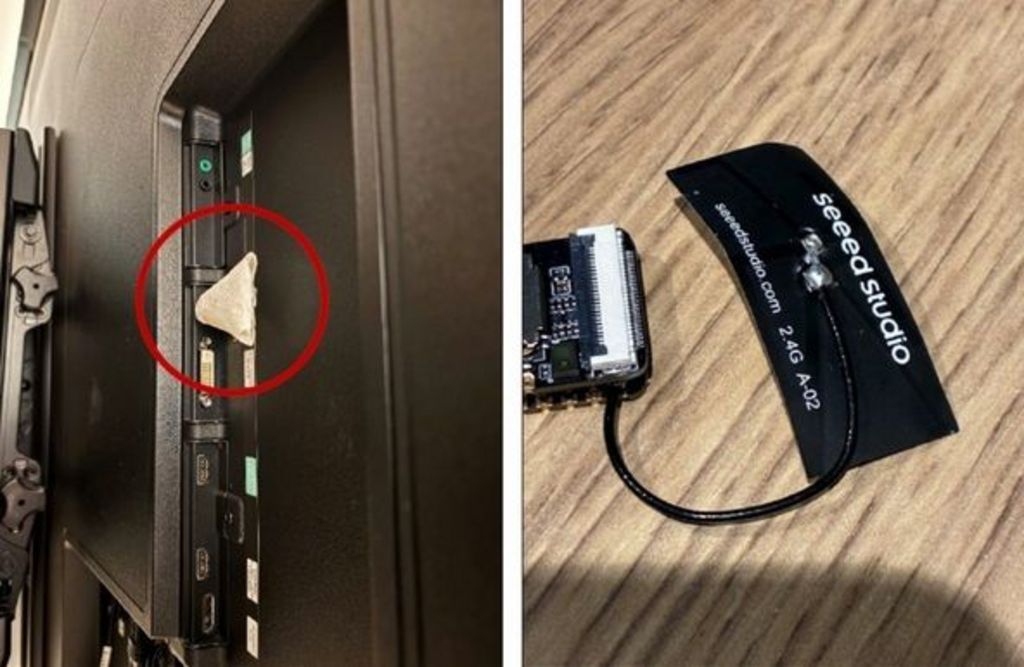
Closed-circuit security footage captured Alfozan near the restricted conference room on eight separate occasions throughout September, according to investigators. On September 30, OpenAI staff made the first discovery: a hidden audio recording device, wrapped in toilet paper to conceal it, tucked behind a mounted television in the room.
To identify who placed the device, investigators positioned a surveillance camera inside the conference room. On October 5, Alfozan was recorded entering the room and checking the spot where the listening device had been installed, court documents state. That same day, security personnel found an unattended bag Alfozan left in a separate meeting room; inside, they discovered a second matching recording device, along with the engineer’s wallet and official identification.
In a public statement posted to the platform X, OpenAI confirmed it had leveraged its own proprietary AI models to help analyze the device and trace its origins. The company also stressed that, to date, investigators have found no evidence that Alfozan successfully accessed or removed sensitive core company assets, including AI model weights, proprietary source code, or private customer data. Alfozan’s employment contract with OpenAI has since been terminated following his arrest.
A native of Saudi Arabia, Alfozan was educated in the U.S. and has held legal permanent resident status in the country since 2010, according to court records. His defense attorney William Pernik pushed back on the allegations in a statement to media, noting that Alfozan built his life in the U.S. after arriving years ago as a young person chasing opportunity. Pernik described the charges as entirely out of character for his client, saying the legal team will conduct a full, exhaustive review of all evidence presented by the government to clarify what actually occurred.
Pernik emphasized that under U.S. legal principles, Alfozan is presumed innocent until proven guilty, and the public allegations released so far do not constitute a finding of guilt. He asked the public to refrain from passing judgment until all facts come to light in court.
A detention hearing is scheduled for October 19 to decide whether Alfozan will remain in federal custody while the criminal case proceeds. The FBI’s investigation into the alleged plot remains ongoing. If convicted on the single charge of illegally attempting to intercept oral communications, Alfozan faces a maximum sentence of five years in federal prison and a fine of $250,000.