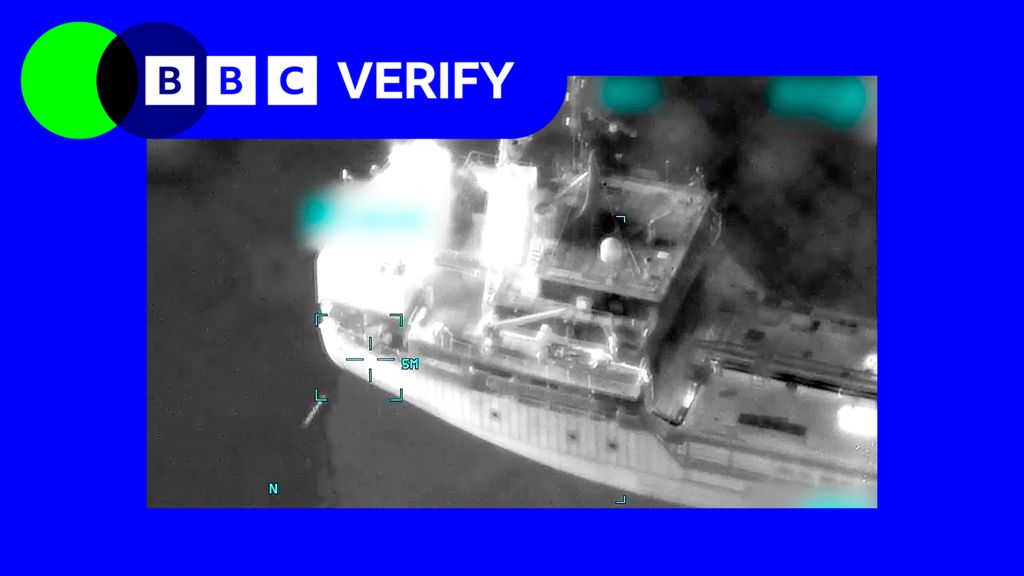
Over a three-day period in mid-June 2026, three commercial tankers operating in the Gulf of Oman have been targeted by United States military strikes, leaving at least three Indian seafarers dead and triggering sharp diplomatic pushback from New Delhi against Washington. The attacks come as part of a sweeping US naval blockade imposed on Iranian ports that began in mid-April, a response to Tehran’s decision to close the Strait of Hormuz, a critical global chokepoint through which roughly 20 percent of the world’s total oil and natural gas supplies transit annually.
The most recent strike unfolded early Thursday morning, when a US warplane launched two Hellfire missiles into the engine compartment of the cargo tanker Jalveer. US Central Command (Centcom), which oversees American military operations in the Middle East, confirmed the attack, stating the vessel had violated the Iran blockade by attempting to transport Iranian crude oil and that its crew repeatedly ignored instructions to stop for inspection. Maritime risk firm Vanguard reported the Jalveer issued an emergency alert shortly after the strike noting a catastrophic fire had broken out in its engine room. Distress calls intercepted by BBC Verify show the crew contacted Oman’s Royal Navy and a nearby commercial vessel for rescue, with one crew member explicitly blaming the US for intentionally targeting a civilian merchant ship. Satellite imagery analyzed by BBC Verify confirms thick plumes of smoke rising from the Jalveer following the attack. Indian officials later confirmed all 20 Indian crew members on board were safely evacuated by Omani naval forces. Notably, ship tracking records show the Jalveer has operated regularly between Gulf ports and multiple Indian ports over the past year, and the vessel has never been officially sanctioned by the US for Iranian ties.
The deadliest attack of the three came on Wednesday, when US forces struck the tanker Settebello, killing three Indian sailors and leaving 21 others in need of rescue. Centcom says the Settebello also violated the blockade by carrying Iranian oil and that its crew failed to respond to repeated directives. The vessel is owned by Indian shipping firm Aqua Aurora Shipping Lines and managed by the United Arab Emirates-based IOS Marine FZE, which has issued a categorical denial of the US claims. The company says it had no affiliation with Iran or Iranian oil shipments, and that US forces never made any attempt to contact the vessel before launching the strike, calling on Washington to release public evidence of its claimed communications. While the Settebello has never been officially US-sanctioned, it is listed as a high-risk vessel by the non-proliferation campaign group United Against Nuclear Iran, which accuses it of moving Iranian crude. Ship tracking data shows the vessel made multiple voyages from the Gulf to Chinese ports in Zhoushan and Lianyungang over the past six months, and its tracking beacon has been inactive since May 31. IOS Marine reports the vessel had been anchored and stationary for roughly 10 days before the strike, and BBC Verify satellite imagery from June 8 places the vessel approximately 120 kilometers off Oman’s port of Sohar. India’s shipping minister Sarbananda Sonowal called the incident deeply unfortunate, confirming the bodies of the three deceased sailors would be repatriated to India as quickly as possible.
The first of the three strikes hit the tanker Marivex on Monday. The vessel was already sanctioned by the US for Iranian links under its previous name, Arihant, and its owner, Arihant Shipping Inc, is also subject to American sanctions. Centcom confirmed an F/A-18 Super Hornet jet launched from the USS Abraham Lincoln aircraft carrier hit the vessel’s engineering and steering compartments with a precision munition, after accusing it of transporting hundreds of thousands of barrels of Iranian fuel oil and bitumen in the Gulf since July 2025. Ship tracking records show the Marivex last docked at Iran’s Bandar Abbas port in early April to load cargo before sailing to two ports on India’s west coast, Mangaluru and Karwar. After the strike, the disabled vessel issued a desperate distress call obtained by BBC Verify from the Forward Seaman’s Union of India (FSUI), with crew reporting a massive onboard fire and that the ship was sinking, pleading “send help” to rescuers. Omani military helicopters eventually responded and evacuated all 24 Indian crew from the burning vessel.
Centcom has declined to respond to questions from BBC Verify about whether it notified Indian or Omani government officials ahead of any of the three strikes, a lack of advance coordination that has amplified anger in New Delhi. The Indian government has formally condemned the series of attacks, issuing a statement calling for an immediate end to the targeting of commercial shipping and civilian infrastructure in the region. New Delhi also summoned the deputy chief of mission of the US embassy in New Delhi to lodge an official diplomatic protest against the attacks.
The strikes have sparked widespread concern across India over the safety of the country’s massive maritime workforce, which numbers nearly 300,000 seafarers working on commercial vessels globally, with more than 18,000 currently operating in the Gulf region alone. India’s shipping ministry reports that 13 Indian-flagged vessels remain stranded in the Strait of Hormuz amid the ongoing blockade and heightened tensions. Harsh V Pant, a senior analyst at the Observer Research Foundation in New Delhi, noted that seafarers have almost no influence over the geopolitical disputes that put their lives at risk, despite bearing the full brunt of conflict. He added that while the attacks will increase friction in already strained India-US relations, a full rupture in bilateral ties is unlikely. Seafarer advocacy groups have echoed these concerns, calling for urgent international action to protect civilian maritime workers. “Seafarers are workers. They are not soldiers,” the FSUI said in a statement Thursday, adding that “the international community cannot remain a silent spectator while seafarers are forced to navigate through conditions resembling a war zone.” As of mid-June, Centcom reports it has disabled nine vessels and redirected 135 others since the blockade of Iranian ports went into effect in April.