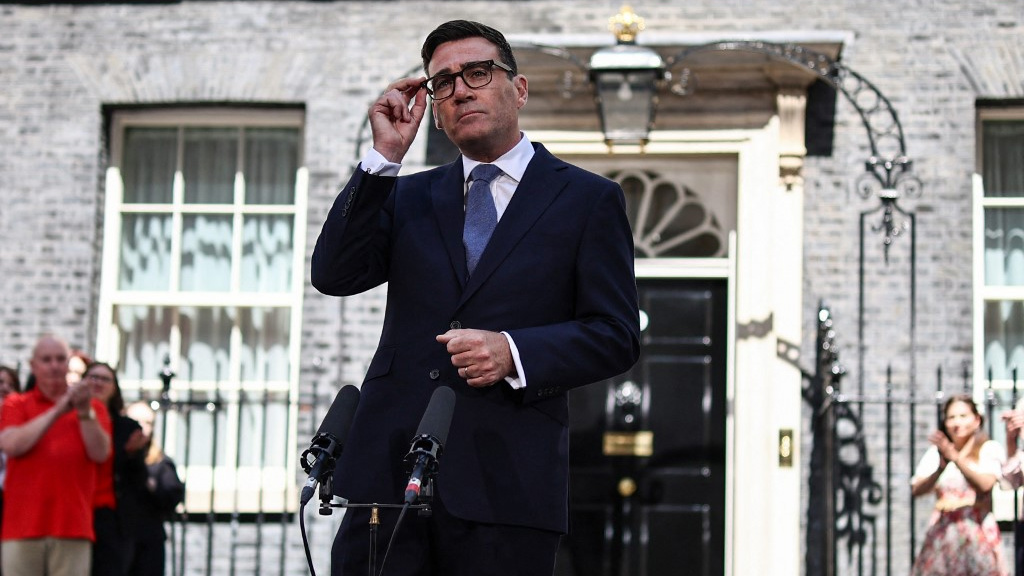
Andy Burnham’s new UK administration has publicly pledged to uphold a long-stated policy of refusing formal engagement with the Muslim Council of Britain (MCB), the nation’s largest umbrella body representing British Muslim communities. But an in-depth investigation by Middle East Eye (MEE) has upended official claims, revealing the so-called non-engagement policy is effectively a phantom: no written government records confirm its existence as an official, codified measure.
Multiple government departments and agencies have disclaimed any ownership of the policy when responding to Freedom of Information (FOI) requests filed by MEE. In responses dated mid-June, the Ministry of Housing, Communities and Local Government and the Home Office both confirmed they hold no documents that outline or reference a formal non-engagement policy with the MCB. A May response from the Cabinet Office echoed this conclusion, stating searches of both physical and digital archives turned up no matching records. To date, no government body has stepped forward to claim responsibility for the policy, nor has any official justification for the ongoing boycott been made public.
These questions around the policy’s shadowy origins come on the heels of a recent revelation that one UK mosque is targeted in an attack every five days, highlighting growing tensions around anti-Muslim hate across the country. The MCB, which remains the most expansive representative body for British Muslim groups, counts more than 500 affiliated organizations across the nation.
Contradictions in the government’s stance have already emerged publicly. The Telegraph reported this month that new equalities minister Sir Stephen Timms appeared on a discussion panel alongside an MCB representative last December, months before Burnham’s government took office. Despite this, an official government spokesperson reaffirmed the line that “there has been no change to our non-engagement policy regarding the Muslim Council of Britain, and there are no plans for ministers to meet with the group.”
When MEE reached out to the UK Office for Equality and Opportunity and its parent ministry for clarification on the policy’s basis and rationale, officials only repeated the standard non-engagement statement, adding that “the government recognises the importance of engaging meaningfully with faith and belief groups.”
MCB spokespeople have dismissed the policy as a relic of anti-Muslim politics. “This so-called policy of non-engagement is a historic relic. It was built to appease those who trade in Islamophobia, and it survives only by recycling decades-old allegations that have never withstood scrutiny,” the organization said in a statement.
Public records further unravel the official narrative of a long-standing policy dating back to 2009, a claim that circulates widely in UK political discourse. That year, Gordon Brown’s Labour government briefly boycotted the MCB after its then-deputy secretary general Daud Abdullah signed the Istanbul Declaration. The government at the time claimed the document endorsed attacks on Royal Navy vessels intercepting weapons shipments bound for Hamas in Gaza. Abdullah denied ever condoning attacks on British troops, and the MCB clarified he had signed the statement in a strictly personal capacity. After Abdullah stepped down from his role, the Brown government resumed formal engagement with the body.
Coalition government ministers held regular meetings with MCB leadership between 2010 and 2015, and civil servants continued routine engagement with the organization until 2020. That year, the MCB published a detailed dossier documenting alleged Islamophobia linked to more than 300 people, including Conservative MPs, party councillors, members and Downing Street special advisers. Shortly after the dossier’s release, civil servants cut off formal contact for reasons that were never publicly explained.
Even after 2020, low-key cooperation continued: the MCB served as a reference for imams applying to serve as military chaplains in partnership with the Ministry of Defence. This collaboration only became public in late 2023 via a Telegraph report, prompting ministers to order the MoD to immediately cut all ties with the organization.
In 2024, the Inter Faith Network, a major UK interfaith charity, was forced to shut down after the previous Conservative government pulled its public funding, solely because one of the charity’s trustees was an MCB member. Keir Starmer’s Labour government retained the non-engagement approach after taking office earlier in 2024. MEE reporting from July 2024 revealed that the Starmer administration ignored all communications from the MCB during the far-right riots that swept the UK that summer, and blocked a government working group tasked with developing an official Islamophobia definition from consulting the organization.
Multiple sources close to Burnham’s administration say the new prime minister is eager to repair ties with British Muslim voters, a large voting bloc that largely abandoned Labour during Starmer’s tenure. Burnham himself has a history of direct engagement with the MCB, including delivering a keynote speech at the organization’s 2015 Muslim Leadership Dinner, years after the policy was supposedly codified.
Today, the MCB retains substantial influence across British Muslim civil society, with a democratically elected leadership and a broad network of affiliates. Whether Burnham will choose to formalize a shift away from the shadowy non-engagement policy that no government department can claim or document remains an open question.