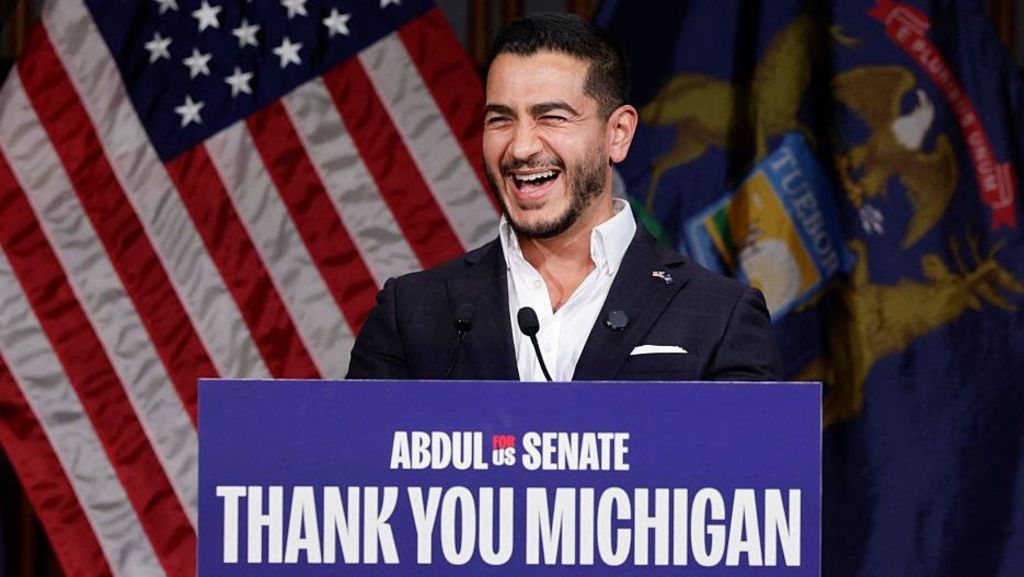
The 2026 United States midterm elections, held at the halfway mark of the presidential term to fill congressional, state, and local public offices across the country, have delivered a series of unprecedented breakthroughs for a new cohort of diverse, progressive politicians with roots in Africa and the Muslim diaspora. Leading the historic wins is 42-year-old Abdul El-Sayed, a Democratic former public health administrator born to Egyptian immigrant parents, who is set to become the first Muslim U.S. Senator after securing his Michigan seat. At his jubilant victory rally, El-Sayed playfully greeted incoming Vice President JD Vance — his former campaign rival who will administer his oath of office in January — with the affectionate Arabic term “habibi,” a lighthearted nod to his cultural heritage that defied the bitter partisan divides of the race. Throughout his campaign, El-Sayed faced relentless attacks from conservative media and former President Donald Trump, who spread unsubstantiated claims that he supported the Muslim Brotherhood, while his opponents repeatedly targeted his full Arabic Muslim name as a political weapon. Rejecting all false allegations, El-Sayed ran a digitally native, youth-focused campaign centered on TikTok content that showed him connecting directly with Gen Z voters, leaning into generational humor, and sharing casual, relatable moments like sporting friendship bracelets. His policy platform prioritized core progressive priorities: universal Medicare for All, widespread affordable housing, and sweeping reforms to curb corporate lobbying and influence in U.S. politics, alongside vocal criticism of unconditional U.S. military aid to Israel.
El-Sayed’s landmark victory is far from an isolated case, as dozens of candidates with African heritage also claimed wins across federal, state, and local offices this cycle. At just 29 years old, Melat Kiros, who was born in Addis Ababa, Ethiopia, and moved to Denver as an infant, made history as the first Gen Z woman ever elected to the U.S. Congress. A political newcomer who had never held public office before, Kiros first ousted a 15-term Democratic incumbent in Colorado’s 1st District primary before notching a commanding landslide general election win. Aligned with the Democratic Socialists of America, her campaign centered on top priorities for young progressive voters: lowering the soaring cost of living, implementing universal childcare, and expanding Medicare for All, while she has publicly called for abolishing the U.S. Immigration and Customs Enforcement agency and ending U.S. military aid to Israel. Kiros drew national controversy for her vocal criticism of Israeli military actions in Gaza, though she has repeatedly clarified that her criticism targets the policies of the Israeli state, not Jewish people as a whole. Her path to politics began in 2023, when a top New York law firm fired her after she refused to remove an open letter she had signed urging dozens of major legal employers to avoid conflating legitimate pro-Palestinian campus protest with antisemitism, even as she explicitly condemned anti-Jewish bigotry. The high-profile termination pushed her to pursue a congressional run full time.
In Maryland, 32-year-old Adrian Boafo, a second-generation Ghanaian-American born in Virginia and raised in Prince George’s County, will take over the 5th Congressional District seat previously held by veteran Democratic Congressman Steny Hoyer, who retired after more than 40 years in public office. Boafo cut his teeth in local governance, first serving on the Bowie City Council before winning a seat as a Maryland state delegate in 2023, and working as a staffer for Hoyer before launching his successful campaign to succeed his former boss. His policy agenda focused on easing the cost of living for working families, expanding access to childcare, and protecting the rights of federal employees, a critical constituency in his Washington D.C.-adjacent district that is home to tens of thousands of government workers. In his victory address, Boafo noted that the mandate to represent his constituents had “never felt more urgent,” citing widespread federal job cuts, persistent inflation, and the incoming Trump administration’s planned aggressive immigration crackdown as pressing challenges for the community.
Veteran progressive lawmaker Ilhan Omar, the 44-year-old Somali-born trailblazer who made history in 2018 as the first Somali-American and one of the first two Muslim women elected to Congress, also secured a fifth term in office, despite an ongoing federal investigation that saw agents search her Washington D.C. home in October over alleged irregularities in her immigration paperwork. Omar has repeatedly denied any wrongdoing and has never faced formal charges, and she has long been a top target of Donald Trump, who has a well-documented history of using derogatory language to describe several African nations including Somalia. Ahead of the election, Trump’s Yemeni-born adviser Amer Ghalib stated that the president would refrain from using such inflammatory rhetoric going forward.
Down the ballot, a new generation of African-American politicians also claimed historic state and local wins. 27-year-old Junior Ezeonu, who moved to the United States from Nigeria as a young child, previously made history as the youngest ever member of the Grand Prairie City Council before winning a seat in the Texas State House. 34-year-old Carol Kazeem, a Nigerian heritage Pennsylvania state legislator, successfully defended her District 159 seat, bringing the total number of winning candidates of Nigerian descent across the midterms to at least four.
The wave of diverse wins has resonated far beyond U.S. borders, particularly with young voters across the African continent, where social media users have widely shared the results as a source of inspiration ahead of major 2027 general elections in political heavyweights Nigeria and Kenya, with many noting the new class of leaders offers a blueprint for progressive, youth-centered political change in their home countries.