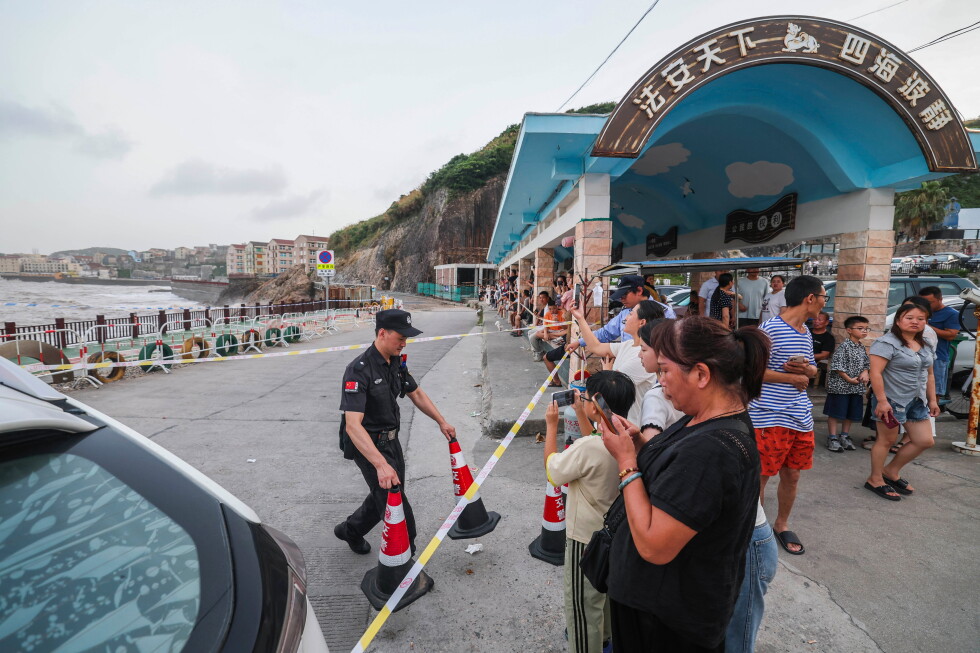
Across East Asia, communities are on high alert and grappling with early disruptions as powerful Typhoon Bavi churns through the region, leaving a trail of canceled travel, closed workplaces and schools, and dozens of injuries in its wake, with a projected landfall on China’s eastern coast this weekend.
According to Taiwan’s Central Weather Administration, the storm carries maximum sustained winds of 144 kilometers per hour (89 mph) around its center. Forecasters project it will pass to the north of Taiwan on Saturday, before tracking toward the eastern Chinese province of Zhejiang, where it is expected to make landfall in the early hours of Sunday, per updates from China’s National Meteorological Center.
Japan’s southern Okinawa prefecture has already felt the storm’s force. Local officials issued urgent warnings for life-threatening high waves, gale-force winds, and dangerous storm surges across the island chain, with reports of heavy rain and strong gusts battering Ishigaki and other nearby islands. Japan’s public broadcaster NHK reports that more than 200 regional flights have been canceled up to this point, stranding hundreds of travelers.
In Taiwan, the storm has already caused tangible harm to residents. As of 8 a.m. Saturday, Taiwan’s Central Emergency Operation Center confirmed at least 36 people have been injured by storm-related incidents. Most of those hurt were involved in motorcycle accidents on rain-slick, wind-swept roads, where low visibility and slippery pavement created hazardous travel conditions.
By Saturday morning, more than 14,200 Taiwanese residents had been evacuated from high-risk areas across the island, including low-lying and mountainous zones in the eastern county of Hualien and the central city of Taichung. Officials have also suspended classes and non-essential office operations across most of the island for Saturday to reduce unnecessary risk to the public.
As the storm advances toward China’s southeastern coast, local authorities have mobilized massive emergency response efforts to minimize potential damage. In Ningde, a coastal city in Fujian province located just south of the projected landfall zone, official state news agency Xinhua reports that more than 3,700 people had been moved out of high-risk onshore areas by Friday evening. Across Fujian, over 17,000 dedicated emergency rescue workers have been placed on standby to respond to floodings, structural damage, and other storm-related emergencies.
China’s National Meteorological Center has issued an orange typhoon alert, the second-highest warning level on the country’s four-tier alert system, in preparation for the storm’s arrival. In line with the alert, many local governments across coastal eastern China have suspended school classes and halted inter-island ferry services. Hundreds of commercial flights have been grounded, and segments of high-speed railway lines have also paused operations to prevent accidents.
In an update Saturday, China’s state broadcaster CCTV confirmed that the National Meteorological Center has also issued the country’s first red rainstorm alert of 2025, signaling an extreme risk of severe flooding and hazardous weather conditions across the region as the typhoon makes landfall.