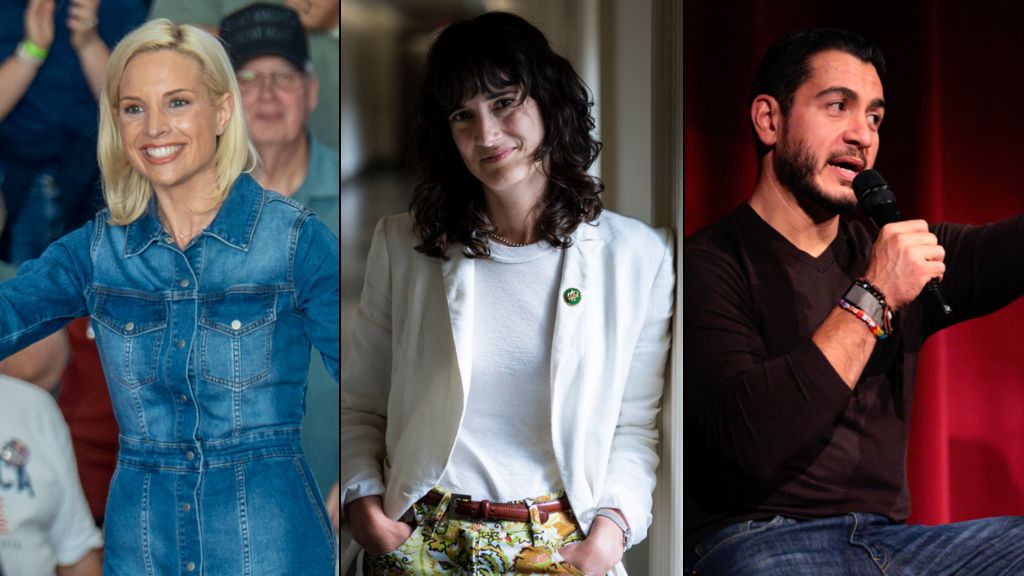
As millions of American voters prepare to cast their ballots in the 2026 US midterm elections, congressional hopefuls are no longer relying solely on policy pledges and public appearances to win over constituents. In an era defined by short-form social media content and split-second voter attention spans, carefully curated personal style has emerged as a deliberate, high-stakes strategic tool to signal authenticity, shared values, and alignment with local community identities.
Celebrity fashion stylist and Arizona State University Fashion Institute of Design and Merchandising faculty associate Joe Zee summed up the dual pressure facing candidates today: “Politicians are dressing for two jobs at once: to look capable of holding office but to also look connected to the people they want to represent.” Across every corner of the country, candidates from both major parties are deploying sartorial choices tailored to their districts’ unique cultural landscapes to cut through crowded campaign noise.
In Washington’s 3rd Congressional District, Democratic incumbent Marie Gluesenkamp Perez, a former auto repair shop owner who flipped a long-held Republican seat in 2022, leans into a no-fuss, workwear-heavy wardrobe of durable work jackets, well-worn flannel shirts, jeans, and practical, scuffed work boots. Conservative public policy adviser and former Capitol Hill Clothiers owner Robert Ordway praised her styling as one of the most authentic on the current campaign trail, noting it perfectly aligns with the Pacific Northwest’s rugged, forest-heavy outdoor cultural identity. Public policy expert and content creator Tashira Halyard added that her low-key aesthetic sends an unmissable message that she is a champion of working-class and small business communities, the core of her re-election platform.
Alaska Democratic Senate hopeful Mary Peltola follows a similar community-rooted styling playbook. Peltola made national headlines in 2022 when she wore traditional Yup’ik mukluks during her swearing-in as the first Alaska Native woman to serve in Congress, and this cycle she has doubled down on rugged fishing gear, flannel shirts, and pieces featuring Indigenous design details that nod to her decades working on commercial fishing boats on the Kuskokwim River, directly tying her visual identity to her campaign slogan of “fish, family and freedom.” Conservative journalist Bonnie Kristian noted the deliberate choice ensures voters immediately recognize her as both a lifelong Alaskan and a member of the state’s Indigenous community.
For Iowa Republican Senate candidate Ashley Hinson, sartorial messaging leans into unapologetic, nostalgic Americana. Her wardrobe blends polished conservative formal wear with casual, folksy touches including denim dresses, red bandanas, and a pair of bedazzled high heels emblazoned with the American flag, which she wore to a packed primary election celebration in June. Halyard pointed out the bold look lets Hinson “literally wear her patriotism on her sleeve,” while Kristian emphasized its strategic value in a hyper-competitive race: the instantly recognizable, flag-themed pieces create a split-second visual signal that resonates deeply with rural Republican voters scrolling social media feeds, leaving no room for misinterpretation of her political brand.
In increasingly purple Texas, two high-profile rivals locked in a heated statewide race have converged on a surprisingly similar sartorial choice: relaxed, unstructured blazers paired with iconic Texas cowboy boots, ditching the traditional necktie that Ordway confirms is now effectively obsolete on campaign trails across both parties. 37-year-old Democratic state legislator James Talarico wears handcrafted Lucchese boots, a style famously favored by former Republican President George W. Bush. Fashion critic Friedman explained the choice carries deep regional semiotic weight, letting Talarico cross traditional partisan lines to appeal to a broad cross-section of Texas voters who associate the boots with state pride, not party affiliation. His 63-year-old opponent, incumbent Republican state attorney general Ken Paxton, also opts for cowboy boots to signal approachability, but his styling has drawn widespread backlash: former President Donald Trump publicly criticized the ill-fitting suits he has worn to events, while opponents slammed him for sporting a luxury Four Seasons branded polo shirt and an unconfirmed high-value watch at a time when cost of living pressures dominate voter concerns. Zee noted the incident highlights a critical risk for candidates: casual styling choices can backfire spectacularly if they accidentally signal elite privilege instead of working-class relatability.
Longtime Tennessee Republican Senate candidate Marsha Blackburn, meanwhile, has cultivated a timeless, unchanging uniform of structured tailored jackets, modest knee-length skirts, and signature pearl necklaces that she has worn consistently for decades. Ordway, who worked as a legislative director on Capitol Hill, recalled her polished, unvarying look was already a staple of her public persona 20 years ago, and Kristian noted her classic, 1990s-era conservative styling is deliberately designed to feel familiar and trustworthy to long-time Tennessee voters.
Michigan Democratic US Senate hopeful Abdul El-Sayed, a left-wing outsider running on a platform of removing corporate money from politics, has adopted a deliberately stripped-down uniform of plain black V-neck t-shirts and blue jeans, which he dubs “minimal look, maximal politics.” Ordway compared the aesthetic to that of a scrappy startup founder, designed to appeal to young, urban working-class voters, while Zee noted the apparent “unstyled” look is a carefully calculated branding choice that strips away the unnecessary ceremony of traditional political appearances, directing voter attention to his policy proposals rather than his wardrobe.
The most famous example of a standardized political uniform belongs to Donald Trump, whose signature navy power suit, crisp white shirt, and bright red tie is so instantly recognizable it has become a Pavlovian visual signal for partisan alignment. Friedman noted that the look, first cultivated during his reality television career long before his presidential run, has spread through Republican ranks, with dozens of GOP senators, cabinet members, and candidates adopting the exact same outfit to signal loyalty to Trump’s political brand. As campaigns increasingly prioritize short social media clips and television appearances to reach voters, Friedman predicts that these kinds of highly distinct, instantly recognizable sartorial branding strategies will only grow more widespread by the 2028 presidential election cycle.
‘The necktie is dead’: How US midterm candidates are dressing for votes