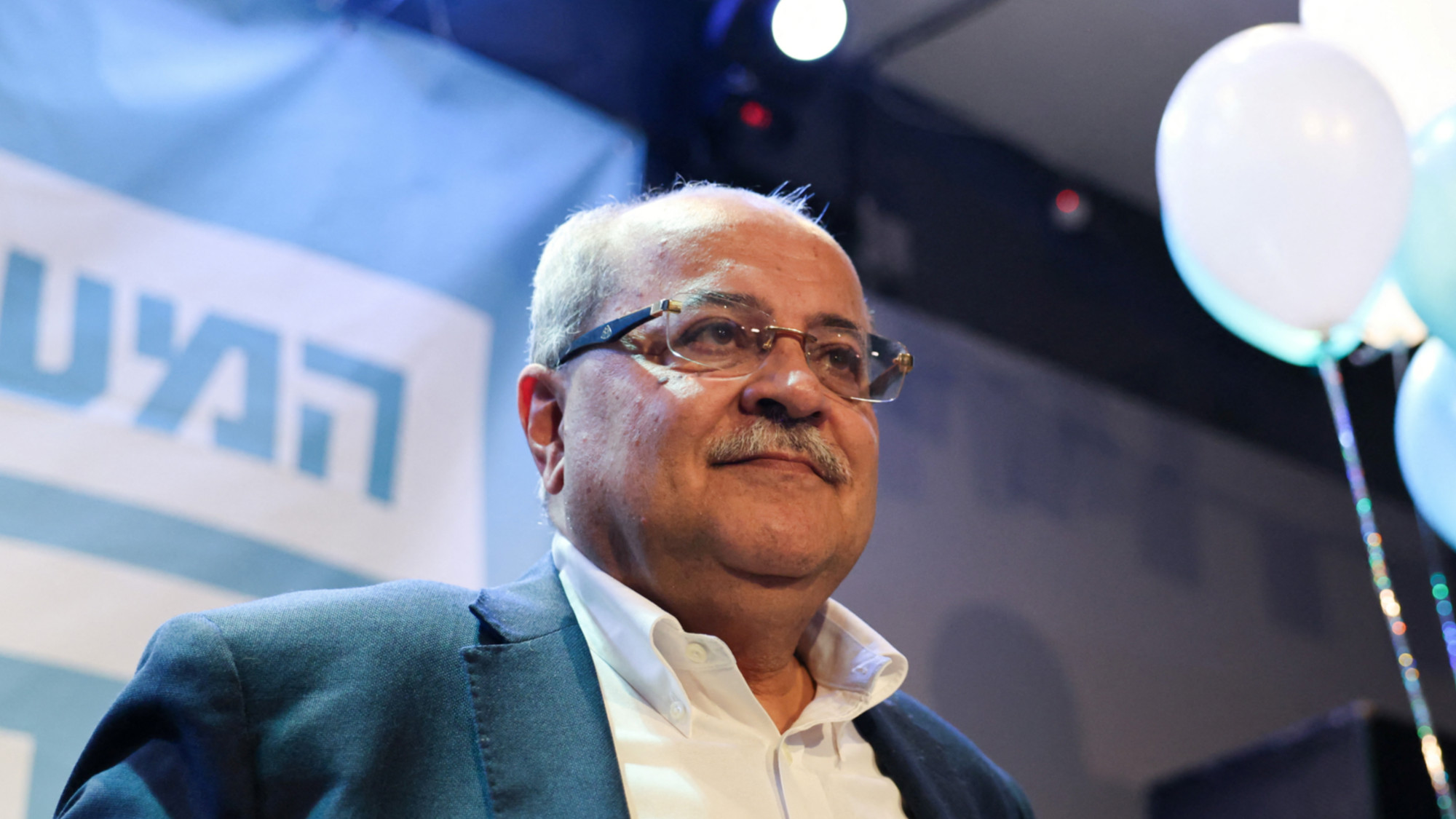
In a Friday exclusive interview with Middle East Eye, prominent Palestinian-Israeli legislator and Ta’al (Arab Movement for Renewal) party founder Ahmad Tibi has issued a direct, high-stakes call to Israeli opposition head Gadi Eisenkot to summon the historic political bravery of late former prime minister Yitzhak Rabin to collaborate with Arab parliamentary blocs and end Benjamin Netanyahu’s long-running tenure as prime minister. Tibi drew a direct parallel to 1993, when Rabin’s 56-seat minority administration relied on Palestinian-aligned parties for critical parliamentary backing to advance the landmark Oslo Accords, arguing there is no valid democratic rationale to exclude Palestinian Knesset representatives from such collaborative efforts in the current political landscape. A minority government in Israel’s 120-seat parliament is defined as an administration whose core coalition holds fewer than the 61 seats required for an absolute majority, sustained by a formal “safety net” arrangement where external supporting parties vote down no-confidence motions against the government without formally joining the cabinet. Tibi’s Ta’al party is part of the broader Joint List alliance, which includes fellow Palestinian-led factions Hadash and Balad; the three secured a combined 11 Knesset seats in the latest election, while the separate Palestinian party Ra’am won 8 seats, bringing the total Palestinian parliamentary representation to 19 seats — an all-time record for Arab parties in Israeli legislative history. This unprecedented seat distribution means neither Netanyahu’s right-wing bloc nor Eisenkot’s opposition faction can hit the 61-seat majority threshold required to form a government without the support of Palestinian legislators. Tibi emphasized that the Joint List’s core strategic priority is backing any political force committed to removing Netanyahu from office to clear the path for a new, alternative governing arrangement, explicitly stating, “We prefer a new government by Eisenkot, as a minority government, and we are ready to help.” He firmly rejected proposals for a cross-party national unity government that would unite Netanyahu’s Likud, the parliament’s single largest party, with mainstream opposition factions to secure a majority while sidelining far-right figures such as Bezalel Smotrich and Itamar Ben Gvir. Tibi argued that such a unity arrangement would allow Netanyahu’s hardline policies to continue unimpeded, with a new non-Likud leader tasked with repackaging those policies to appear more palatable to Western governments. “We don’t like a unity government, because one side will continue his brutal policy and the second will help him market this policy,” he explained. Tibi hailed the record-high turnout among Palestinian citizens of Israel as the decisive electoral force that blocked Netanyahu from securing a new outright majority, noting that the prime minister’s right-wing bloc secured only 53 seats in the latest Tuesday election, a sharp drop from the 64 seats it won in 2022 to form what was widely condemned as the most far-right administration in Israel’s history. That outgoing government’s tenure was marked by widespread international condemnation for overseeing mass atrocities in Gaza, large-scale forced displacement and surging settler violence across the occupied West Bank, multiple regional military conflicts, and a dramatic spike in state-backed discrimination and incitement targeting Palestinian citizens of Israel. Palestinian citizens of Israel are the descendants of the indigenous Arab population of historic Palestine, who survived the 1948 mass expulsion and ethnic cleansing campaigns carried out by Zionist militias and remained within the borders of the newly established state of Israel; today they number roughly two million people, making up approximately 20 percent of the country’s total population. Tibi paid tribute to Palestinian voters who turned out to cast ballots despite advanced age, chronic illness, and mobility barriers, describing their collective participation as a historic democratic milestone. He noted the immediate top priority for the Arab parliamentary blocs is leveraging these unprecedented electoral gains to dismantle what he called Netanyahu’s “criminal government” and advance tangible improvements to the civil and political status of Palestinian citizens across Israel. Tibi also forcefully dismissed unsubstantiated allegations that Qatar had funded efforts to boost turnout among Palestinian voters, framing the claims as transparently politically motivated and predicting the manufactured controversy would fade within days with no measurable impact on final election results or the government formation process. “Two, three, four, five days, everything will be relieved. It will be a minor issue; it will have zero effect on the results and on the process,” he stated. He accused Netanyahu of peddling these false foreign financing claims for two clear purposes: to intimidate Palestinian voters and to pressure Eisenkot to reject any potential collaboration with Arab legislative blocs. Tibi framed the record high Arab voter turnout as an act of collective political self-defence against rising state-sanctioned racism and violent incitement targeting Palestinian communities. He went on to reject Netanyahu’s repeated attempts to delegitimize the Arab vote, pointing to well-documented allegations of improper foreign financing surrounding the prime minister’s own office to argue the Likud leader had no moral standing to question electoral integrity. “The only corrupted party here is the prime minister and the prime minister’s office,” Tibi said. The veteran legislator also called on mainstream opposition parties to move with urgency to oust sitting Knesset Speaker Amir Ohana, a senior Likud lawmaker, accusing Ohana of transforming the Israeli parliament into a racist institution and systematically fomenting hostility and discrimination against Palestinian elected representatives. “Amir Ohana made the Knesset racist,” Tibi said, describing the speaker as a primary driver of collapsing cross-communal relations in the legislature, particularly through his repeated discriminatory treatment of Palestinian Knesset members. He pledged that the full slate of Palestinian legislators would throw their support behind the opposition’s nominee for a new Knesset speaker, urging no delay in the procedural vote to remove Ohana. Tibi concluded by noting that the combined 67 seats held by the mainstream opposition and Palestinian parties represented a clear democratic majority, arguing that Palestinian citizens, who make up one fifth of Israel’s population, hold an unassailable democratic right to play a formal role in determining the country’s next governing leadership.
Israel: Tibi urges Eisenkot to show ‘courage’ and form minority government with Palestinians