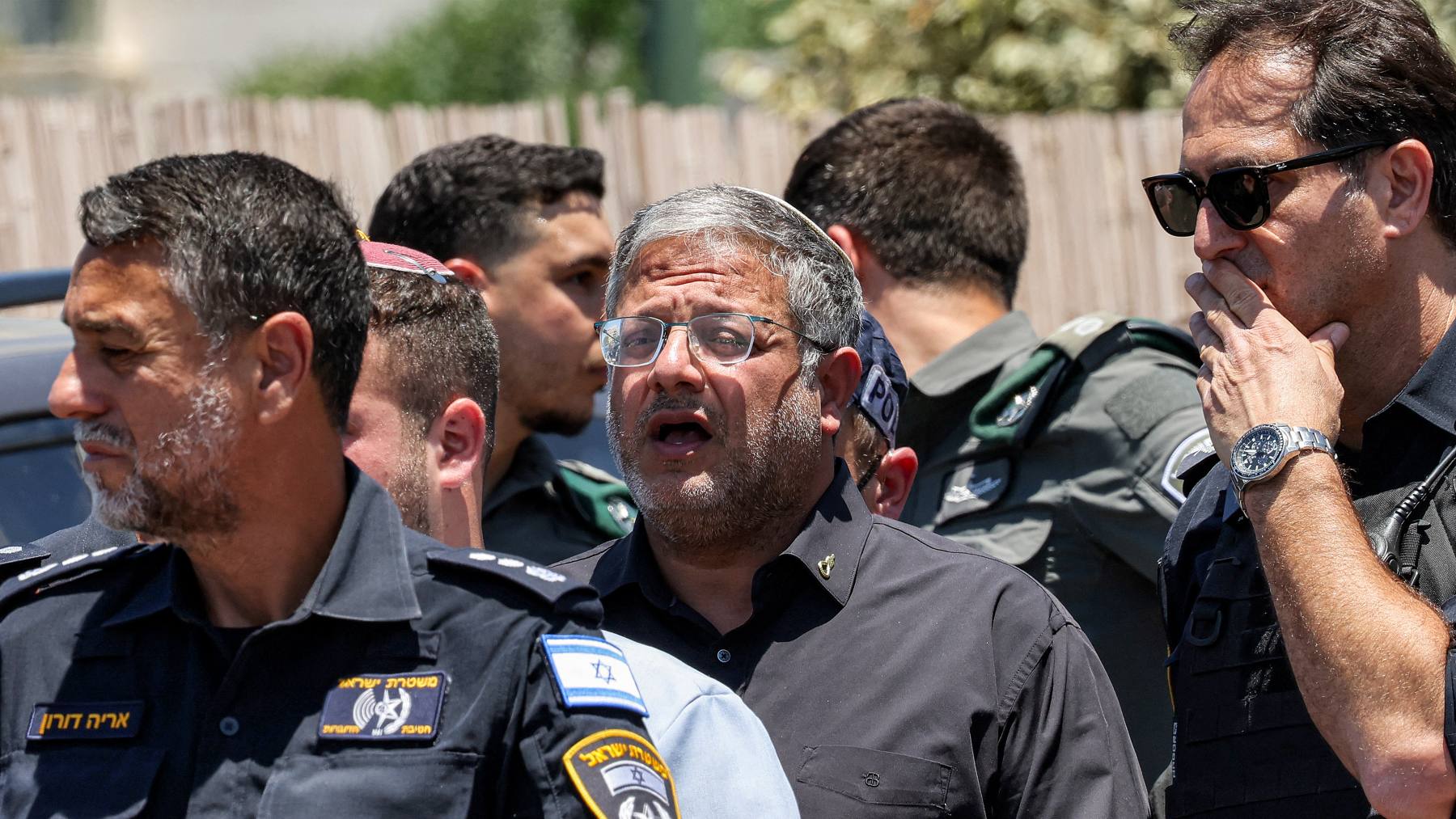
Weeks ahead of Israel’s October 27 Knesset parliamentary election, far-right Israeli National Security Minister Itamar Ben Gvir has reignited international and regional condemnation with a set of extreme, inflammatory remarks that escalate his longstanding anti-Palestinian agenda, Israeli media has confirmed. In an exclusive interview with Israel’s Channel 14, Ben Gvir laid out his radical policy blueprint should he secure the coveted position of defense minister in the next governing coalition: dismantle the internationally recognized Palestinian Authority, and facilitate the forced displacement of Palestinian communities from both the occupied West Bank and the blockaded Gaza Strip.
Claiming without evidence that 60 percent of Palestinians currently residing in the occupied territories wish to leave, Ben Gvir said he would prioritize the initiative as defense chief. “I will dedicate consistent time and resources to this process, holding weekly coordination meetings with all relevant government bodies to advance it,” he stated. Rejecting the decades-old territorial division framework agreed through the 1995 Oslo Accords, which split the West Bank into three administrative zones—Areas A and B with varying degrees of Palestinian self-governance, and Area C under full Israeli control—Ben Gvir asserted complete Israeli sovereignty over the entire region. “There is no difference between Areas A, B and C. The entire land is ours,” he said.
The United Nations has repeatedly formalized its position that the entire West Bank, including East Jerusalem, is legally classified as occupied Palestinian territory, and that all Israeli settlements built on land captured by Israel in the 1967 Six-Day War hold no legal validity under international law. This is not the first time Ben Gvir, a politician with a well-documented history of hate speech and genocidal rhetoric against Palestinians, has pushed anti-Palestinian policy. In his latest comments, he also called for rolling back existing restrictions on the use of force by Israeli soldiers operating in occupied territories. When asked how Israel could deploy additional troops to counter unrest in the West Bank and Gaza, Ben Gvir replied: “It is very simple: The more you allow soldiers to shoot and use force, the less manpower you need.” He added that current military rules of engagement are far more restrictive than those governing Israeli police, and that he would eliminate those limits if given the defense portfolio.
Ben Gvir also used the interview to publicly critique incumbent Prime Minister Benjamin Netanyahu, arguing that the prime minister has lacked sufficient commitment to advancing the policy of displacing Palestinian communities from occupied land. The controversial remarks come amid a wave of highly provocative Israeli incursions into major Muslim holy sites across the occupied Palestinian territories during the recent Jewish holiday of Sukkot. On September 29, more than 950 Israeli settlers entered the Al-Aqsa Mosque compound in occupied East Jerusalem, where far-right Israeli groups shared footage online showing participants conducting unauthorized Jewish religious rituals, praying, singing and dancing within the Islamic holy site. Ben Gvir was among the far-right figures who took part in earlier incursions into the Al-Aqsa compound this season, and Netanyahu further escalated tensions with a visit to underground tunnels located beneath the site. During his trip, Netanyahu stated: “It is moving to touch the rock of our existence. We are here very close to the Holy of Holies. We are here, and we will always remain here.”
Longstanding status quo agreements governing the Al-Aqsa compound recognize the site as an Islamic holy site under the administrative control of the Jerusalem Islamic Waqf, with Israel retaining authority over external security and visitor access. Later on September 29, Ben Gvir led hundreds of Israeli settlers on a visit to the Ibrahimi Mosque in Hebron, another site sacred to both Muslims and Jews. “When I arrive at the Ibrahimi Mosque, I draw energy that makes me want to sing and rejoice,” Ben Gvir told Channel 14 during the visit. Israeli authorities closed the entire mosque to Muslim worshippers for the duration of the Sukkot holiday, a move the Palestinian Ministry of Endowments and Religious Affairs condemned as a deliberate attack on the holy site and a violation of Muslim freedom of worship. The Ibrahimi Mosque has been split into separate sections for Muslim and Jewish worshippers since 1994, when an Israeli ultranationalist settler opened fire inside the mosque, killing 29 Palestinian worshippers at prayer.