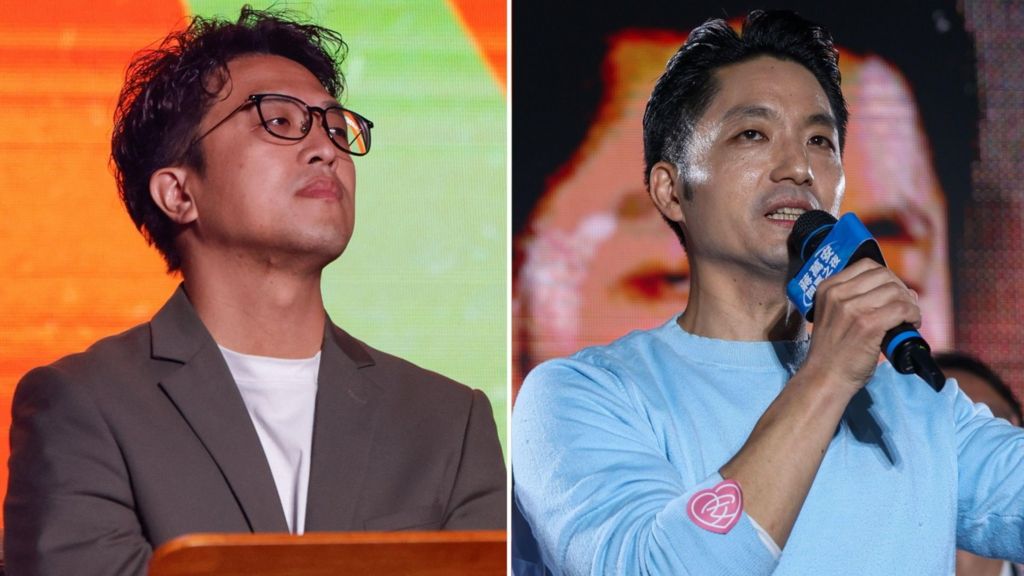
Taiwan’s high-stakes Saturday local elections have yielded a nuanced political landscape: the Kuomintang (KMT), the island’s main opposition party, held onto the closely watched Taipei mayoral seat but suffered unexpected, significant defeats across multiple other key constituencies, in a vote widely viewed as a critical early popularity gauge ahead of the 2028 presidential polls. Incumbent Taipei mayor Chiang Wan-an, whose party advocates for warmer, more pragmatic cross-strait ties with Beijing, secured a second term with just under 54% of the total vote in the capital, fending off a spirited challenge from the ruling Democratic Progressive Party’s (DPP) Puma Shen, a former civil defence activist who has been publicly sanctioned by the Chinese government. Chiang’s margin of victory marks a sharp drop from his 2020 landslide, when he claimed more than 67% of Taipei’s ballots. Addressing tearful supporters at his victory rally, Chiang framed the re-election as a resounding endorsement of his administration’s track record, noting that the “silent majority” of Taipei residents had cast their ballots in favour of stability, shared prosperity and practical, solution-focused governance, rather than polarising political grandstanding and divisive rhetoric. One long-time KMT supporter told reporters he felt deeply emotional about the result, arguing that Chiang’s first term had only laid the groundwork for key city projects that required a second term to be fully implemented. Yet the narrower win in Taipei masked far deeper setbacks for the KMT across the rest of the island. Most notably, the party lost control of the central metropolis of Taichung, a long-held KMT stronghold where popular outgoing two-term mayor Lu Shiow-yen – widely tipped as a leading KMT presidential nomination hopeful for 2028 – was barred from running for re-election due to term limits. International Crisis Group Senior Northeast Asia Analyst William Yang noted that the failure to retain Taichung will severely damage Lu’s presidential prospects and is set to spark bitter internal infighting within the KMT over the coming months. Yang added that the outcome means Beijing, which claims Taiwan as its sovereign territory and refuses to recognise the DPP as a legitimate negotiating partner, has dodged its “worst nightmare” of a DPP administration running Taipei, but will now be forced to closely monitor internal KMT power struggles before recalibrating its strategy for the 2028 presidential race. For the DPP, the near-miss in Taipei represented a remarkable comeback bid: the party has not held the Taipei mayoral office for nearly 30 years, and Shen ran a highly innovative, social media-driven campaign that centred squarely on local pocketbook issues including affordable housing, expanded public transit access and improved community public services, rather than the cross-strait geopolitical debates that have dominated national-level politics. Conceding defeat gracefully, Shen told supporters that the election outcome still counted as a “victory for Taiwan’s democracy”, noting that DPP candidates had secured wins in multiple traditional KMT strongholds across the island that had long been considered unwinnable for his party. “There will be moments of success, and moments of setback, but the courage and pioneering spirit of Taiwan’s people will never fade,” Shen told his tearful supporters. One young Shen backer at the rally told reporters that while the loss was disappointing, the campaign had demonstrated a fresh, community-focused model of grassroots politics that would shape future DPP electoral efforts. The election unfolded against a fraught backdrop of sustained Chinese military pressure, with Beijing regularly deploying fighter jets and naval vessels to circle the island in the months leading up to polling day. An investigation by BBC Verify also uncovered a coordinated disinformation campaign targeting the election, using AI-generated deepfake videos that spread false, damaging claims about Shen – including fabricated footage purporting to show him using illegal drugs – and manipulated clips of sitting DPP president Lai Ching-te, who Beijing labels a separatist, dressed in children’s clothing to mock and discredit him. Political analysts noted that while the local election results will not trigger immediate shifts in cross-strait policy, the mixed outcome for both major parties creates significant uncertainty for the 2028 presidential race, where Lai is widely expected to seek a second term. Lev Nachman, a National Taiwan University associate professor specialising in Taiwanese political studies, observed that the DPP’s failure to flip Taipei has sawn away much of the momentum Lai had carried heading into the national election cycle, leaving both major parties facing unexpected internal challenges in the months ahead.