Fresh tensions have emerged across the Taiwan Strait following remarks by former U.S. President Donald Trump during a Beijing summit, where he cautioned Taiwan against moving ahead with a formal declaration of independence from mainland China. The comments, delivered after two days of high-level talks with Chinese President Xi Jinping, have reignited debate over the long-standing fragile balance of power in one of the world’s most geopolitically volatile regions.
During post-summit comments, Trump clarified that he had made no binding commitments one way or the other regarding the self-governing island, which Beijing has consistently claimed as an inalienable part of its sovereign territory and has never ruled out seizing by military force. The U.S. leader also noted he would soon make a final decision on a long-awaited $11 billion arms sales package to Taiwan, a deal that has drawn fierce opposition from Beijing.
The United States is legally obligated under the Taiwan Relations Act to provide the island with the means to defend itself, but successive U.S. administrations have had to balance this unofficial security commitment with the need to maintain formal diplomatic and economic ties with Beijing, which adheres firmly to the one-China principle.
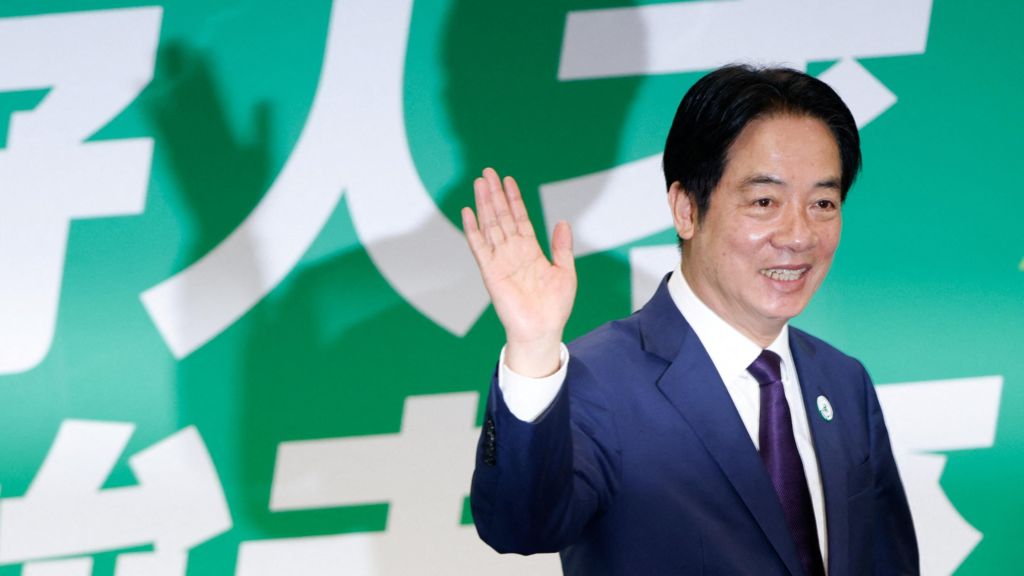
In response to Trump’s remarks, Taiwanese President Lai Ching-te reaffirmed his long-held position that the island already views itself as a sovereign, independent state, meaning no formal declaration of independence is necessary. On Saturday, Lai’s spokesperson, Karen Kuo, emphasized that Taiwan’s status as a “sovereign, independent democratic country” is self-evident. However, she added that Taipei remains committed to upholding the long-standing cross-strait status quo, under which the island neither moves toward formal independence nor accepts unification with mainland China.
Public opinion data consistently shows that while a large majority of Taiwan’s population identifies as separate from China, most favor retaining the current status quo over any abrupt change to cross-strait relations. Washington’s long-standing official policy remains unchanged: it does not support Taiwanese independence, and its formal relationship with Beijing is based on recognition of a single Chinese government.
Trump told Fox News in an interview following his meetings with Xi that U.S. policy toward Taiwan had not shifted, and stressed he had no interest in provoking conflict with Beijing. “I’m not looking to have somebody go independent,” he said. “You know, we’re supposed to travel 9,500 miles to fight a war. I’m not looking for that. I want them to cool down. I want China to cool down.”
Speaking to reporters on his return flight to Washington, Trump added that he and Xi had spoken extensively about the Taiwan issue, but declined to answer questions about whether the U.S. would militarily defend Taiwan in the event of an attack. He noted that Xi holds extremely strong views on the issue of the island, saying “[Xi] doesn’t want to see a movement for independence.”
Beijing has repeatedly denounced Lai as a separatist “troublemaker” who undermines cross-strait peace, and has ramped up large-scale military drills around Taiwan in recent years. These exercises have significantly raised regional tensions and tested the delicate balance of power that Washington has sought to maintain for decades.
Trump added that he planned to discuss the pending arms sales deal directly with Taiwan’s leadership, though he avoided referring to Lai by his official title, a long-standing convention for U.S. presidents due to the lack of formal diplomatic relations between the two sides. U.S. presidents traditionally do not hold direct public talks with Taiwan’s sitting leader, as such a step would almost certainly trigger a major diplomatic crisis with Beijing.
Despite the warning on independence, Taipei expressed gratitude for Trump’s long-standing security support. “Our nation is grateful to President Trump for his continued support for security in the Taiwan Strait since his first term in office,” Taiwan’s presidential spokesperson said. “Taiwan will continue to deepen co-operation with the US to achieve peace through strength, ensuring that peace and stability across the Taiwan Strait are not threatened or undermined, which serves the common interests of Taiwan, the US, and the global democratic community.”