标签: South America

南美洲

  • US interior secretary is in Venezuela to discuss critical minerals

    US interior secretary is in Venezuela to discuss critical minerals

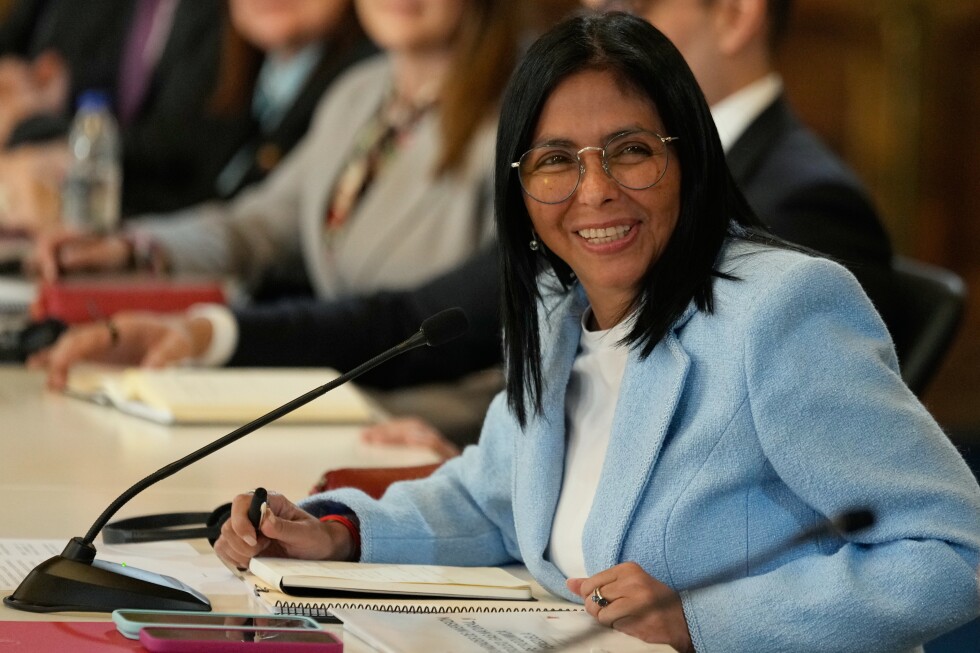
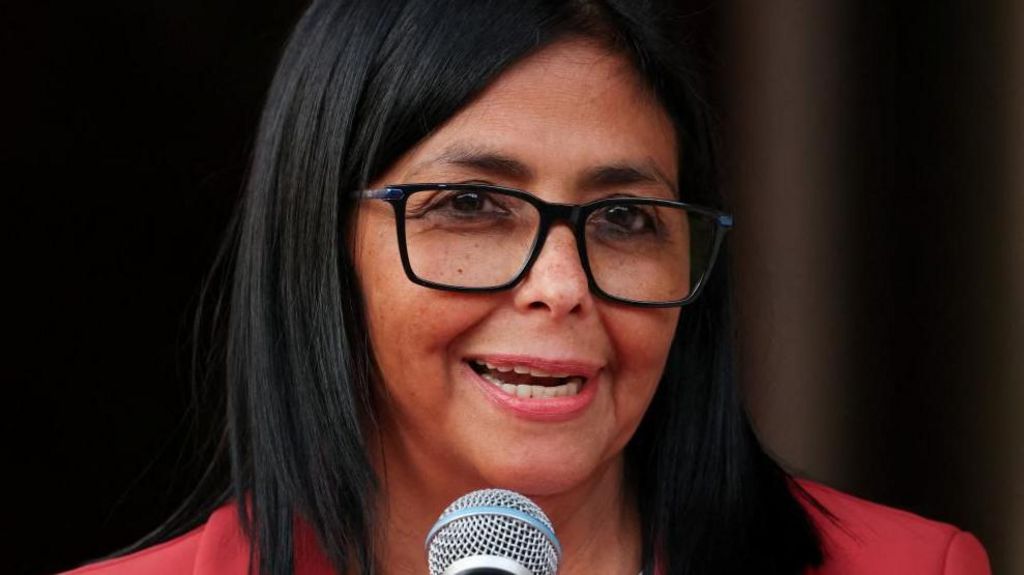
    CARACAS, Venezuela — In a significant diplomatic move, U.S. Secretary of the Interior Doug Burgum convened with Venezuela’s acting President Delcy Rodríguez on Wednesday, signaling the Trump administration’s intensified efforts to secure influence over the nation’s vast natural resource reserves. The high-level meeting represents the latest development in Washington’s strategic pivot toward resource diplomacy in South America.

    Burgum, who chairs President Donald Trump’s National Energy Dominance Council, embarked on the two-day diplomatic mission to engage with both American and Venezuelan corporate entities. The U.S. diplomatic mission in Venezuela characterized the visit through social media channels as a ‘vital and historic step’ supporting the administration’s phased strategy for Venezuelan economic transformation, specifically emphasizing the creation of ‘a legitimate mining sector and safe critical mineral supply chains.’

    This diplomatic engagement follows the capture of former President Nicolás Maduro by U.S. forces two months ago, which precipitated Rodríguez’s ascension to acting leadership. The visit continues energy-focused diplomacy initiated in February by Energy Secretary Chris Wright, who previously explored Venezuela’s substantial petroleum potential.

    The Trump administration recently unveiled plans to establish a critical minerals trading alliance among allied nations, strategically designed to counter China’s dominant position in supplying essential elements required for advanced military equipment and consumer electronics. Venezuela’s resource portfolio extends beyond its well-documented oil reserves to include substantial deposits of gold, copper, diamonds, and other valuable minerals, though extraction operations frequently occur under hazardous conditions within a minimally regulated industry.

    Accompanied by Laura Dogu, the top U.S. diplomat stationed in Venezuela, Burgum’s meetings at the presidential palace further solidify the administration’s resource-focused foreign policy approach. Previous allegations by Maduro and his administration suggested U.S. geopolitical interests were primarily driven by Venezuela’s substantial resource wealth, claims that gain renewed context amid these developing diplomatic exchanges.

  • No More Foundation launches anti-violence campaign ahead of the Women’s World Cup

    No More Foundation launches anti-violence campaign ahead of the Women’s World Cup

    A major international initiative targeting gender-based violence was unveiled Tuesday by the No More Foundation in coordination with Brazil’s upcoming hosting of the 2027 Women’s World Cup. The comprehensive campaign aims to leverage the global sporting event’s platform to address alarming rates of violence against women in Brazilian society.

    Citing a concerning 2025 research study indicating that 37% of Brazilian women aged 16 and above experienced violence within the past year, the New York-based organization is implementing a multi-faceted approach to prevention and education. The strategic program will feature public service announcements during sports broadcasts, educational curriculum development for schools and community organizations, and extensive digital content creation in the pre-tournament period.

    Brazil, selected as host nation in 2024, will stage the tournament across eight cities from June 24 to July 25, 2027. No More Global CEO Pamela Zaballa emphasized the unprecedented reach of this initiative, stating: “Integrating prevention messaging, education, and survivor resources into one of the world’s most watched sporting events creates potential for global impact reaching millions—both women and men—with lasting effects extending far beyond the tournament.”

    The campaign has garnered significant institutional support, including partnerships with Brazil’s tourism board (Visit Brazil) and national broadcaster EBC. Marcelo Freixo of Visit Brazil noted that the World Cup preparation cycle “represents a historic opportunity to strengthen our image as a country that promotes equality, safety, and respect.”

    Launch elements included a public service announcement featuring prominent football figures: current player Tarciane, former legend Formiga, and women’s national team coach Arthur Elias, demonstrating cross-generational commitment to the cause.

  • US and Ecuador forces launch operation to fight drug trafficking

    US and Ecuador forces launch operation to fight drug trafficking

    Ecuadorian and United States military forces have initiated coordinated operations targeting organizations designated as terrorist entities within the South American nation, according to an official announcement from the U.S. Southern Command on Tuesday. The joint mission aims to combat illicit drug trafficking networks that have established significant operational presence in Ecuador, though specific operational details remain classified.

    The development follows Monday’s declaration by Ecuadorian President Daniel Noboa that American forces would participate in a ‘new phase’ of the country’s intensified campaign against drug cartels. Noboa has identified Ecuador’s extensive port infrastructure as a critical vulnerability, noting that approximately 70% of global cocaine shipments now transit through these facilities, creating highly profitable opportunities for transnational criminal organizations.

    Ecuador’s geographical positioning between Colombia and Peru—the world’s two primary cocaine producers—has made it increasingly vulnerable to narcotics trafficking operations. This security collaboration emerges just four months after Ecuadorian voters rejected a constitutional amendment that would have permitted the reestablishment of foreign military bases within the country, dealing a significant political setback to Noboa’s security agenda.

    On Monday, President Noboa convened high-level discussions in Quito with U.S. Southern Command leader General Francis Donovan and Mark Schafer, commander of U.S. Special Operations forces in Central and South America. The meetings produced agreements on enhanced intelligence sharing and coordinated operational activities at key transportation hubs, including airports and seaports.

    The U.S. Southern Command characterized the operations as ‘decisive action against narco-terrorists who have long inflicted terror, violence, and corruption throughout the hemisphere.’ This announcement follows Washington’s temporary deployment of Air Force personnel to the former U.S. military installation in Manta three months ago.

    The Trump administration has demonstrated increased focus on counter-narcotics operations in the region, conducting over 40 lethal strikes against suspected drug trafficking vessels in Caribbean and Pacific waters since September. Recent actions include the high-profile seizure of Venezuelan leader Nicolás Maduro on narco-terrorism charges and tense diplomatic exchanges with Colombian President Gustavo Petro regarding drug interdiction efforts.

  • 4 former Argentine navy officers face trial for 2017 submarine sinking that killed 44 crew members

    4 former Argentine navy officers face trial for 2017 submarine sinking that killed 44 crew members

    Four former high-ranking Argentine naval officers stood trial Tuesday in Santa Cruz province, facing criminal charges for their alleged roles in the catastrophic sinking of the ARA San Juan submarine in November 2017. The tragedy claimed the lives of all 44 crew members aboard the German-built vessel.

    The defendants, who maintain their innocence, confront allegations including dereliction of duty, breach of official obligations, and aggravated negligent destruction—all carrying potential prison sentences. Prosecutors presented evidence indicating the submarine had experienced ‘numerous technical defects’ since its 2015 mid-life overhaul, with these deficiencies reportedly documented by multiple captains over the years.

    According to judicial investigations, the fatal sequence began when seawater entered ventilation ducts, reaching battery compartments and triggering a short circuit and minor fire. This caused the vessel to lose propulsion and commence an uncontrolled descent beyond its crush depth of approximately 600 meters, resulting in catastrophic implosion.

    Despite the military prosecutions, no high-level political figures from the administration of then-President Mauricio Macri have faced legal accountability. Families of the victims, represented by attorney Luis Tagliapietra, have criticized the judicial process for excluding political leadership from investigation and for failing to conduct essential expert analyses.

    The trial unfolds more than six years after the submarine disappeared during its transit from Ushuaia to Mar del Plata following training exercises. Despite reporting and subsequently downplaying a snorkel malfunction hours before the disaster, the vessel vanished with all hands in the South Atlantic.

  • Mexican drug lord ‘El Mencho’ buried in golden coffin

    Mexican drug lord ‘El Mencho’ buried in golden coffin

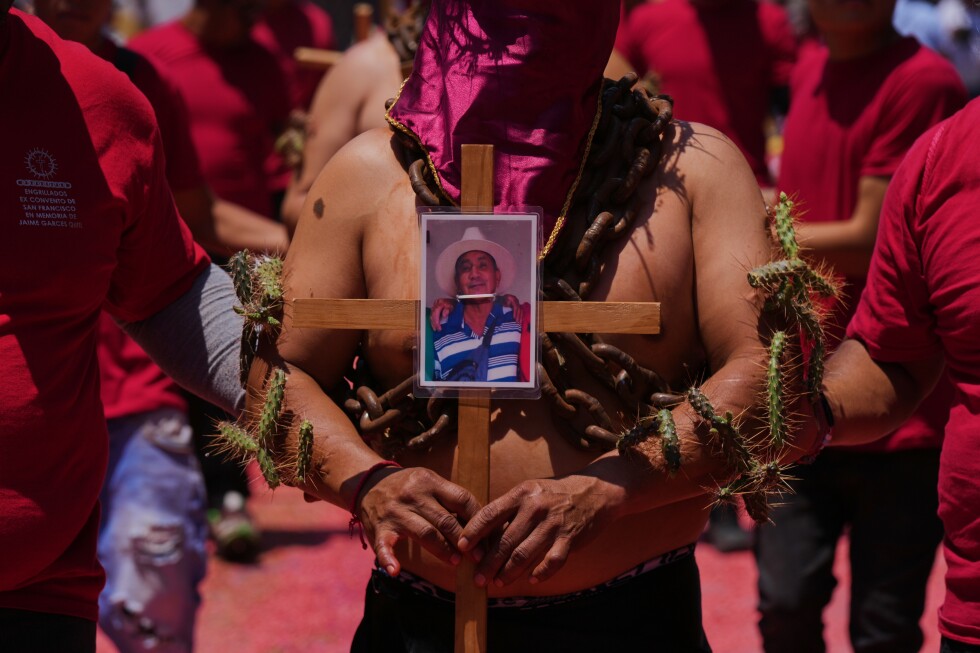
    In a lavish ceremony underscoring the persistent influence of organized crime, the notorious Jalisco New Generation Cartel (CJNG) founder Nemesio Oseguera Cervantes, alias “El Mencho,” was laid to rest in a golden casket on Monday. The 59-year-old drug lord, Mexico’s most-wanted criminal with a $15 million U.S. bounty on his head, died following a late February firefight between his armed guards and Mexican special forces operatives attempting his capture.

    The funeral proceedings near Guadalajara in CJNG’s home state of Jalisco unfolded under heavy National Guard surveillance, reflecting authorities’ concerns about retaliatory violence. Despite security measures, the event displayed extravagant narco-culture symbolism, including monumental floral arrangements requiring multiple transport vehicles. Among these was a prominent rooster-shaped tribute nodding to Oseguera’s passion for cockfighting.

    Local media reported the funeral procession featured narcocorridos—ballads glorifying drug traffickers—and traditional ranchero music, with the song “El Muchacho Alegre” (The Cheerful Boy) accompanying the golden casket’s arrival at the cemetery chapel. Many attendees concealed their identities with face masks during the hour-long ceremony, highlighting the pervasive climate of fear and anonymity surrounding cartel activities.

    While the burial plot was noted as relatively modest compared to the grandiose mausoleums of other narcos, the spectacle contrasted sharply with the violence that followed Oseguera’s death. Cartel members previously unleashed coordinated attacks across 20 Mexican states, torching vehicles and blockading roads in retaliatory strikes.

    El Mencho’s death represents both a tactical victory for President Claudia Sheinbaum’s administration—which faces mounting pressure from the U.S. to combat drug trafficking—and a potential catalyst for escalated violence. Security analysts warn that power struggles within the tens-of-thousands-strong CJNG could trigger intensified factional conflicts, creating new security challenges for Mexican authorities.

  • Argentina’s top union sues to halt President Milei’s sweeping labor overhaul

    Argentina’s top union sues to halt President Milei’s sweeping labor overhaul

    BUENOS AIRES, Argentina — Argentina’s labor landscape has become the epicenter of a major constitutional confrontation as the nation’s primary trade union coalition launched legal proceedings against President Javier Milei’s recently enacted labor legislation. The General Confederation of Labor (CGT) initiated this judicial challenge on Monday, targeting reforms that congressional lawmakers had approved just three days prior.

    The contested legislation represents the most substantial overhaul of Argentina’s labor framework in decades, granting corporations unprecedented flexibility in hiring practices, termination procedures, severance arrangements, and collective bargaining negotiations. The reforms specifically aim to diminish the traditional influence that labor organizations have wielded since the Peronist movement emerged in the 1940s.

    In their formal submission to Buenos Aires courts, CGT legal representatives contended that the legislation ‘constitutes a severe violation of collective and individual rights that directly contravene constitutional guarantees.’ The union’s constitutional argument rests on two fundamental principles: the ‘principle of progressivity’ that prohibits the erosion of established worker protections, and the ‘protective principle’ designed to maintain equilibrium between employer and employee interests.

    Union officials directly linked the legislation to Argentina’s deteriorating employment situation, asserting that over 300,000 positions have been eliminated since Milei assumed presidential authority in December 2023. The administration’s austerity-driven economic agenda, according to the CGT, systematically undermines worker protections rather than representing isolated policy decisions.

    President Milei celebrated the legislation as ‘historic’ following its congressional passage, characterizing the measures as essential ‘labor modernization’ necessary to attract international investment, enhance productivity, and stimulate formal job creation in a nation where approximately 40% of workers operate within the informal economy.

    The legislative process exposed profound political divisions, culminating last month in nationwide work stoppages organized by the CGT and violent confrontations between left-wing demonstrators and security forces outside congressional facilities. The judiciary now faces the consequential decision of whether to grant an injunction that would suspend implementation pending final constitutional review.

  • Party run by Colombia’s former FARC rebels fights for survival in Sunday’s election

    Party run by Colombia’s former FARC rebels fights for survival in Sunday’s election

    Colombia’s congressional elections on Sunday represent an existential moment for former FARC rebels transitioning to political life, as they face the daunting challenge of competing without the guaranteed seats that previously sustained their political movement.

    The Comunes party, comprised of ex-combatants from the Revolutionary Armed Forces of Colombia, must now secure votes on equal footing with established political parties after the expiration of special provisions granted under the 2016 peace agreement. The party previously held ten congressional seats as part of the transitional justice arrangement but now faces intense electoral competition without this safety net.

    Political analysts express skepticism about the former rebels’ electoral prospects. Yan Basset, a political science professor at Bogota’s Rosario University, noted, “They have not really gained the support of the people,” highlighting the enduring stigma from the five-decade conflict during which FARC forces kidnapped thousands and bombed numerous villages.

    The party’s electoral performance has deteriorated significantly, dropping from 89,300 votes nationwide in 2018 to just 50,100 in 2022. This decline poses critical challenges under Colombian electoral laws requiring parties to capture at least 3% of total votes—approximately 509,000 ballots—to maintain official party status, receive public funding, and field candidates.

    In a strategic pivot, Comunes has formed an alliance with Fuerza Ciudadana, a left-wing movement that recently secured mayoral and gubernatorial positions in northern Colombia. The former rebels have conspicuously minimized their traditional symbols, featuring Fuerza Ciudadana’s orange logo instead of their characteristic red rose on campaign materials and official ballots.

    The electoral struggle occurs against the backdrop of recent admissions by former FARC commanders regarding wartime atrocities. In a January video submitted to Colombia’s transitional justice system, leaders acknowledged recruiting at least 18,000 children during the conflict, with former top commander Rodrigo Londoño stating that violence against girls caused “great physical and psychological damages that persist to this day.”

    Carlos Carreño Marín, a former FARC commander and peace deal negotiator now representing Comunes in Congress, acknowledged the challenge: “We are in an intense struggle against parties that have been doing this for two centuries.”

    The election outcomes will significantly impact President Gustavo Petro’s constitutional reform agenda, including proposed nationalization of healthcare and pension system reforms, with nearly 300 congressional seats at stake.

  • Argentina’s Milei opens Congress praising Trump and attacking opposition

    Argentina’s Milei opens Congress praising Trump and attacking opposition

    In a characteristically combative address to Argentina’s Congress on Sunday, libertarian President Javier Milei delivered a 90-minute polemic that celebrated his administration’s accomplishments while launching vitriolic attacks against political opponents. The presidential speech, marked by heated exchanges with opposition lawmakers, served as both a victory lap and declaration of continued political warfare.

    Milei’s address came following significant legislative victories that have strengthened his position. The president highlighted several key achievements including labor market reforms, adjustments to criminal responsibility age thresholds, the Mercosur-European Union trade pact, and preliminary approval of glacier protection legislation. “This extraordinary session represents one of the most productive periods in our historical record, fulfilling all campaign commitments made for 2025,” Milei declared.

    The Argentine leader devoted substantial attention to international relations, particularly emphasizing his administration’s alignment with the United States. Milei praised the financial assistance provided by Washington and highlighted his “special relationship” with former President Donald Trump, whom he characterized as a “key ally.” In a notable rhetorical flourish, Milei echoed Trump’s signature phrase, proclaiming, “We must create the century of the Americas. Make America Great Again.”

    Milei articulated Argentina’s geopolitical advantages, emphasizing the nation’s abundance of critical minerals sought by Western nations, strategic access to both Atlantic and Pacific oceans, and proximity to Antarctica. “Argentina functions as a natural nexus within the West’s strategic value chain,” the president asserted.

    The address frequently descended into confrontation as Milei denounced opposition legislators as “thieves,” “murderers,” and “ignorant” individuals. He specifically targeted former leftist President Cristina Fernández de Kirchner, currently imprisoned on corruption charges.

    Political analysts note Milei’s significantly strengthened legislative position compared to his early presidency in 2023, when his La Libertad Avanza party ranked only third in congressional representation. Following the 2025 elections and alliance with the right-wing Republican Proposal (PRO) party, Milei’s coalition now commands the largest bloc in both chambers and maintains veto-sustaining capabilities.

    According to Gustavo Marangoni, political scientist and director of M & R Asociados consulting firm, the administration has successfully consolidated support from previously reserved or critical allies, including PRO members who now demonstrate “perfect alignment with the ruling party.” Juan Negri, director of the Political Science program at Torcuato Di Tella University, observed that Milei now operates with “significant support and a parliamentary majority that seemed unprecedented in 2023.”

  • Lindsey Heaps and Jaedyn Shaw score as USWNT blanks Argentina 2-0 in SheBelieves Cup

    Lindsey Heaps and Jaedyn Shaw score as USWNT blanks Argentina 2-0 in SheBelieves Cup

    The United States Women’s National Soccer Team continued its formidable form with a decisive 2-0 triumph against Argentina in the SheBelieves Cup on Sunday, held in Nashville, Tennessee. This victory marks the team’s sixth consecutive clean sheet, underscoring a period of defensive excellence and offensive firepower.

    Lindsey Heaps emerged as a pivotal force, contributing both a goal and an assist. The opening score materialized in the 19th minute following a skillful play from Emma Sears, who maneuvered the ball from the left corner into the penalty area before delivering a pass to an unmarked Heaps. The veteran forward expertly finished with her left foot, notching her 39th international goal—the highest tally among the current squad.

    The American offensive pressure persisted, culminating in a second goal from Jaedyn Shaw. Positioned at the top left corner of the box, Shaw unleashed a precisely curved right-footed shot that found the net’s left post, securing her 10th goal for the national team.

    The match was not without its physical challenges. Following Shaw’s goal, defender Lilly Reale sustained a right leg injury, necessitating her substitution by Emily Fox. The game’s intensity was further highlighted during stoppage time when Argentina’s Milagros Martín received a yellow card for a push on U.S. forward Trinity Rodman.

    Statistically, the U.S. asserted overwhelming control, commanding 67.7% of possession and registering three shots on target. In contrast, the Argentine squad managed only a single shot on goal against U.S. keeper Claudia Dickey. This performance extends the team’s impressive run, having outscored opponents 27-1 over its last seven fixtures since a narrow October defeat to Portugal.

    The SheBelieves Cup, a round-robin tournament featuring the U.S., Argentina, Canada, and Colombia, now progresses to Columbus, Ohio. The next marquee matchup will see the United States face Canada, who earlier defeated Colombia 4-1, on Wednesday.

  • Venezuela’s opposition leader Machado says she will return to the country in the coming weeks

    Venezuela’s opposition leader Machado says she will return to the country in the coming weeks

    Venezuelan opposition figure María Corina Machado has declared her intention to return to Venezuela in the coming weeks, signaling a potential political showdown in the South American nation. The 2015 Nobel Peace Prize laureate made the announcement via social media on Sunday, though she refrained from specifying an exact date for her homecoming.

    Machado, a central figure in Venezuela’s political opposition, emphasized that her return would focus on preparing for what she described as “a new and gigantic electoral victory.” She urged supporters to reinforce the unity established during the 2023 primaries, where she emerged as the consensus candidate to challenge former President Nicolás Maduro’s regime.

    The political landscape remains volatile since Maduro and his wife were apprehended in a U.S. military operation in January. Current Acting President Delcy Rodríguez has issued stern warnings that Machado “will have to answer” upon her return to Venezuelan territory.

    International observers note the complex transition dynamics, with U.S. Secretary of State Marco Rubio emphasizing that Venezuela’s political change must progress through phases of stabilization, economic recovery, and gradual transition. The U.S. administration has not indicated expectations for immediate elections.

    Machado’s Nobel Peace Prize recognition in 2015 honored her persistent advocacy for democratic transition in Venezuela. Her subsequent controversial decision to present the medal to U.S. President Donald Trump following the military intervention that ousted Maduro drew mixed international reactions. Maduro currently faces drug trafficking charges in U.S. courts, where he has entered not guilty pleas.

    The political crisis intensified after Maduro was declared the winner of July 2024 elections, triggering widespread protests and government crackdowns. The opposition maintains credible evidence indicating that Edmundo González—who replaced Machado after her disqualification from the electoral process—was the legitimate victor.