标签: South America

南美洲

  • Canada beats Colombia 4-1 in SheBelieves Cup women’s soccer opener

    Canada beats Colombia 4-1 in SheBelieves Cup women’s soccer opener

    In a decisive display of skill and determination, the Canadian women’s national soccer team emphatically halted their five-game international losing streak with a 4-1 triumph over Colombia in the inaugural match of the SheBelieves Cup on Sunday in Nashville, Tennessee.

    The match, characterized by its physical intensity and seven yellow cards, saw Canada establish early dominance. Defender Vanessa Gilles broke the deadlock in the 31st minute, powerfully heading a Janine Sonis corner kick into the net. Sonis then transitioned from provider to scorer in the 67th minute, converting a masterfully taken penalty kick with an arcing shot that left Colombian goalkeeper Katerin Tapia rooted to the spot.

    Canada’s momentum continued unabated as Sydney Collins found the back of the net just six minutes later, extending the lead to a comfortable 3-0. Colombia managed a consolation goal in the 81st minute when Leicy Santos confidently converted a penalty kick past Canadian keeper Kailee Sheridan. However, any hopes of a late Colombian comeback were extinguished by Nichelle Prince, who sealed the comprehensive 4-1 victory with a goal in the 90th minute.

    The contest’s physical nature reached a climax when Colombia’s Gisela Robledo received her second yellow card, resulting in a red card and an early dismissal. This victory sets the stage for a highly anticipated North American derby, as Canada is scheduled to face the United States in their next SheBelieves Cup fixture on Wednesday in Columbus, Ohio.

  • Supporters of Brazil’s Bolsonaro rally across Brazil against Lula

    Supporters of Brazil’s Bolsonaro rally across Brazil against Lula

    Across Brazil’s urban landscapes, thousands of demonstrators clad in the national colors of yellow and green gathered Sunday in a formidable display of political force. The rallies, organized in major metropolitan centers including São Paulo, Rio de Janeiro, and the capital Brasília, signaled a revitalized right-wing mobilization ahead of October’s pivotal presidential election.

    The movement centers around Flávio Bolsonaro, son of incarcerated former President Jair Bolsonaro, who has assumed his father’s political mantle. From his Instagram platform, the younger Bolsonaro declared this electoral cycle decisive for Brazil’s future, framing the contest as a rescue mission for the nation. His candidacy positions him directly against current President Luiz Inácio Lula da Silva, who seeks a nonconsecutive fourth term.

    This political theater unfolds against the dramatic backdrop of the elder Bolsonaro’s imprisonment. The former leader is serving a 27-year sentence for attempting to overthrow the government following his 2022 electoral defeat to Lula. Many supporters perceive his incarceration as politically motivated persecution rather than judicial accountability.

    According to observational studies from the University of São Paulo and nonprofit More in Common, approximately 20,000 demonstrators gathered in São Paulo with nearly 5,000 in Rio de Janeiro (with a 12% margin of error). The visual symbolism was striking: protest signs demanding “Free Bolsonaro” lined Paulista Avenue, while giant inflatable figures depicted Lula in prison attire and Bolsonaro wearing the presidential sash.

    The demonstrations incorporated international symbolism as well, with some participants waving American flags alongside Brazilian banners. Flávio Bolsonaro utilized his platform to criticize Brazil’s Supreme Court, accusing justices of undermining democracy—a reference to the judicial panel that sentenced his father last September.

    Douglas Ruas dos Santos, a state lawmaker participating in Rio’s protest, articulated the movement’s long-term vision: “We believe that 2026 will be the year of the turning point. We have a project led by President Bolsonaro, which was entrusted to Flávio Bolsonaro.”

    Recent polling data indicates a statistically dead heat in a hypothetical runoff between Flávio Bolsonaro and President Lula, setting the stage for one of Brazil’s most consequential electoral battles in modern history.

  • Trump talks regime change in Iran after strikes, but history shows that could be very hard

    Trump talks regime change in Iran after strikes, but history shows that could be very hard

    Following coordinated U.S. and Israeli airstrikes that targeted Iranian leadership positions, former President Donald Trump publicly urged Iranian citizens to seize the opportunity for regime change. In a video address delivered shortly after the attacks, Trump declared: “Now is the time to seize control of your destiny. This is the moment for action.”

    Despite this apparent simplicity, historical evidence suggests that successful regime change operations remain exceptionally complex. The United States possesses an extensive yet troubled history with such interventions, including operations in Vietnam (1960s-70s), Panama (1989), Nicaragua (1980s), Iraq and Afghanistan (post-9/11), and most recently in Venezuela. Notably, the CIA engineered the 1953 coup that overthrew Iran’s democratically elected government, installing Shah Mohammad Reza Pahlavi—who was subsequently ousted during the 1979 Islamic Revolution after increasingly authoritarian rule.

    These intervention attempts frequently begin with clear intentions—establishing democracy in Iraq or supporting anti-Communist leaders during the Cold War—but often descend into political quagmires where democratic aspirations transform into civil conflicts, allied dictators become liabilities, and American casualties mount.

    Trump himself previously criticized such nation-building efforts, stating in 2016: “We must abandon the failed policy of regime change,” and later remarking in Saudi Arabia that interventionists “were intervening in complex societies that they did not even understand.”

    The current situation presents particular complexities. Iran’s economy remains severely compromised, and dissent persists despite brutal crackdowns on protests that resulted in thousands of deaths and arrests. While key Iranian allies including Hamas, Hezbollah, and the Assad government have been weakened, and Supreme Leader Ayatollah Ali Khamenei confirmed killed, the U.S. lacks a clear postwar vision.

    Jonathan Schanzer of the Foundation for Defense of Democracies notes that potential allies might exist within Iran’s current power structure, but emphasizes that “there needs to be a sense that there is no salvation for the regime as such.” This proves particularly challenging in a leadership united by religious ideology, where “true believers” rarely switch allegiances.

    Historical parallels extend to Latin America, where the Monroe Doctrine justified two centuries of interventionism. Christopher Sabatini of Chatham House observes that direct U.S. involvement has rarely produced “long-term democratic stability,” citing Guatemala’s 40-year civil war and Nicaragua’s devastating conflict as examples.

    The recent Venezuelan operation may signal Washington’s current approach—rather than backing opposition leader María Corina Machado, the U.S. collaborated with President Delcy Rodríguez, previously second-in-command to captured leader Nicolás Maduro. This suggests a preference for modifying existing power structures rather than complete overthrow.

    As military strategist Phillips O’Brien notes: “Air power can damage a leadership, but it can’t guarantee that you’ll bring in something new.” The fundamental question remains whether the U.S. fully comprehends the complexities of the society it seeks to reshape.

  • Navarrete stops Nunez to unify super-featherweight titles

    Navarrete stops Nunez to unify super-featherweight titles

    In a spectacular display of boxing prowess, Mexican champion Emanuel Navarrete forcefully unified the IBF and WBO super-featherweight titles with a commanding performance against countryman Eduardo Nunez. The highly anticipated bout concluded before the eleventh round when ringside medical personnel intervened due to Nunez’s deteriorating condition.

    Navarrete, the 31-year-old three-division world champion, systematically dismantled his previously undefeated opponent throughout the contest at Glendale’s Desert Diamond Arena. The victory marks Navarrete’s 40th professional win in 43 appearances, simultaneously ending Nunez’s impressive 19-fight winning streak.

    The tactical battle saw Navarrete establish early dominance before delivering devastating blows in the ninth round that prompted the first medical examination of Nunez. By the conclusion of the tenth round, Nunez displayed significant facial damage including deep lacerations and a severely swollen right eye that rendered him unable to continue safely.

    Reflecting on the stoppage, Navarrete expressed mixed emotions: ‘It’s difficult to witness your opponent in distress, but the uncertainty of boxing necessitates caution. Those final rounds present unpredictable dangers where a single punch could alter everything.’

    With this unification victory, Navarrete positions himself for potential undisputed championship opportunities against WBC titleholder O’Shaquie Foster and WBA champion Lamont Roach, setting the stage for further consolidation in the super-featherweight division.

  • Death toll rises to 22 after cargo plane carrying money crashes near Bolivia’s capital

    Death toll rises to 22 after cargo plane carrying money crashes near Bolivia’s capital

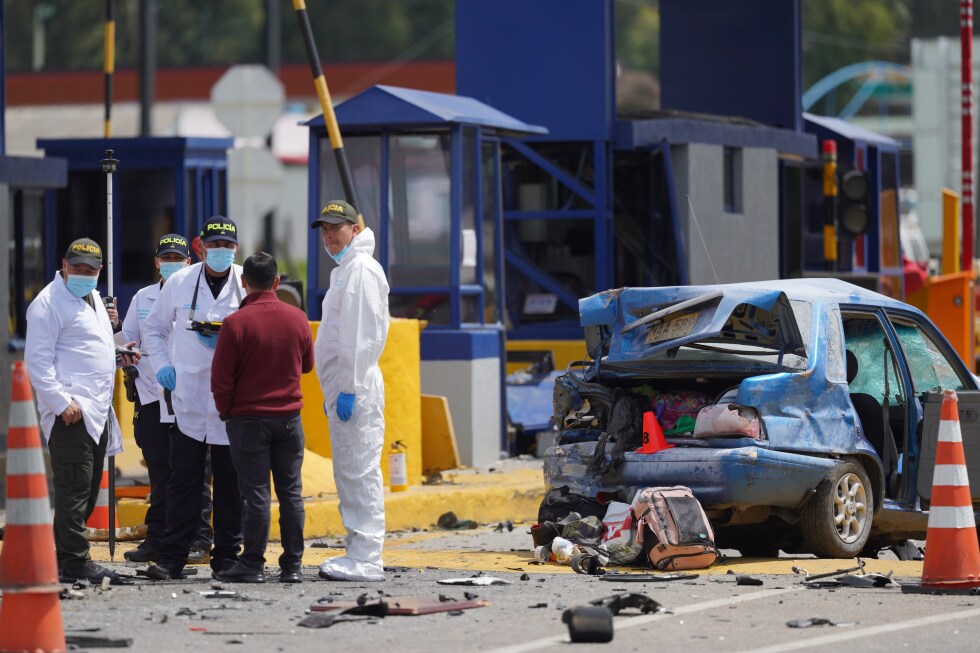
    A catastrophic military aircraft accident near Bolivia’s capital has resulted in a mounting death toll, with authorities confirming 22 fatalities and 29 injuries following Friday’s crash. The Bolivian Air Force Hercules C-130 transport plane was carrying approximately 18 tons of newly printed national currency when it experienced a catastrophic failure during landing procedures at El Alto International Airport.

    According to Defense Minister Marcelo Salinas, the aircraft had completed its mission of collecting freshly minted banknotes from Santa Cruz de la Sierra and was executing its final approach when the tragedy unfolded. The massive transport plane overshot the runway, careened into an adjacent field, and collided with multiple civilian vehicles on a nearby roadway before erupting in flames.

    The human cost has been devastating—among the confirmed casualties are 12 male victims (including one flight crew member), six women, and four children. Most injuries occurred among passengers utilizing public transportation routes adjacent to the airport perimeter. Emergency response teams worked through Saturday conducting recovery operations while medical facilities in El Alto received an influx of trauma patients.

    Social media documentation revealed harrowing scenes of aircraft debris, destroyed automobiles, and human remains scattered across the crash zone. Fire Chief Pavel Tovar reported at least 15 vehicles sustained significant damage from the impact and subsequent fire.

    In a remarkable secondary development, the crash precipitated widespread currency scavenging as high-denomination banknotes blanketed the area. Official reports indicate over 600 security personnel—including 500 military troops and 100 police officers—were deployed to secure the perimeter and prevent further looting of the uncirculated currency.

    Central Bank President David Espinoza supervised the controlled incineration of recovered cash containers, emphasizing that “these banknotes maintain zero monetary value as they never achieved official circulation status.” While the exact monetary value remains undisclosed, authorities confirmed the currency originated from international printing facilities before arriving in Santa Cruz.

  • At least 11 killed after military cargo plane crashes in Bolivia

    At least 11 killed after military cargo plane crashes in Bolivia

    A catastrophic aviation disaster unfolded Friday evening at Bolivia’s high-altitude El Alto International Airport, resulting in a confirmed death toll of at least eleven individuals. The tragedy involved a military cargo aircraft that crashed upon its approach, according to official statements from national authorities and local fire services.

    The ill-fated flight, which originated from the eastern lowland city of Santa Cruz de la Sierra, was attempting to land at approximately 18:20 local time (22:20 GMT) when the accident occurred. Preliminary reports from Bolivia’s air traffic control authority indicate the aircraft failed to stop upon touchdown, violently skidding beyond the runway’s confines.

    The失控的plane subsequently collided with multiple vehicles on a densely trafficked motorway adjacent to the airport perimeter, significantly amplifying the casualty count. Emergency response teams were immediately dispatched to the scene, undertaking extensive rescue and recovery operations throughout the night.

    In response to the severe incident, airport authorities have enacted a full closure of El Alto International Airport, one of the nation’s primary aviation hubs. This closure has caused widespread disruption to both domestic and international air travel, with numerous flights being canceled or diverted to alternative airports. A comprehensive investigation led by aviation safety experts has been launched to determine the precise cause of the mechanical failure or human error that led to the devastating crash.

  • Cargo plane carrying money crashes near Bolivia’s capital, killing at least 15 people, official says

    Cargo plane carrying money crashes near Bolivia’s capital, killing at least 15 people, official says

    A Bolivian Air Force cargo aircraft transporting newly printed national currency crashed during landing procedures near El Alto International Airport on Friday, resulting in a catastrophic incident that claimed at least 15 lives and left numerous others injured.

    The Hercules C-130 military transport plane, which had originated from Santa Cruz de la Sierra after collecting its monetary cargo, experienced a critical landing failure upon approach to the high-altitude airport serving La Paz. According to Defense Minister Marcelo Salinas, the aircraft ‘landed and veered off the runway’ before coming to rest in an adjacent field, erupting in flames that were subsequently extinguished by emergency responders.

    The crash created a scene of devastation on a nearby highway, where debris from the aircraft struck approximately 15 vehicles, causing significant damage and trapping occupants. Social media footage depicted destroyed automobiles, aircraft wreckage, and human remains scattered across the roadway.

    In a remarkable secondary development, the crash resulted in the dispersal of banknotes across the accident site, prompting local residents to scramble for the currency despite intervention by riot police attempting to secure the area. Central Bank President David Espinoza confirmed the aircraft was transporting newly printed bolivianos that had recently arrived from international sources, though the exact monetary value remains undisclosed.

    Rescue operations continued into Friday evening with two of the plane’s six crew members still unaccounted for. Aviation authorities have temporarily suspended all flights to and from El Alto International Airport while investigations into the crash causation proceed.

  • Pentagon to cut ties with Columbia, Yale, Brown and others Hegseth accuses of ‘wokeness’

    Pentagon to cut ties with Columbia, Yale, Brown and others Hegseth accuses of ‘wokeness’

    In a significant policy shift, the Pentagon has announced it will prohibit military personnel from attending several prestigious universities beginning next academic year. Defense Secretary Pete Hegseth unveiled the controversial measure in a social media address, characterizing institutions including Columbia, Yale, Brown, and MIT as “factories of anti-American resentment” and “breeding grounds of toxic indoctrination.”

    The decision extends a previous disengagement from Harvard University, with Hegseth alleging these elite institutions have exploited taxpayer funding while fostering military disdain. “They’ve replaced the study of victory and pragmatic realism with the promotion of wokeness and weakness,” he stated without presenting substantiating evidence.

    The policy implications remain partially unclear regarding scope and implementation. Despite Hegseth’s call for “complete and immediate cancellation of all Department of War attendance,” specific affected programs require clarification. Notably, these universities remained listed in Pentagon databases for Tuition Assistance programs as of Friday, covering full tuition for active-duty personnel.

    The move represents an escalation of tensions between the administration and Ivy League institutions, which have been frequent targets of political criticism regarding campus culture. While some universities had recently reached accommodations with the White House to restore federal funding, Harvard has pursued legal action alleging governmental retaliation for ideological differences.

    The policy particularly impacts professional military education opportunities, potentially affecting graduate-level programs, fellowships, and specialized degrees like Harvard’s master’s in public administration for military members. The announcement signals deepening ideological divisions affecting military-educational partnerships that have historically provided advanced training for military officers through both war colleges and civilian institutions.

  • Search for Brazil flood survivors continues as death toll rises to 64

    Search for Brazil flood survivors continues as death toll rises to 64

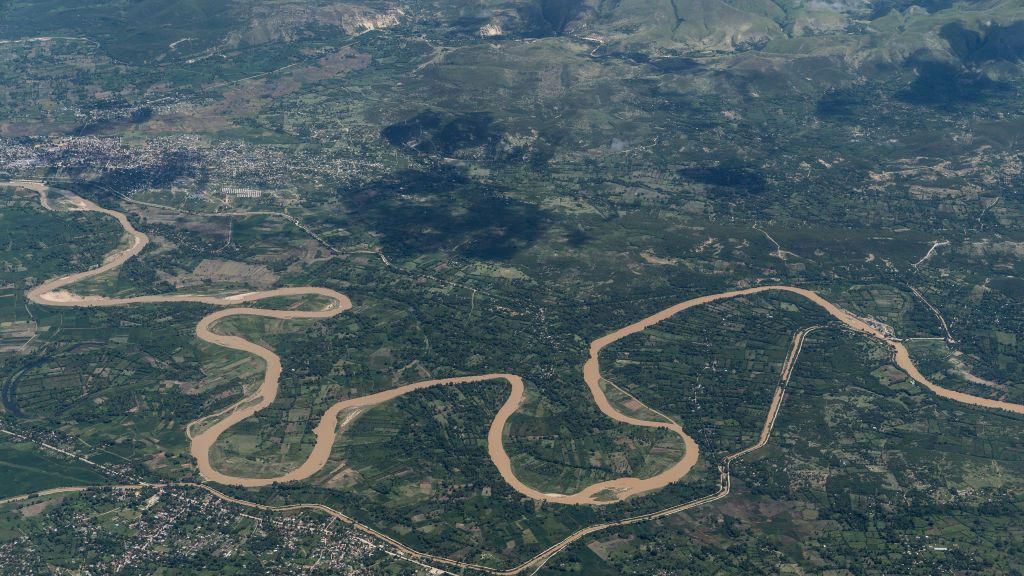
    A catastrophic weather event has struck the Brazilian state of Minas Gerais, resulting in significant loss of life and widespread destruction. Official reports confirm that 64 individuals have perished following a series of devastating landslides and severe flooding, triggered by relentless heavy rainfall that commenced earlier this week.

    The intense downpours, which began late Monday, have inflicted severe damage across multiple municipalities, including the cities of Juiz de Fora and Uba, located approximately 310 kilometers north of Rio de Janeiro. Emergency response teams have been engaged in continuous search and rescue operations throughout the week, working to assist survivors and recover victims.

    According to the Minas Gerais fire department, five people remain unaccounted for, while the scale of displacement is substantial, with more than 5,500 residents forced to evacuate their homes due to the imminent danger.

    In response to the crisis, President Luiz Inácio Lula da Silva is scheduled to visit the affected region on Saturday to conduct meetings with local authorities and assess the damage firsthand. The federal government has demonstrated its commitment to recovery efforts by authorizing the immediate release of approximately 3.4 million reais (equivalent to $660,000 USD) to fund urgent reconstruction projects and provide essential humanitarian aid.

    Compounding the tragedy, Brazil’s National Meteorology Institute (Inmet) has issued further warnings of impending severe weather conditions across Minas Gerais and neighboring states, including Rio de Janeiro and São Paulo. Meteorological experts have highlighted continued risks of additional landslides, river overflows, and major flooding events in these areas.

    The vulnerability of the region’s population is underscored by a 2023 report from Cemaden, the Brazilian government’s natural disaster monitoring agency, which indicated that nearly a quarter of Juiz de Fora’s 540,000 residents inhabit zones identified as high-risk for natural hazards related to land and water.

    This disaster occurs within a broader pattern of increasingly frequent extreme weather events that scientists attribute to human-induced climate change. The tragedy echoes the devastating floods that struck Brazil’s southern Rio Grande do Sul state in May 2024, which resulted in at least 185 fatalities and caused economic losses exceeding 10 billion reais ($1.9 billion USD), devastating local commerce, industrial operations, and agricultural production.

  • Argentina’s Senate convenes for final labor reform vote, as unions and opposition march in protest

    Argentina’s Senate convenes for final labor reform vote, as unions and opposition march in protest

    BUENOS AIRES — Argentina’s capital witnessed massive demonstrations on Friday as a broad coalition comprising labor unions, opposition factions, and leftist organizations flooded the streets of downtown Buenos Aires. The protests targeted President Javier Milei’s comprehensive labor reform package, which is poised for a decisive Senate vote imminently.

    The proposed legislation, championed by Milei’s La Libertad Avanza party, seeks to fundamentally transform Argentina’s labor landscape by granting employers enhanced flexibility regarding hiring practices, termination procedures, severance arrangements, and collective bargaining protocols. This initiative has encountered vehement resistance from labor unions and their Peronist allies, who contend that these measures would dismantle crucial worker protections and exacerbate vulnerabilities amid Argentina’s recurrent economic instability.

    Despite last week’s preliminary Senate endorsement, the government was compelled to modify a contentious provision that proposed halving salaries for workers on leave due to non-work-related injuries or illnesses. This amendment followed vigorous opposition from lawmakers, necessitating a final Senate vote to determine whether to accept the revised text or reinstate the original clause.

    The legislative process has been marked by significant tension, culminating last week in a 24-hour nationwide strike organized by Argentina’s largest trade union group, the General Confederation of Labor. Simultaneously, clashes erupted between police and demonstrators from various leftist factions outside Congress, highlighting the deeply polarized nature of the debate.

    President Milei maintains that modernizing Argentina’s half-century-old labor code is essential to attract foreign investment, enhance productivity, and stimulate job creation in a nation where approximately 40% of workers operate in the informal economy. Union leaders, however, argue these reforms would undermine the worker protections that have characterized Argentina since the emergence of Peronism in the 1940s—a movement that continues to wield substantial influence, particularly among the country’s 13 million registered workers, roughly 40% of whom maintain union affiliations.

    A successful Senate vote would deliver Milei a significant legislative achievement, potentially enabling him to highlight these substantial economic reforms during his upcoming Sunday address at the opening of Congress’s ordinary sessions.