标签: South America

南美洲

  • Ecuador deploys 75,000 soldiers to crime-ridden provinces under nightly curfew

    Ecuador deploys 75,000 soldiers to crime-ridden provinces under nightly curfew

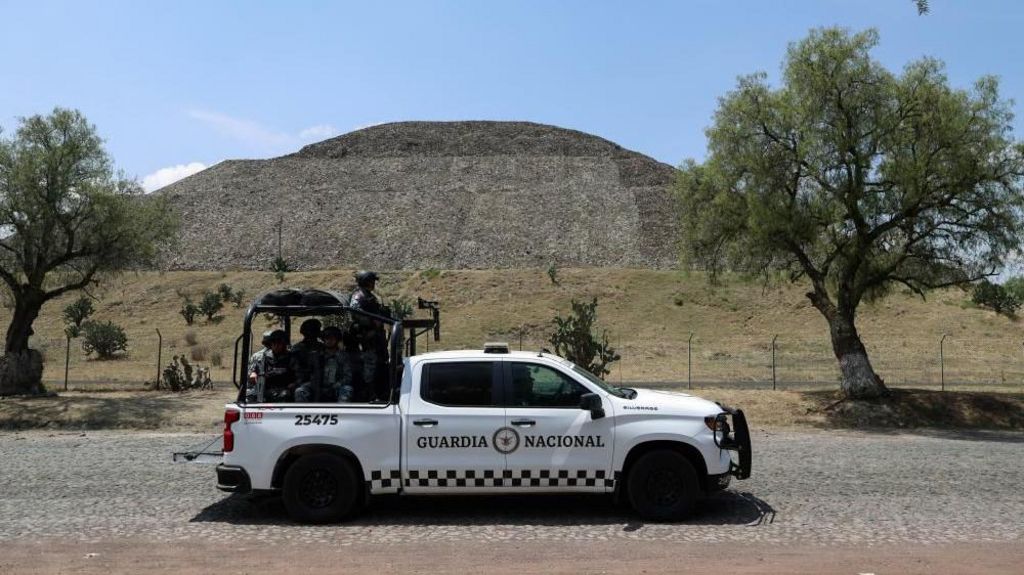
    Ecuador has initiated an unprecedented security mobilization, deploying 75,000 military and police personnel to four violence-plagued provinces while implementing strict nighttime curfews. The emergency measures, which began Sunday night, prohibit civilian movement between 11 p.m. and 5 a.m. in Guayas, El Oro, Los Rios, and Santo Domingo de los Tsachilas provinces for an initial two-week period.

    The massive security operation has already resulted in 253 arrests for curfew violations. Interior Minister John Reimberg confirmed authorized artillery strikes against three identified targets, declaring emphatically that operations would continue regardless of consequences. Remarkably, these initial strikes resulted in no recorded casualties according to official reports.

    This dramatic escalation responds to Ecuador’s spiraling security crisis, with homicide rates quintupling since the COVID-19 pandemic to reach 50 murders per 100,000 residents last year—the highest rate in decades. The violence stems primarily from competing international drug cartels battling for control of coastal ports used to transport cocaine to United States markets.

    President Daniel Noboa has extended a state of exception granting military authority to conduct joint patrols with police and enter homes without warrants. The conservative leader has pointed fingers at neighboring Colombia, accusing its government of insufficient action against cartels operating along their shared border. In retaliation, Noboa imposed tariffs on Colombian imports in January, vowing to maintain them until security conditions improve.

    Ecuador’s military recently collaborated with United States forces in a cross-border operation targeting a training camp used by Colombian drug traffickers. Officials identified the facility as belonging to Comandos de la Frontera, a splinter group originating from Colombia’s FARC guerrillas.

    Despite these aggressive measures, civil society groups criticize Noboa’s iron-fisted approach, arguing it has failed to reduce crime while endangering civilians. The strategy faced particular scrutiny after eleven soldiers received 30-year prison sentences last year for the abduction and murder of four children whose bodies were discovered near a military base outside Guayaquil.

  • UN receives reports alleging torture of detainees in Venezuela continues

    UN receives reports alleging torture of detainees in Venezuela continues

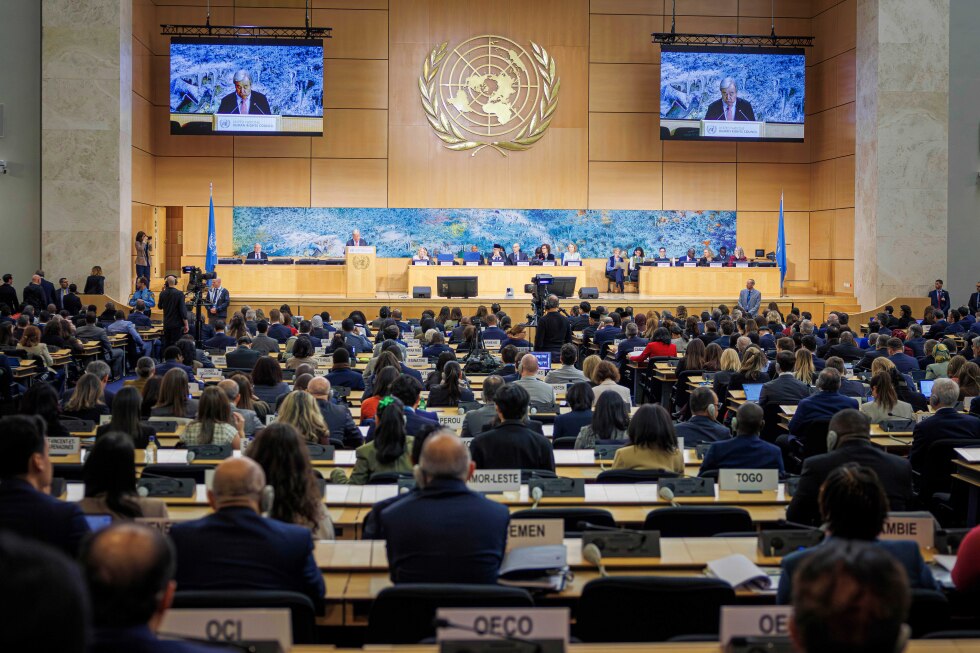
    The United Nations High Commissioner for Human Rights, Volker Türk, has raised serious concerns regarding continued human rights violations in Venezuela despite recent political changes. Speaking before the UN Human Rights Council, Türk acknowledged the passage of an amnesty law under the leadership of Delcy Rodríguez, who assumed power following the seizure of former President Nicolás Maduro by US forces in January. However, he emphasized that “structural and systemic human rights concerns have persisted” in the South American nation.

    Türk revealed that his office continues to receive disturbing reports of “torture and mistreatment of detainees” occurring in Venezuelan detention facilities, specifically naming Rodeo 1 and Fuerte Guaicaipuro centers. Particularly alarming is the disclosure that a child remains among those arbitrarily detained despite the amnesty legislation.

    The Commissioner highlighted a significant discrepancy in release figures, noting that while the Maduro-loyalist parliament claims over 7,700 individuals received “full freedom,” the independent prisoners’ rights organization Foro Penal has confirmed fewer than 700 actual releases. According to parliamentary data, most beneficiaries weren’t in traditional prisons but under alternative restrictions like house arrest or parole.

    Türk has urgently requested official documentation of those released and unimpeded access to detention centers, requests that have thus far gone unfulfilled. This call for transparency comes as the Independent International Fact-Finding Mission on Venezuela continues documenting post-January human rights violations, including torture, sexual violence, and degrading treatment in detention facilities.

    Venezuelan officials have historically dismissed such allegations as politically motivated and previously characterized UN reports as “politicized” and driven by “perfidious interests.” The government has not yet responded to Türk’s latest statements.

  • Mexico City breaks Guinness Record with giant football training session

    Mexico City breaks Guinness Record with giant football training session

    Mexico City has officially entered the Guinness World Records by orchestrating the largest football training session in history. A staggering 9,500 participants converged upon the iconic Zocalo square, the city’s main plaza, creating a monumental sporting event that dwarfed previous attempts. The meticulously organized gathering was strategically timed to capitalize on the global excitement building towards the upcoming World Cup tournament.

    The event transformed the historic heart of the Mexican capital into a vast, open-air training ground. Participants, ranging from amateur enthusiasts to aspiring athletes, executed synchronized drills and exercises under the guidance of certified coaches. Guinness World Records adjudicators were present to officially verify the count and ensure all strict guidelines were met, culminating in the formal recognition of this unprecedented achievement.

    This record-breaking endeavor serves multiple purposes beyond the athletic spectacle. City officials and sports organizers designed the event to foster national pride, promote grassroots football development, and harness the unifying power of sport. The Zocalo square, traditionally a space for political and cultural gatherings, witnessed an extraordinary demonstration of communal engagement and athletic spirit, setting a new benchmark for large-scale sporting participation worldwide.

  • Ecuador deploys 75,000 soldiers and police to combat drug gangs

    Ecuador deploys 75,000 soldiers and police to combat drug gangs

    In an unprecedented security mobilization, the Ecuadorian government has initiated a sweeping counter-narcotics operation across four provinces severely impacted by drug-related violence. Interior Minister John Reimberg confirmed the deployment of over 75,000 combined police and military personnel to the regions of El Oro, Guayas, Los Ríos and Santo Domingo de los Tsáchilas, alongside the implementation of nighttime curfews as part of what authorities term a “new phase” in their campaign against criminal organizations.

    The substantial escalation comes despite President Daniel Noboa’s sustained efforts to combat cartel violence since assuming office in November 2023. Official statistics reveal a troubling 30% surge in homicides between 2024 and 2025, culminating in a record murder rate last year, underscoring the persistent challenges facing the nation.

    Ecuador’s strategic positioning between Colombia and Peru—the world’s primary cocaine producers—has established the country as a critical transit hub for illicit narcotics. An estimated 70% of cocaine originating from these neighboring nations is trafficked through Ecuadorian territory en route to international markets, particularly the United States.

    In response to this transnational threat, the Noboa administration has forged a strategic alliance with the United States, participating in a 17-nation coalition led by President Donald Trump targeting criminal networks throughout the Western Hemisphere. This collaboration recently manifested through the establishment of the FBI’s first operational office in Ecuador and the launch of joint counter-narcotic initiatives.

    The partnership was further solidified during the “Shield of the Americas” summit convened by President Trump at Mar-a-Lago, where he characterized criminal syndicates as a “cancer” requiring military intervention. Following the high-level meeting, President Noboa publicly affirmed his commitment to confronting transnational organized crime, stating via social media: “For too long, the mafias thought that America was their territory. That they could cross borders, move drugs, guns and [spread] violence without consequences. Their time has run out.”

  • Laptop found in search for missing Brazilian woman

    Laptop found in search for missing Brazilian woman

    British authorities in Essex are intensifying their investigation into the disappearance of Vitoria Figueiredo Barreto, a 30-year-old research psychologist from Brazil who vanished under mysterious circumstances nearly two weeks ago. The search operation has yielded significant evidence, including the recovery of her personal laptop and crucial CCTV footage that may hold clues to her whereabouts.

    Barreto was last in communication with her family on March 3rd and was officially reported missing the following day. According to Essex Police, surveillance footage captured at Brightlingsea boatyard at 00:16 GMT on March 4th shows an individual believed to be Barreto jumping over a fence into the facility. Investigators theorize she may have taken a boat from the premises, which was subsequently discovered adrift near Bradwell-on-Sea. The vessel was found to be missing a distinctive horseshoe-shaped buoyancy aid.

    The investigation expanded on March 14th when police discovered Barreto’s laptop in the coastal town of Brightlingsea, where she had traveled by bus on the day of her disappearance. Authorities are currently pursuing multiple potential sightings in the Bradwell region while appealing to the public for additional information.

    Barreto, hailing from the coastal city of Fortaleza in northeastern Brazil, had recently attended a conference in Morocco before arriving in the United Kingdom on February 2nd. She had been residing with friend Liliane Silva while conducting research at the University of Essex in Colchester.

    Her family has initiated a unique outreach effort, urging the Brazilian community in Essex to display national flags in hopes of attracting Barreto’s attention and making her feel secure should she see them. Detective Superintendent Anna Granger emphasized the department’s commitment: “Every single officer, staff member and volunteer involved in this search would love nothing more than to reunite Vitoria with her mum – and we’re working around the clock to do that.”

    The police have acknowledged strong community support in both raising awareness of Barreto’s disappearance and assisting her family during the investigation. Authorities continue to urge anyone with information regarding potential sightings or relevant CCTV footage to come forward immediately.

  • Neymar’s path to the World Cup with Brazil narrows after subdued performance for Santos

    Neymar’s path to the World Cup with Brazil narrows after subdued performance for Santos

    SAO PAULO — Brazilian football superstar Neymar Jr. faces mounting uncertainty regarding his selection for the upcoming World Cup following an unimpressive performance in Santos’ 1-1 draw against Corinthians on Sunday. The match represented the final opportunity for the 34-year-old striker to demonstrate his capabilities before Brazil coach Carlo Ancelotti announces his squad for crucial preparatory friendlies against France and Croatia.

    Neymar, Brazil’s all-time leading scorer with 79 international goals, delivered a notably subdued performance at Vila Belmiro Stadium. His most significant opportunity came in the second half with a narrowly missed header, while throughout the match he demonstrated limited dribbling effectiveness and failed to register a single shot on target. The performance followed his controversial absence from Tuesday’s match against Mirassol, which Ancelotti attended without prior notification of Neymar’s withdrawal.

    The striker’s recent history compounds his selection challenges. Neymar underwent ACL reconstruction surgery in October 2023 followed by additional knee surgery in December, limiting him to fewer than 10 appearances for Santos this season. Despite these setbacks, he has demonstrated flashes of his former brilliance, most notably in February when his two-goal performance against Vasco da Gama elevated him into Santos’ top ten all-time scorers.

    Ancelotti has maintained stringent selection criteria, emphasizing that only fully fit players will be considered for the World Cup tournament. The coach has simultaneously suggested that certain established players might bypass the usual evaluation process, leaving Neymar with residual hope for final squad inclusion even if omitted from the upcoming friendlies.

    Following the match, a visibly disappointed Neymar told reporters: ‘My aspiration to rejoin the national team and compete in the World Cup remains strong, but ultimately this decision lies beyond my control. Regardless of my participation, I will always support Brazil.’

    With Brazil’s federation staff observing Sunday’s match and Ancelotti’s final squad announcement scheduled for May, Neymar’s pathway to what would be his fourth consecutive World Cup appearance appears increasingly precarious.

  • Spain-Argentina Finalissima in Qatar cancelled

    Spain-Argentina Finalissima in Qatar cancelled

    The highly anticipated Finalissima match between reigning Copa America champions Argentina and European champions Spain has been officially cancelled due to escalating geopolitical tensions in the Middle East. The prestigious intercontinental showdown was originally scheduled for March 26th in Qatar but has been called off following security concerns stemming from regional conflicts.

    European football’s governing body Uefa announced that despite exploring multiple alternative arrangements, no viable solution could be agreed upon with the Argentine Football Association (AFA). Proposed alternatives included hosting the match at Real Madrid’s Bernabéu Stadium in Spain or organizing a two-legged fixture split between Madrid and Buenos Aires. However, these proposals were ultimately rejected by Argentine officials.

    In a detailed response, Conmebol (South American football’s governing body) and AFA revealed they had counter-proposed moving the match to March 31st at a neutral venue in Italy. Uefa declined this four-day postponement, citing scheduling conflicts with the Spanish national team. The European body further noted that Argentina’s alternative suggestion to reschedule after the World Cup was impossible due to Spain’s packed international calendar.

    The Spanish Football Federation emphasized their willingness to play under any circumstances, stating they had ‘worked intensively’ to facilitate the match without preconditions. This cancellation follows similar security-driven decisions in other sports, including the recent cancellation of Formula 1 races in Bahrain and Saudi Arabia originally planned for April.

    The Finalissima, a quadrennial event co-organized by Uefa and Conmebol, last took place in 2022 when Argentina defeated Italy 3-0 at London’s Wembley Stadium. The tournament was designed to showcase elite intercontinental football competition between South American and European champions.

  • Abreu’s 3-run homer sends Venezuela to its first WBC semifinal in 17 years

    Abreu’s 3-run homer sends Venezuela to its first WBC semifinal in 17 years

    MIAMI — In a stunning reversal of fortune at loanDepot Park, Venezuela mounted a spectacular comeback to dethrone reigning World Baseball Classic champions Japan with an 8-5 quarterfinal victory on Saturday. The triumph not only snapped Japan’s impressive 11-game WBC winning streak but also secured Venezuela’s first semifinal appearance in the tournament in nearly two decades.

    The game’s pivotal moment arrived in the sixth inning when Boston Red Sox outfielder Wilyer Abreu launched a decisive three-run homer off Japanese pitcher Hiromi Itoh. The 409-foot blast to right field transformed a 5-4 deficit into a 7-5 lead, igniting euphoric celebrations among Venezuelan players and their passionate supporters.

    Abreu’s heroic swing capped a remarkable team resurgence that began in the previous inning when Maikel Garcia ignited the rally with a two-run homer. The Venezuelan squad demonstrated exceptional resilience against the tournament favorites, feeding off the electric atmosphere created by their fervent fanbase that remained standing throughout most of the contest.

    In postgame remarks, Abreu reflected on the climactic moment: ‘I attempted to at least tie the game with a sacrifice fly, but he delivered a quality pitch that I could drive. Making solid contact in that situation and witnessing the outcome was incredibly exhilarating.’

    The victory carries historic significance beyond the tournament itself, as Venezuela simultaneously clinched qualification for the six-nation baseball tournament at the 2028 Olympics alongside the United States and Dominican Republic. Abreu emphasized the broader meaning for his nation: ‘This represents something profound for Venezuelans. While our country has participated in Olympics through other sports, we’re endeavoring to carve our own legacy in baseball.’

    Despite the monumental achievement, the Venezuelan team maintains focus on the unfinished tournament, with Abreu noting: ‘Our preparation has been exemplary, but the mission remains incomplete. We have additional objectives to accomplish.’ Venezuela advances to face Italy in the semifinal round, carrying momentum from one of the most significant victories in their national baseball history.

  • A blow to Caribbean democracy as Stabroek News and Newsday papers fold after social media shift

    A blow to Caribbean democracy as Stabroek News and Newsday papers fold after social media shift

    SAN JOSÉ, Costa Rica (AP) — The Caribbean media landscape is undergoing a profound transformation as longstanding newspapers collapse under the weight of digital disruption. Two iconic publications—Guyana’s Stabroek News and Trinidad and Tobago’s Newsday—have ceased operations this year, signaling a critical juncture for press freedom and democratic discourse in the region.

    The closures represent more than business failures—they signify the erosion of institutional knowledge and independent journalism that has guided Caribbean democracies through pivotal moments. Stabroek News, established in 1986 during Guyana’s authoritarian period, printed its final edition after 38 years of operation. Meanwhile, Newsday terminated both print and digital publications in January after three decades of service.

    Media experts identify a convergence of challenges: catastrophic advertising revenue declines, changing consumption patterns, and the overwhelming dominance of social media platforms. For generations like 32-year-old Carlon Augustus of Trinidad and Tobago, real-time social media updates have replaced the ritual of daily newspaper reading. “Everything is on social media now. Whatever happens today, you don’t have to wait to get the papers tomorrow,” Augustus noted.

    The impact extends beyond convenience. These independently owned newspapers provided essential platforms for democratic discourse—particularly Stabroek News, which became renowned for its op-ed sections featuring literary giants and its letters page that served as “an informal national meeting place” where citizens debated matters of public importance as equals.

    Kiran Maharaj, president of the Media Institute of the Caribbean, emphasized the gravity of these losses: “You have now a narrowing of that [media diversity],” she stated, noting these publications’ resistance to influence from advertisers or political interests.

    The financial realities proved insurmountable. Daily News Limited, Newsday’s publisher, cited a 75% drop in print advertising over the past decade. Despite attempts to establish digital operations in 2018, the transition proved insufficient. Stabroek News faced additional challenges, including substantial unpaid government advertising debts exceeding $90 million.

    Former Newsday editor-in-chief Judy Raymond reflected on the broader implications: “That is definitely a loss to the country, to our democracy, where particularly in this age of social media, credible professional media houses are needed more than ever.”

    As the Caribbean navigates complex issues including corruption allegations and resource management controversies, the disappearance of these journalistic institutions leaves a void in democratic accountability—raising urgent questions about the future of credible information ecosystems in the region.

  • Cuban protesters ransack Communist office as energy crisis deepens

    Cuban protesters ransack Communist office as energy crisis deepens

    In a rare display of public dissent, protesters in the central Cuban city of Moron ransacked a Communist Party office following rallies against severe food shortages and persistent power outages. The Cuban Interior Ministry (Minint) confirmed five arrests after a small group vandalized the building overnight into Saturday, starting fires with furniture from the reception area.

    The demonstrations occur amid mounting economic pressures exacerbated by a prolonged US oil blockade. President Miguel Díaz-Canel revealed in a national broadcast that no fuel has entered the country for three months due to these sanctions. The energy crisis has crippled essential services including hospital operations, public transportation, and education systems.

    While initial reports from state-run newspaper Invasor indicated the protest began peacefully, it escalated into acts of vandalism targeting multiple government facilities. Social media footage circulated showing protesters hurling rocks through windows while shouting “liberty” as fires burned in the streets.

    The unrest coincides with confirmed diplomatic talks between Havana and Washington to address longstanding differences. However, the situation remains tense as the Trump administration continues its pressure campaign, having previously threatened a “friendly takeover” and blocked Venezuelan oil shipments that once supplied half of Cuba’s energy needs.

    Cuban authorities have deployed specialized forces to investigate what they term “acts of vandalism,” highlighting the unusual nature of such public dissent in a country where protest rights, while constitutionally granted since 2019, remain undefined in practice.