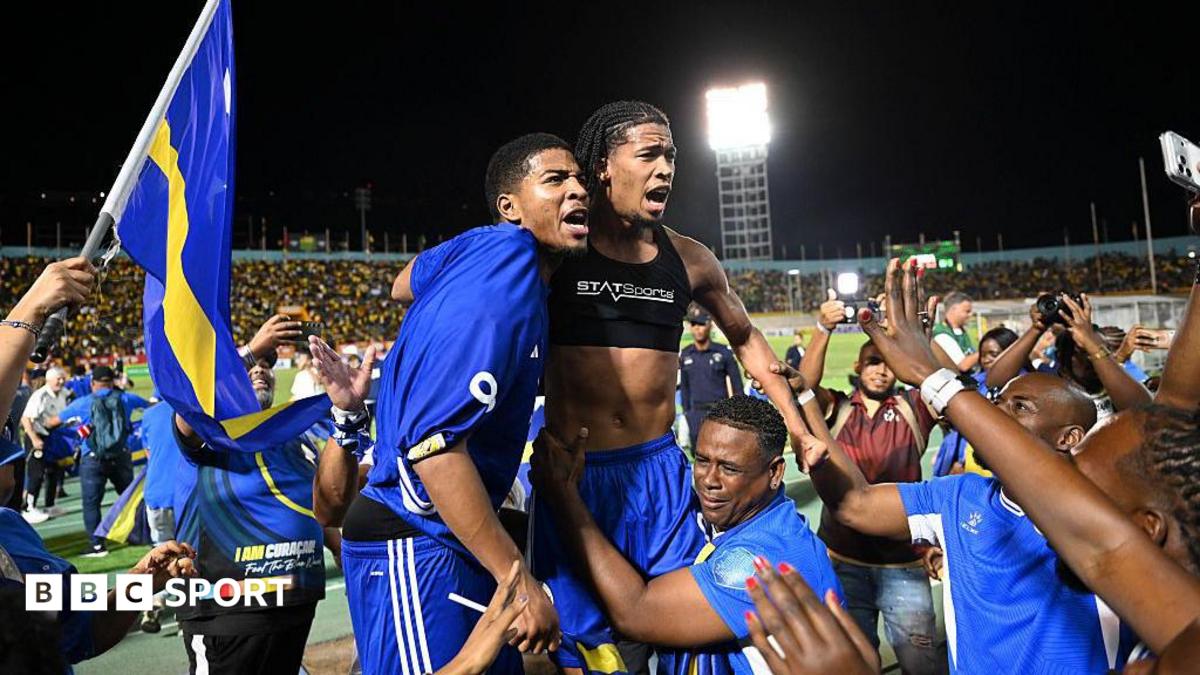
Nestled in the heart of the Caribbean, the tiny sun-drenched island of Curacao has long been known globally for its namesake orange liqueur and blend of Dutch colonial heritage and vibrant local culture. But this June, the small island nation is set to step onto the world’s biggest sporting stage and write a new chapter of football history that will far outlast its reputation as a vacation destination.
With a total land area smaller than the Isle of Man and a population of just 158,000 — fewer people than live in 40 cities and towns across the United Kingdom — Curacao is not even a fully sovereign state, remaining an autonomous constituent country within the Kingdom of the Netherlands. Yet it has defied all odds to qualify for the 2026 FIFA World Cup, becoming the smallest nation ever by both size and population to reach the sport’s premier tournament.
This milestone achievement has sparked unprecedented national celebration across the island. “It brings so much joy and pride to the island that you can’t describe it. The whole island is turning blue,” Gilbert Martina, president of the Curacao Football Federation (FFK), told BBC Sport ahead of Curacao’s World Cup debut against four-time champions Germany in Houston. Thousands of passionate “Blue Wave” fans are expected to travel to Texas for the opening match, with fans booking last-minute charter flights directly from the Caribbean island to see their team make its first World Cup appearance.
Unlike most national squads, only one member of Curacao’s 26-player roster — winger Tahith Chong — was actually born on the island. The remaining 25 players were born and raised in the mainland Netherlands, part of the large Curacaoan diaspora that numbers roughly the same as the island’s total population. Eighteen of these squad members previously represented the Netherlands at youth international level, with two — defender Joshua Brenet and midfielder Riechedly Bazoer — even earning senior caps for the Dutch senior team before switching their allegiances to Curacao.
The shift toward integrating diaspora talent began more than a decade ago, when the federation hired high-profile Dutch manager Patrick Kluivert in 2015. The first of the new wave of diaspora players, Miami FC goalkeeper Eloy Room, made his international debut for Curacao that same year, with current captain Leandro Bacuna — a former midfielder for Aston Villa and Cardiff City — following in 2016. A massive influx of new talent joined the squad after 2023, with 15 first debuts in the past three years, including Chong, who switched from Dutch under-21 duty to Curacao in 2025.
Critics have occasionally raised questions about the lack of native-born players in the squad, but the arrangement is widely accepted on the island, where cross-Atlantic family and cultural ties to the Netherlands are deeply ingrained. “We’re very used to our diaspora also being outside the island. So that’s not necessarily a factor in how we would identify ourselves. Even if a player is not born here, they feel an extreme connection and identify as Curacaoan,” explained Boudino de Jong, a Curacao native and co-founder of Profound, the FFK’s digital partner.
For the players themselves, the connection to the island runs deep through family heritage. Juninho Bacuna, Leandro’s younger brother and a former midfielder for Huddersfield Town and Rangers, chose to represent Curacao for the chance to play alongside his brother and honor his parents, who were both born on the island. “When we were kids we dreamed of playing together in one team on one pitch. That’s why I decided early on to play for Curacao so I could be with him, make my parents proud, make the island proud,” the 28-year-old said.
Alongside its historic player cohort, Curacao brings another record to this World Cup: 78-year-old manager Dick Advocaat will become the oldest head coach to ever lead a team at the tournament. Advocaat, a legendary Dutch football manager, first took charge of Curacao in 2024 and is widely credited with building the discipline and mentality that drove the team’s unbeaten qualifying run. He stepped aside temporarily in February 2025 to care for his ill daughter, but returned to the role last month after his family situation improved, with players and sponsors publicly advocating for his comeback.
Advocaat’s influence transformed the team’s approach, Martina said: “He prepared the mindset and the mentality that the team has to learn to play for results instead of playing for fun.” That focus paid off during qualifying for the expanded 48-team 2026 World Cup, where Curacao finished the Concacaf qualifying process unbeaten, picking up seven wins and three draws to secure their spot. Even when Advocaat missed the decisive qualification draw against Jamaica for family reasons — with assistant Dean Gorre stepping in to lead the side — the team held on to secure the point they needed. For Gorre, the moment was made even more special by the fact that his son, Kenji Gorre, a former Swansea City winger, is a member of the Curacao squad. “To see him lead the biggest game of Curacao’s history, to live that with him and to actually be on the field while he is the coach is a unique situation,” Kenji Gorre said.
Drawn into a challenging Group E alongside Germany, Ecuador and Ivory Coast, Curacao is widely considered the underdog heading into their opening match. But captain Leandro Bacuna says the team has no intention of just making up the numbers. “People look at us always having fun and dancing. We are all together. But as soon as the referee blows the whistle we have one thing on our mind — getting a result,” he said. His brother Juninho echoed that fighting spirit, noting that even a potential knockout stage matchup against the Netherlands would bring out the very best from the side: “If that happens, I’m giving, not 100, not 200, I will give 1000% more than I will give ever. We just want to show the world that we are a small island but we have got a big heart, belief and a lot of talent.”
Off the pitch, Curacao’s qualification is already being felt across the island. The entire nation shut down to celebrate the decisive qualification draw, with traffic stopping across the island as fans poured into the streets to celebrate. Martina says the moment has been transformative for national pride, with blue flags and decorations covering everything from buildings to cars. Beyond celebration, the team’s World Cup run is expected to drive a major boost to tourism and foreign investment, putting the small Caribbean island on the global map in a new way.
For the players and fans alike, this is more than just a football tournament — it is a story of defying impossible odds. “This is a story of the impossible being possible. This is a story of hope,” Kenji Gorre said. “This will be a story that will go on for generations in the Gorre family, as well as the world of Curacao.” Martina says the team has set a modest but ambitious goal: reaching the knockout stage as one of the best third-placed teams in the new expanded format. Regardless of their results, Curacao has already made history — and proven that size is no barrier to reaching the world’s biggest sporting stage.