In a significant environmental development, Brazil’s Amazon rainforest saw an 11% reduction in deforestation from August 2024 to July 2025, according to government data released on Thursday. Despite this progress, the region faced record-breaking wildfires and severe drought, as reported by Brazil’s National Institute for Space Research (INPE). Approximately 5,796 square kilometers (2,238 square miles) of forest were cleared during this period—an area nearly four times the size of New York City—marking the lowest deforestation level in nearly a decade. The Environment Ministry attributed this decline to enhanced environmental enforcement, expanded satellite monitoring, and improved coordination among federal agencies. This announcement comes just weeks before Brazil hosts the COP30 U.N. climate summit in Belem, where the country is expected to showcase its commitment to ending illegal deforestation by 2030. However, INPE also reported that fire detections in the Amazon from January through October 2025 reached their highest levels since 2010. Widespread burning and prolonged drought have caused severe air pollution in northern Brazil, leading to flight cancellations and health warnings in states like Amazonas and Para. Experts warn that these fires, often used to clear deforested land, could undermine recent conservation efforts. Brazil’s environmental enforcement agency, Ibama, conducted 9,540 inspections this year—a 38% increase from 2024—issuing $520 million in fines and seizing over 4,500 pieces of machinery and livestock linked to illegal activities. Additionally, over 75 civil lawsuits were filed against deforestation and illegal burning cases. Márcio Astrini of the Climate Observatory highlighted the progress but criticized the government’s contradictory policies, such as approving oil drilling projects in the Amazon River basin. Greenpeace Brazil welcomed the results but emphasized the need for permanent safeguards and stronger global cooperation to ensure lasting progress.
标签: South America
南美洲
-

Top Intel Democrat rips Trump administration over exclusion from boat strike briefing
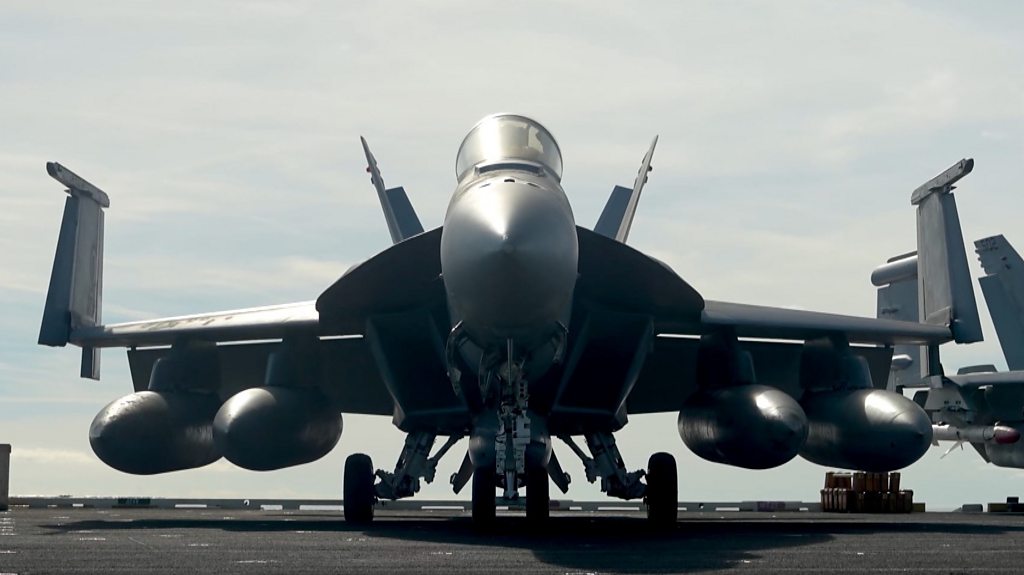
The Trump administration’s recent decision to exclude Democrats from national security briefings has raised significant concerns about the politicization of military and intelligence operations. Virginia Senator Mark Warner, the top Democrat on the Senate Intelligence Committee, warned that such actions could endanger U.S. troops and withhold critical information from the public. Warner criticized the administration for breaking long-standing norms of bipartisan collaboration in national security matters, particularly after Democrats were excluded from a briefing on U.S. military strikes against drug-carrying boats off South America. These strikes, totaling 14 so far, have resulted in 61 deaths and have drawn scrutiny from lawmakers in both parties regarding their legal justification, as Congress has not authorized military action in the region. The administration has also deployed an unusually large naval force near Venezuela, fueling speculation about potential efforts to oust President Nicolás Maduro. Senate Republicans, including Thom Tillis of North Carolina, acknowledged the need for bipartisan briefings but defended the administration’s approach, citing the politicized nature of the issue. Meanwhile, Warner and other Democrats have expressed frustration over the erosion of bipartisan traditions in national security decision-making. The Senate is expected to vote on a war powers resolution next week, which would prohibit military strikes near Venezuela without congressional approval. The resolution has garnered support from some Republicans, but concerns remain about the administration’s transparency and adherence to constitutional processes. The administration’s actions have also drawn criticism from House Democrats, who were excluded from a separate classified briefing on the strikes. The Pentagon’s decision to withdraw legal advisors from the briefing further exacerbated concerns about the lack of legal justification for the military actions. As tensions rise, lawmakers from both parties are calling for greater accountability and a return to bipartisan cooperation in national security matters.
-

‘Everything’s gone’ – BBC finally able to access one of Jamaica’s worst-hit areas
In a recent development, the BBC has managed to enter Falmouth, one of Jamaica’s most severely impacted areas following a recent disaster. The once-thriving tourism hub now lies in ruins, with buildings, power lines, and even a historic church that was once visited by King Charles, all reduced to rubble. The scene is one of utter devastation, with locals describing the situation as ‘everything’s gone.’ Falmouth, known for its vibrant tourism industry, now faces a long and arduous road to recovery. The destruction not only affects the local economy but also poses significant challenges for the community’s morale and future prospects. Authorities are now focusing on relief efforts and rebuilding plans to restore the area to its former glory.
-

Before and after: Satellite images reveal hurricane devastation in Jamaica
Jamaica is grappling with the aftermath of Hurricane Melissa, a Category 5 storm that has left widespread devastation across the island. With power outages, communication breakdowns, and treacherous conditions hampering relief efforts, authorities have yet to provide a comprehensive damage assessment. However, satellite imagery analyzed by BBC Verify is beginning to reveal the storm’s catastrophic impact on communities. The southwestern coastal port of Black River, described by Prime Minister Andrew Holness as ‘ground zero,’ has suffered severe destruction. Key structures, including a market building, a café, and a warehouse, have been obliterated or heavily damaged. The fishing village of White House, home to thousands, bore the brunt of the hurricane’s 185 mph winds, with nearly every structure either damaged or destroyed. Montego Bay, a major tourist hub, now resembles a brown swamp, with floodwaters inundating the port, industrial park, and nearby facilities. Mayor Richard Vernon described the area as ‘devastated,’ praising locals for their resilience and mutual support. As Jamaica begins the long road to recovery, the full scale of the disaster remains to be seen.
-

‘The bodies just kept coming’ – photographer at deadly Rio police raid
In the aftermath of what is now being called the deadliest police raid in Rio de Janeiro’s history, the Penha neighborhood has become a grim scene of devastation. Over 120 people, including both suspected gang members and police officers, lost their lives during the operation targeting the notorious Red Command gang. The raid, which involved approximately 2,500 security personnel, aimed to curb the gang’s territorial expansion but has since drawn widespread condemnation for its high death toll. Photographer Bruno Itan, who witnessed the aftermath, described the harrowing scene where bodies, some mutilated and decapitated, were laid out in a public square. Residents of the Alemão and Penha neighborhoods searched tirelessly for missing relatives, many of whom were found lifeless on a nearby hillside. The governor of Rio state, Cláudio Castro, defended the operation, stating that the police intended to arrest suspects alive but were met with violent retaliation. However, the United Nations High Commissioner for Human Rights expressed horror at the scale of the violence, and Brazil’s Supreme Court has summoned Governor Castro to explain the actions in detail. The incident has reignited debates about police brutality and the effectiveness of such operations in combating organized crime.
-

What is COP30 and why does it matter?
As the world grapples with escalating climate crises, global leaders are set to convene for COP30, the 30th annual United Nations climate conference. Scheduled from November 10 to 21 in Belém, Brazil, this summit marks a decade since the landmark Paris Agreement, which aimed to cap global temperature rises at 1.5°C above pre-industrial levels. The conference, officially known as the ‘Conference of the Parties,’ brings together nearly 200 nations to strategize on mitigating and adapting to climate change. However, the choice of Belém, located in the heart of the Amazon rainforest, has sparked logistical and environmental concerns, including deforestation for infrastructure and limited accommodations, potentially sidelining poorer nations. The summit faces additional challenges as global climate targets remain under strain, with only a third of countries submitting updated emission reduction plans. UN Secretary-General António Guterres has acknowledged that exceeding the 1.5°C target is now inevitable but remains hopeful for future corrective measures. Key discussion points at COP30 include the transition from fossil fuels, financial commitments to developing nations, renewable energy expansion, and the launch of the ‘Tropical Forests Forever Facility.’ The summit also grapples with the contentious stance of the Trump administration, which has rolled back U.S. climate commitments and criticized global climate efforts. Despite these hurdles, COP30 represents a pivotal moment for international collaboration, aiming to reinforce the commitments made in Paris and drive meaningful progress toward a sustainable future.
-

How ‘Love is Blind’ is reshaping global views on love, from Japan to Brazil
The recent Denver season of Netflix’s reality dating show ‘Love Is Blind’ marks its first foray into the Mountain West, but the franchise has already established itself as a global phenomenon. Over five years, the show has produced seasons in nine U.S. cities and inspired nearly a dozen international adaptations. By challenging conventional notions of love and prioritizing emotional connections over physical appearances, each season reflects the cultural intricacies of its setting, whether in Dallas or Japan. However, the show has faced criticism, including lawsuits over contestant treatment and concerns about internalized biases, particularly when couples meet face-to-face. Despite these issues, the series has successfully highlighted diverse cultural norms and forms of love across regions like Brazil, Japan, Sweden, the U.K., Mexico, the Middle East, Germany, Argentina, and France, with Italy and the Netherlands soon to follow. Brandon Riegg, Netflix’s vice president of nonfiction series and sports, emphasizes that the show’s blend of local authenticity and global relatability has subtly influenced global perspectives on love. Culturally conscious adaptations, such as the reserved dynamics of ‘Love is Blind: Japan’ and the bold emotions of ‘Love is Blind: Brazil,’ demonstrate the show’s ability to resonate with varied audiences. The Middle Eastern adaptation, ‘Love is Blind: Habibi,’ thoughtfully addressed conservative cultural values, earning praise for its respectful approach. The show has also sparked discussions about diversity and representation, with fans advocating for more inclusive casting and even a queer version. While the romantic relationships often take center stage, the friendships formed during the show have become a meaningful aspect, offering participants a lifeline in emotionally intense situations. As ‘Love Is Blind’ continues to evolve, it remains a platform for exploring the multifaceted nature of love across cultures and identities.
-

UK charters flights to get Britons out of Jamaica
In the aftermath of Hurricane Melissa, a catastrophic Category 5 storm, the UK government has initiated emergency charter flights to evacuate British nationals from Jamaica. The hurricane, which struck the Caribbean island on Tuesday, has caused widespread devastation, including destroyed homes, severe flooding, and significant loss of life. At least five fatalities have been reported in Jamaica, with an additional 20 confirmed in Haiti. The Foreign Office estimates that up to 8,000 British citizens are currently on the island and has urged them to register for updates on evacuation efforts. The chartered flights are available to British nationals and their immediate families holding valid travel documents, with priority given to those unable to secure commercial flights. Foreign Secretary Yvette Cooper emphasized the UK’s commitment to ensuring the safe return of its citizens, citing the strong historical ties between the UK and Jamaica. Jamaica’s Transport Minister Daryl Vaz announced that some airports, including Norman Manley International in Kingston, will initially reopen solely for humanitarian relief flights, with limited commercial operations resuming later. The UK has also pledged £2.5 million in aid to support emergency relief efforts, including the provision of shelter kits, water filters, and blankets. Hurricane Melissa, with sustained winds of 295 km/h (185 mph), is one of the most powerful storms recorded this year, surpassing even Hurricane Katrina in intensity. The storm has left three-quarters of Jamaica without electricity and caused significant damage to infrastructure, prompting Prime Minister Andrew Holness to declare the island a disaster area. While Melissa has moved towards the Atlantic, the risk of flash flooding and landslides remains high, with additional rainfall expected in mountainous regions. The remnants of the storm are forecast to impact the UK next week, though they are expected to be less severe.
-

Hurricane leaves trail of destruction across Caribbean
The Caribbean region is reeling from the catastrophic impact of Hurricane Melissa, a record-setting storm that has claimed at least 32 lives and caused widespread devastation across Jamaica, Haiti, and Cuba. Despite being downgraded from a Category 5 to a Category 1 hurricane, Melissa’s ferocity has left communities in ruins, with sustained winds reaching 298 km/h (185 mph) at its peak—surpassing even the destructive force of Hurricane Katrina in 2005. The storm’s path of destruction has been particularly severe in Jamaica’s southwestern parish of St Elizabeth, where knee-deep mud and washed-out bridges have isolated towns like Black River. In Cuba, Santiago de Cuba, the nation’s second-largest city, suffered extensive damage, with residents using machetes to clear debris-clogged streets. President Miguel Díaz-Canel described the hurricane’s impact as “considerable,” though no official casualty figures have been released. The Bahamas, while spared the worst of the storm, saw nearly 1,500 people evacuated in one of the largest operations in the country’s history. Despite flooding in some areas, major tourist destinations like Nassau and Freeport remain largely unaffected. Haiti, already grappling with gang violence and a humanitarian crisis, reported at least 23 deaths, including 10 children, primarily due to flooding from relentless rains. Communication and power networks in Jamaica’s hardest-hit regions remain severed, leaving families unable to contact loved ones. Amid the devastation, a glimmer of hope emerged as a baby was safely delivered under emergency conditions, earning the name “Baby Melissa.” The US National Hurricane Center (NHC) warns that hazardous conditions will persist in Cuba, Jamaica, and Hispaniola for several days, even as floodwaters in the Bahamas begin to recede.
-

Dozens dead in ‘total devastation’ left behind by Hurricane Melissa
Hurricane Melissa has unleashed catastrophic destruction across the Caribbean, claiming lives, obliterating infrastructure, and submerging entire communities. The Category 5 storm, one of the most powerful ever recorded in the region, struck Jamaica with full force, leaving at least five dead and widespread devastation. Prime Minister Andrew Holness described the scene as ‘total devastation,’ with 80-90% of roofs destroyed, alongside critical infrastructure like hospitals, libraries, and police stations. King Charles, Jamaica’s head of state, expressed deep concern and sadness, emphasizing the urgent need to address climate change and restore nature’s balance. The storm, now downgraded to Category 2, also wreaked havoc in Haiti, where at least 20 people perished in severe flooding. In Cuba, Melissa’s 115 mph winds and torrential rains battered the southeast, prompting President Miguel Díaz-Canel to urge vigilance. The storm is now heading toward the Bahamas and Bermuda, with a tropical storm warning in effect for the Turks and Caicos Islands. The U.S. has deployed a disaster response team to Jamaica, while Haiti and the Bahamas have formally requested aid. The hurricane’s aftermath has left thousands homeless, crops destroyed, and communities in disarray, with recovery efforts expected to take months.