标签: South America

南美洲

  • Fifteen killed after helicopter crashes during Peru flood rescue

    Fifteen killed after helicopter crashes during Peru flood rescue

    A Peruvian Air Force Mi-17 helicopter crashed during emergency flood response operations in southern Peru on Sunday, resulting in fifteen fatalities. The aircraft, which lost radio contact during its mission in the storm-ravaged Arequipa region, was discovered wrecked in the Chala district on Monday.

    Among the deceased were all four crew members and eleven passengers, including seven children. Reports indicate that some military personnel aboard had brought family members along during the rescue deployment. The youngest victim was just three years old.

    The helicopter had been dispatched from Pisco in the Ica region to support disaster relief efforts in Arequipa, where torrential rains have triggered severe flooding, mudslides, and river overflows. The wreckage was located near the coastal town of Chala Viejo.

    Peruvian authorities have launched a full investigation into the tragic incident. The Air Force expressed profound condolences to families and colleagues of the victims, describing the loss as ‘irreparable.’

    Meanwhile, the climate emergency continues to batter Arequipa with destructive force. Regional Governor Rohel Sánchez has formally requested national government assistance after numerous homes were rendered uninhabitable. Separate weather-related incidents have claimed at least two additional lives—an elderly woman swept away by floodwaters in Cayma district and a man killed by lightning.

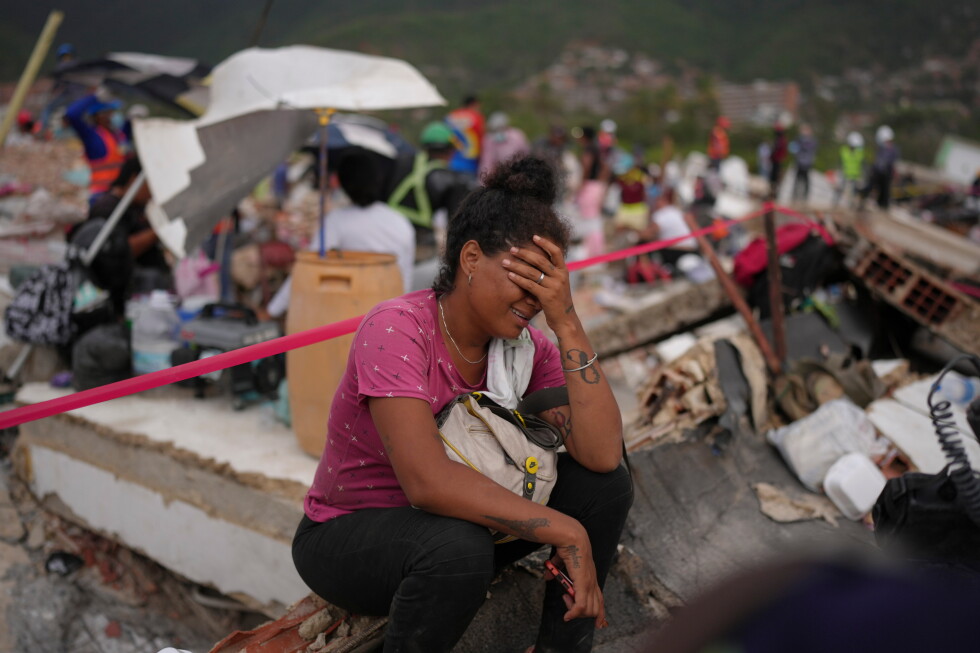
    Visual documentation from affected areas shows extensive damage with torrents of mud and debris inundating residential neighborhoods and floodwaters penetrating homes, creating a compounded humanitarian crisis.

  • Illegal gold mining surges into new parts of Peru’s Amazon, threatening rivers and lives

    Illegal gold mining surges into new parts of Peru’s Amazon, threatening rivers and lives

    COLOMBIA — A devastating wave of illegal gold mining operations is rapidly infiltrating previously untouched regions of Peru’s Amazon rainforest, creating an escalating environmental and public health emergency that experts warn could cause irreversible damage to one of the world’s most biodiverse ecosystems.

    The destructive industry, once concentrated primarily in Peru’s southern Amazon region of Madre de Dios, has now expanded northward into Loreto, Ucayali, and along the Ecuador border. This alarming expansion marks a dangerous new phase for Amazon destruction, as operations penetrate remote river systems and Indigenous territories with increasing sophistication.

    Rodolfo García Esquerre, Peru’s high commissioner against illegal mining, acknowledged the severity of the crisis during a February television interview, stating: ‘Unfortunately, we have illegal mining in all regions of Peru.’

    The mining techniques employed are exceptionally destructive: bulldozers strip away pristine forest, excavators carve massive pits into flood plains, and floating dredges suction river sediment in search of gold. The process leaves behind toxic, mercury-contaminated water pools and severely eroded riverbanks, while access roads enable deeper penetration into previously intact wilderness.

    Environmental lawyer César Ipenza attributes the accelerated expansion to surging gold prices, with the precious metal trading at approximately $2,000 per ounce in 2026—near historic highs and roughly double its value from a decade earlier. ‘Illegal mining has increased considerably,’ Ipenza confirmed, noting that higher prices make operations economically viable in increasingly remote areas.

    The environmental transformation occurs with alarming speed. Research professor Luis Fernández of Wake Forest University’s Sabin Center for Environment and Sustainability observed: ‘You’ll see changes in weeks to months once the machinery comes in… sediment plumes in the rivers almost immediately.’

    At the Panguana Biological Station in Peru’s central Amazon—a private conservation area protecting exceptionally biodiverse forests—administrator Fernando Malatesta described dramatic changes: ‘Where there were once intact forests… the rivers are now murky. You used to see crystal-clear water, but not anymore.’ He recounted visiting a nearby area recently deforested by dozens of machines, describing it as ‘an unrecognizable place.’

    The crisis extends beyond environmental damage to include serious threats to human safety. Malatesta and his team were forced to abandon their research station in 2025-2026 after facing escalating threats and confrontations with armed individuals. Researchers connect this violence to growing involvement of organized criminal networks, with illegal gold mining becoming a significant revenue source for transnational crime organizations.

    Julia Urrunaga, Peru program director for the Environmental Investigation Agency, noted the activity is ‘deeply linked to the political forces in the country right now,’ complicating enforcement efforts.

    While Peru’s government established a high-level multisector commission in late 2023 to combat illegal mining and formalize small-scale operations, environmental defenders consider enforcement inadequate despite recent operations seizing equipment valued at over $16 million.

    Indigenous communities face particularly dire circumstances. Julio Cusurichi, an Indigenous leader from Madre de Dios, reported that more than 30 Indigenous leaders have been killed in recent years while defending their territories. Some communities, facing economic pressure, have reluctantly participated in mining operations, selling land for short-term gain despite long-term consequences.

    The most insidious threat may be mercury contamination. Used extensively in gold extraction, mercury pollutes rivers and enters food chains, particularly affecting communities that rely on fish as a dietary staple. Claudia Vega, mercury program coordinator at the Amazon Center for Scientific Innovation, warned that contamination levels could approach those of Japan’s Minamata disaster, which caused widespread neurological damage, deformities, and sensory loss.

    Scientists caution that continued expansion could push the Amazon toward an ecological tipping point, potentially converting vast rainforest areas into degraded savanna-like ecosystems. Urrunaga emphasized that international gold buyers ‘need to be accountable for the destruction that their consumption is generating in terms of the environment, but most importantly in terms of human lives.’

    As Malatesta solemnly noted: ‘Every tree that falls, every river that is contaminated and every animal that disappears remind us that we are losing an irreplaceable treasure.’

  • At least 25 National Guards killed in violence after death of Mexican drug lord

    At least 25 National Guards killed in violence after death of Mexican drug lord

    Mexico has deployed 2,500 soldiers to western regions following a devastating wave of cartel violence that killed at least 25 National Guard members. The unrest erupted after Nemesio Oseguera Cervantes, known as ‘El Mencho’ and leader of the Jalisco New Generation Cartel (CJNG), died in custody Sunday after being captured by special forces.

    The security crisis has spread across at least 20 states since El Mencho’s death, with cartel members launching coordinated attacks including road blockades, vehicle burnings, and arson attacks on businesses. Security Secretary Omar Garcia Harfuch confirmed casualties included a prison guard, a state prosecutor’s office member, and 30 cartel operatives.

    El Mencho was captured following intelligence tracking of a romantic partner he was meeting in Tapalpa, Jalisco. The operation involved firefights that left six of his bodyguards dead and three military personnel injured. While being transported to Mexico City, the drug lord succumbed to injuries sustained during his capture.

    President Claudia Sheinbaum praised the military operation while emphasizing her administration’s commitment to restoring order. ‘There is calm, there is government, there are armed forces and there is a lot of co-ordination,’ she stated, noting that most roadblocks had been cleared by Monday morning.

    The violence prompted widespread shelter-in-place orders as deserted streets reflected public fear. The CJNG, considered Mexico’s most dangerous criminal organization, demonstrated its continued capacity for violence despite losing its leader.

    International cooperation played a role in the operation, with US-provided intelligence contributing to El Mencho’s capture though no US forces participated directly. The US State Department had offered a $15 million reward for information leading to his capture.

  • Colombia’s ELN rebels declare a unilateral ceasefire ahead of key congressional elections

    Colombia’s ELN rebels declare a unilateral ceasefire ahead of key congressional elections

    BOGOTA, Colombia — In a significant political development, Colombia’s National Liberation Army (ELN) has announced a unilateral ceasefire preceding next month’s crucial congressional elections. The country’s largest remaining rebel organization declared it would suspend hostilities against military and electoral authorities to facilitate public voting “in liberty,” though the ceasefire’s duration remains unspecified.

    The declaration emerges against a backdrop of escalating electoral violence targeting candidates in rural regions. The ELN utilized its official communication channels to refute longstanding allegations of political coercion and municipal fund manipulation, asserting they “do not finance any campaigns as drug traffickers do” and emphasizing voter autonomy in electoral decisions.

    This development follows the Colombian government’s termination of peace negotiations last year after ELN attacks in northeastern territories displaced over 50,000 civilians. The March 8 elections will determine composition of the Senate and House of Representatives, with more than 300 congressional seats contested. Simultaneously, primaries will select presidential candidates for left-wing and center-right coalitions ahead of May’s presidential race.

    President Gustavo Petro’s left-wing Historical Pact movement faces a pivotal test in establishing congressional support for potential constitutional reforms. However, electoral integrity has been compromised by violence, including recent incidents: Indigenous Senator Aida Quilcue’s temporary abduction in Cauca, the fatal shooting of two bodyguards protecting Senator Jairo Castellanos, and the assassination of presidential candidate Miguel Uribe last year—the first such attack in thirty years.

    Electoral monitoring organization Movement for Electoral Observation classifies 11% of Colombian municipalities at “extreme risk” for election-related violence, evaluating factors including armed group presence, forced displacements, and attacks on human rights defenders. This security assessment underscores the complex challenges facing Colombia’s democratic processes amid ongoing internal conflicts.

  • ‘Burned and destroyed’: Locals and tourists describe Mexico unrest

    ‘Burned and destroyed’: Locals and tourists describe Mexico unrest

    Popular Mexican resort destinations were transformed into scenes of chaos and destruction following the security operation that resulted in the death of Nemesio Oseguera Cervantes, known as “El Mencho,” leader of the Jalisco New Generation Cartel (CJNG). The feared drug lord’s demise on Sunday triggered immediate and coordinated retaliatory attacks across multiple states, with tourist hotspots Puerto Vallarta and surrounding areas experiencing the most visible violence.

    Eyewitness accounts from residents and tourists describe unprecedented scenes of vehicles set ablaze, plumes of smoke rising across cities, and roads deliberately blocked with burning cars. Jerry Jones, an American expatriate and publisher of LGBT+ lifestyle magazine Out and About Puerto Vallarta, reported that the violence erupted without warning. “We were completely caught off guard,” Jones stated, noting that the first indication of trouble came when a reader sent video footage of a bus being intentionally set on fire.

    The rapid escalation left authorities overwhelmed, with residents receiving minimal official communication during the critical initial hours. Jones observed no military or police presence in his neighborhood until afternoon, despite widespread destruction occurring since morning. The local government eventually issued shelter-in-place orders, transforming normally vibrant streets into eerily quiet zones as businesses, schools, and universities closed indefinitely.

    Canadian content creator Marc-André, who documents life in Puerto Vallarta through his YouTube channel More Life Diaries, described the transformation of the tranquil resort town into what resembled “an absolute war zone.” His drone footage captured hundreds of vehicles simultaneously burning across the city, creating an apocalyptic landscape completely alien to the area’s typical atmosphere of music and social gatherings.

    The violence stranded both residents and tourists, with some becoming trapped inside retail establishments as chaos erupted outside. Community members demonstrated remarkable resilience, spontaneously organizing to combat fires overwhelmed firefighters couldn’t address and assisting tourists without access to food supplies. When a single grocery store briefly opened Sunday evening, queues stretched to unprecedented lengths as people sought essential provisions.

    Despite the trauma, long-term residents expressed confidence in the community’s ability to recover. Jones emphasized Puerto Vallarta’s history of overcoming adversity, noting: “We have been through hurricanes together, the pandemic together, and businesses here join together. In times like this, they do not compete. They join together and they help each other.”

    The economic implications for Mexico’s tourism industry remain concerning, with many visitors experiencing canceled flights and disrupted vacation plans. American tourists interviewed by CNN described the situation as a “complete shocker” and “like being in the twilight zone,” with many expressing surprise at the rapid deterioration of security in areas previously considered safe havens.

  • Rubio heads to Caribbean to reassert US interests after Venezuela strikes and Iran threats

    Rubio heads to Caribbean to reassert US interests after Venezuela strikes and Iran threats

    WASHINGTON — Secretary of State Marco Rubio is scheduled to undertake a strategic diplomatic mission to St. Kitts and Nevis this Wednesday, demonstrating the Trump administration’s sustained commitment to Western Hemisphere affairs despite escalating tensions with Iran. The one-day visit coincides with the Caribbean Community (CARICOM) leadership summit, where Rubio will engage in multilateral discussions addressing regional security, economic cooperation, and stability initiatives.

    This diplomatic outreach occurs precisely one month after U.S. military operations successfully deposed Venezuelan President Nicolas Maduro, who currently faces serious narcotics trafficking charges in American courts. Maduro has entered a not guilty plea to allegations of collaborating with drug cartels to facilitate the shipment of thousands of tons of cocaine into the United States.

    The administration’s hemispheric strategy—often characterized by officials as a modern interpretation of the Monroe Doctrine—emphasizes regional primacy and opposition to external influences. Recent operations including maritime interventions against suspected drug traffickers, embargo enforcement against Cuba, and the seizure of sanctioned oil tankers constitute what President Trump has termed the “Donroe Doctrine.”

    While the administration’s current foreign policy priority has visibly shifted toward Iran, with substantial military assets deployed to the Middle East, Rubio’s presence at the CARICOM summit underscores continued strategic interest in what officials frequently reference as “America’s backyard.” The Secretary’s agenda includes reinforcing partnerships to combat illicit narcotics networks and address migration challenges while promoting sustainable economic development throughout the region.

  • Mexican Open denies cancellation amid violence

    Mexican Open denies cancellation amid violence

    The Mexican Open tennis tournament will proceed as scheduled despite widespread security concerns triggered by the death of notorious drug cartel leader Nemesio Oseguera Cervantes. The criminal figurehead, widely known as ‘El Mencho,’ died in custody last Sunday following his capture by Mexican special forces during a violent confrontation in Jalisco state.

    In response to his death, members of the powerful Jalisco New Generation Cartel (CJNG) have initiated a wave of violence across multiple regions, including arson attacks on businesses and the establishment of burning blockades. This has prompted travel advisories from both the US and UK governments, specifically warning against non-essential travel to Guerrero—where the tournament is hosted in Acapulco—and four other Mexican states.

    Tournament organizers have issued an official statement denying cancellation rumors and confirming the event will continue under enhanced security protocols. ‘The event continues as scheduled and tournament operations are proceeding normally,’ organizers stated, emphasizing their ‘coordination and constant communication with federal, state, and municipal authorities.’

    The violence has impacted other sporting events across Mexico, with four football matches postponed over the weekend. One match was temporarily suspended when players exited the field following reports of gunshots near the stadium.

    Despite the security situation, British players Cameron Norrie, Katie Boulter, and Heather Watson are all scheduled to compete in Mexican tournaments this week. The WTA has confirmed additional security measures have been implemented at the Merida Open, where Boulter and Watson are competing, noting that the Yucatan region has remained largely unaffected by the recent violence.

  • What the killing of drug lord ‘El Mencho’ means for Mexico

    What the killing of drug lord ‘El Mencho’ means for Mexico

    Mexico’s national security apparatus has confirmed the death of Nemesio Oseguera Cervantes, the notorious cartel leader operating under the alias ‘El Mencho,’ during a coordinated military operation. The high-profile takedown of the Jalisco New Generation Cartel (CJNG) leader represents one of Mexico’s most significant counter-narcotics victories in recent years.

    Background intelligence indicates El Mencho rose from humble beginnings as an avocado farmer to establish CJNG as Mexico’s most formidable and technologically advanced criminal organization. His network extended across five continents with particular strongholds throughout Mexico and the United States, specializing in synthetic drug production and distribution.

    The immediate aftermath presents a complex scenario for Mexican authorities. While eliminating such a high-value target disrupts CJNG’s operational command structure, security analysts anticipate potential fragmentation within the organization. Historical precedent suggests such events often trigger violent power struggles among subordinate factions seeking to fill the leadership vacuum.

    Geopolitical implications extend beyond Mexico’s borders, affecting international drug trafficking routes and bilateral security cooperation with the United States. The elimination of Mexico’s most-wanted criminal figure may temporarily disrupt distribution networks but is unlikely to substantially diminish overall drug flow without complementary structural interventions addressing systemic corruption and alternative economic opportunities in cartel-dominated regions.

  • Violence erupts in Mexico after drug lord El Mencho killed

    Violence erupts in Mexico after drug lord El Mencho killed

    Mexico has been plunged into a state of widespread turmoil and retaliatory violence following the death of Nemesio Oseguera Cervantes, the infamous leader of the Jalisco New Generation Cartel (CJNG) known as ‘El Mencho’. The high-value target was killed during a meticulously planned security operation on Sunday in the town of Tapalpa, Jalisco, which involved crucial intelligence support from the United States.

    The operation, executed by Mexican special forces, resulted in significant casualties. Four cartel members were confirmed dead alongside El Mencho, with three military personnel sustaining injuries. The Mexican Defense Ministry affirmed the success of the mission against the country’s most-wanted criminal.

    In a brutal response to the loss of their leader, CJNG factions unleashed a coordinated wave of violence across at least a dozen Mexican states. Retaliatory tactics included the strategic placement of approximately 250 burning vehicle blockades on major roadways, with 65 concentrated in Jalisco alone. Urban centers, including the World Cup host city Guadalajara and the resort destination Puerto Vallarta, were transformed into scenes resembling conflict zones, with eyewitnesses reporting armed gunmen on streets shrouded by plumes of smoke from innumerable fires.

    The escalating crisis prompted Jalisco Governor Pablo Lemus Navarro to declare a code red emergency, suspending all public transportation systems, canceling mass gatherings, and shifting educational institutions to remote learning. The violence extended to widespread looting and attacks on commercial establishments, with approximately 20 bank branches targeted by rioters.

    International repercussions were immediate. The United States issued urgent shelter-in-place advisories for its citizens in five Mexican states, while several major airlines, including Air Canada, United Airlines, and American Airlines, canceled flights to affected regions. The UK government similarly warned its nationals to exercise extreme caution.

    Mexican President Claudia Sheinbaum attempted to project control, emphasizing ‘absolute coordination’ between state and federal authorities while urging citizens to remain ‘calm and informed.’ Despite these assurances, the Security Cabinet confirmed 25 arrests linked to the violence, with 11 suspects detained for direct participation in attacks and 14 others for alleged looting.

    US Press Secretary Karoline Leavitt characterized El Mencho’s death as a significant victory in the bilateral fight against narcotics trafficking, highlighting his status as a prime target for both governments and his cartel’s primary role in funneling fentanyl into the United States. The late cartel leader, a 59-year-old former police officer, had built a vast criminal empire responsible for trafficking massive quantities of cocaine, methamphetamine, and synthetic opioids, with the US State Department offering a $15 million bounty for information leading to his capture.

  • Who was El Mencho, Mexico’s most wanted man?

    Who was El Mencho, Mexico’s most wanted man?

    The elimination of Nemesio Oseguera Cervantes, infamously known as ‘El Mencho,’ marks a pivotal moment in Mexico’s ongoing battle against organized crime. As the mastermind behind the Jalisco New Generation Cartel (CJNG), his death represents both a significant tactical victory for authorities and a potential catalyst for escalated violence across the nation.

    US intelligence agencies played a crucial role in the operation that brought down Mexico’s most feared cartel leader, demonstrating unprecedented cross-border cooperation between Mexican and American authorities. This joint effort underscores the international dimension of combating drug trafficking organizations that operate across national boundaries.

    In the immediate aftermath of El Mencho’s death, his organization has launched a coordinated campaign of violence and intimidation. From Guerrero on the Pacific coast to Tamaulipas in the northeast, cartel members have erected roadblocks and unleashed violence in at least eight Mexican states. The western state of Jalisco, the cartel’s home territory, has witnessed particularly severe unrest with masked gunmen setting fire to businesses in Guadalajara—a designated host city for the upcoming FIFA World Cup.

    Tourist destinations like Puerto Vallarta have been paralyzed as both visitors and residents shelter indoors awaiting the passing of this violent outburst. This widespread display serves dual purposes: demonstrating loyalty to the fallen leader and expressing fury toward government forces responsible for his elimination.

    The strategic vacuum left by El Mencho’s death raises critical questions about the future balance of power within Mexico’s criminal landscape. Historical patterns suggest that despite the removal of such influential figures, criminal organizations typically maintain continuity through well-established succession structures. The CJNG likely has several high-ranking lieutenants prepared to assume leadership, though replicating El Mencho’s unique combination of strategic vision and brutal effectiveness may prove challenging.

    El Mencho’s criminal career followed a trajectory common to many cartel leaders. Beginning with marijuana cultivation in his native Michoacán, he advanced through the criminal ranks during his time as an undocumented immigrant in California. Multiple arrests and eventual deportation shaped his development into a calculating and ruthless operator who ultimately built Mexico’s predominant criminal enterprise from the remnants of the fractured Milenio Cartel.

    His rise coincided with the decline of the Sinaloa Cartel following the extradition of Joaquín ‘El Chapo’ Guzmán. The CJNG strategically expanded its operations during this power transition, particularly capitalizing on the lucrative fentanyl trade that has become a primary concern for American authorities.

    The Sheinbaum administration now faces the complex challenge of managing both the security fallout from cartel violence and the diplomatic implications of deepened cooperation with the United States. This operation may temporarily alleviate pressure from Washington regarding cross-border fentanyl trafficking while potentially forestalling calls for unilateral American military action on Mexican soil—a proposition that has gained traction among some Republican policymakers.

    As Mexico processes the death of its most wanted criminal, the nation watches nervously to determine whether this represents a turning point in the drug war or merely another chapter in the cyclical violence that has long plagued the country.