标签: South America

南美洲

  • Severe floods in southeast Brazil kill at least 25 and force hundreds to evacuate

    Severe floods in southeast Brazil kill at least 25 and force hundreds to evacuate

    SOUTHEASTERN BRAZIL — Catastrophic flooding has struck the state of Minas Gerais, Brazil, resulting in at least 25 confirmed fatalities and leaving 43 individuals unaccounted for, according to official statements released Tuesday. Meteorological authorities have issued warnings of additional rainfall expected to batter the region in the coming days, exacerbating an already critical situation.

    The devastating downpours commenced on Monday, primarily affecting the municipalities of Juiz de Fora and Uba, located approximately 310 kilometers north of Rio de Janeiro. The unprecedented rainfall volume, which local officials reported as double the anticipated February precipitation, triggered massive evacuations with approximately 440 residents forced to abandon their homes amid rapidly rising waters.

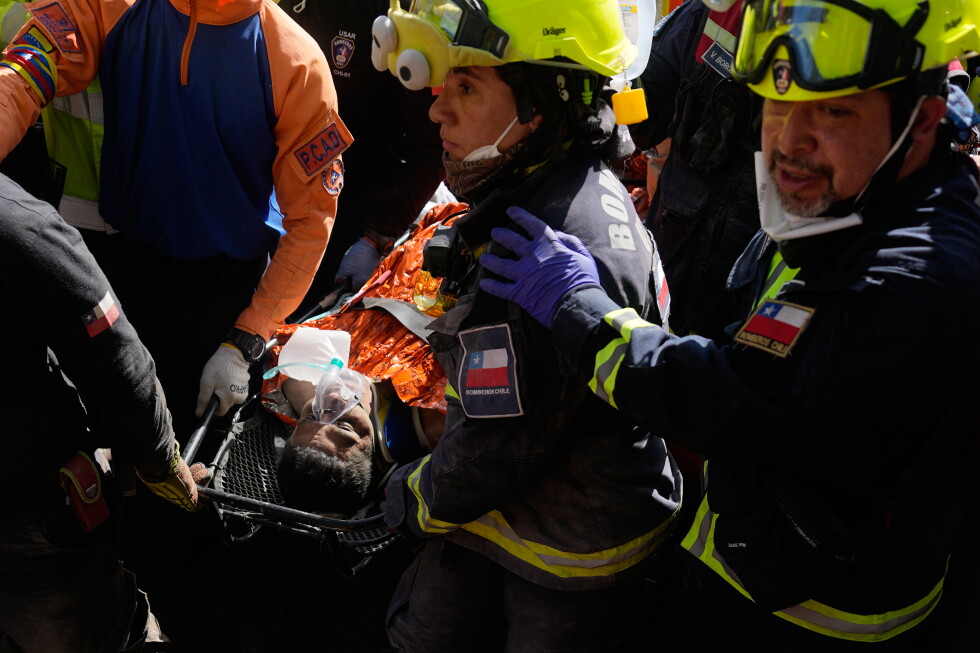
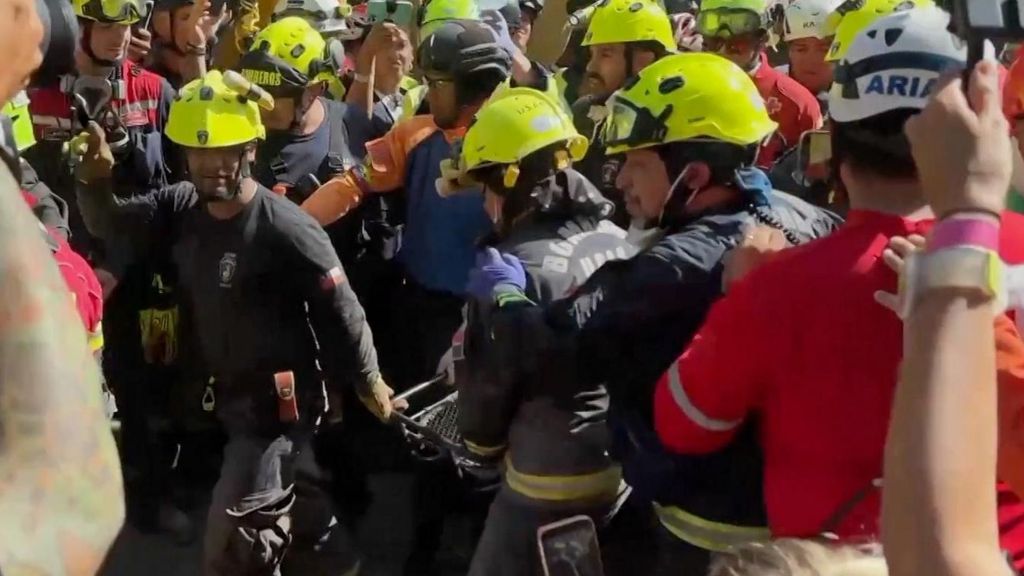
    Rescue operations led by Minas Gerais’ fire department are underway, though responders anticipate a protracted and meticulous search process. Firefighter Demetrius Bastos Goulart, 47, emphasized the challenges: “The enormous volume of mud from landslides requires extremely precise operations to avoid endangering potential survivors.”

    Urban infrastructure has been severely compromised, with viral footage from emergency services showing thoroughfares completely submerged and a local river dramatically diverting from its natural course. Authorities have urgently cautioned residents to avoid areas susceptible to additional mudslides.

    President Luiz Inácio Lula da Silva has publicly confirmed the deployment of security forces to assist with rescue missions and provide immediate aid to affected communities. The crisis response is further complicated by geographical factors, as Brazil’s meteorology institute Inmet noted the region’s proximity to hills, valleys, and slopes increases vulnerability to additional rainfall impacts.

    With Juiz de Fora’s population of 560,000 and neighboring Uba’s 107,000 residents facing ongoing threats, regional officials continue to monitor the situation closely as weather patterns show no immediate signs of improvement.

  • Mexico hunts 23 inmates sprung from jail during wave of violence

    Mexico hunts 23 inmates sprung from jail during wave of violence

    A coordinated wave of retaliatory violence orchestrated by the Jalisco New Generation Cartel (CJNG) has plunged multiple Mexican states into chaos following the confirmed death of its leader, Nemesio Oseguera Cervantes, alias “El Mencho.” The strategic resort city of Puerto Vallarta became a primary battleground where cartel operatives implemented road blockades, incinerated vehicles, and executed a brazen prison break.

    According to official reports, armed assailants utilized a vehicle to ram through prison gates in Puerto Vallarta, facilitating the escape of 23 inmates during the widespread unrest. The security apparatus across Jalisco state has initiated a multi-state manhunt for the fugitives, though authorities have not yet disclosed their identities or potential cartel affiliations.

    The violence resulted in a devastating human toll, with over 70 casualties reported nationwide, including 25 members of Mexico’s National Guard. The tourist-oriented economy of Puerto Vallarta suffered immediate disruption as major airlines suspended flights and cruise lines canceled scheduled port calls. Residents and visitors received emergency shelter-in-place orders while thick black smoke from burning vehicles blanketed the resort landscape.

    El Mencho, who ranked as Mexico’s most-wanted criminal and carried a $15 million U.S. bounty for his capture, met his end during a special forces operation in Tapalpa, Jalisco. Defense officials revealed that intelligence from one of the drug lord’s romantic partners enabled authorities to locate him. A fatal firefight erupted between Cervantes’ security detail and Mexican forces during the apprehension operation, resulting in his subsequent death from sustained injuries.

    While the Mexican government reported successful clearance of most cartel-erected blockades by Monday, continued violence was documented in Morelia—El Mencho’s birthplace—where armed groups persisted in destroying property and terrorizing civilians.

    The CJNG, under El Mencho’s leadership, evolved into a formidable transnational criminal enterprise with operations extending beyond its Jalisco stronghold into numerous Mexican states. The organization has gained notoriety for its extreme brutality, frequent confrontations with security forces, and significant role in fentanyl trafficking that drew particular attention from the Trump administration.

  • Hong Kong lodges ‘strong protest’ after Panama takes control of canal ports

    Hong Kong lodges ‘strong protest’ after Panama takes control of canal ports

    A significant international dispute has erupted after the Panamanian government assumed control of two critical container ports at the entrance to the Panama Canal, leading Hong Kong to issue a formal diplomatic protest. The ports, which had been operated for over twenty years by Hong Kong-based conglomerate CK Hutchison, were seized following a ruling by Panama’s Supreme Court that annulled the company’s long-standing contracts, declaring them ‘unconstitutional’.

    The Hong Kong government condemned the action as a ‘blatant act’ that violates both the spirit of the contracts and established international trade rules, lodging a ‘strong protest’ with Panamanian authorities. CK Hutchison, founded by billionaire Li Ka-shing, has labeled the takeover ‘unlawful’.

    This confrontation occurs against a backdrop of heightened geopolitical tensions, primarily fueled by repeated claims from former US President Donald Trump and his administration that China exerts control over the strategic waterway. Despite these assertions, there is no public evidence to suggest the Chinese government operates or controls the canal. The Panama Canal Authority, an agency of the Panamanian government, remains the sole operator.

    Complicating the matter further is a pending commercial transaction. Prior to the seizure, CK Hutchison had agreed to sell the majority of its stake in the ports to a consortium led by US investment giant BlackRock. The Panamanian government’s sudden intervention now jeopardizes this $22.8 billion deal, injecting significant uncertainty into global maritime investments.

    The Panama Canal itself remains a linchpin of global commerce. Approximately 14,000 vessels traverse the 51-mile shortcut between the Atlantic and Pacific oceans annually, facilitating about 5% of the world’s maritime trade. China is a major user of the canal, accounting for 21.4% of its total cargo volume from October 2023 to September 2024, second only to the United States. While Chinese firms have a notable commercial presence in the region, operational control of the canal remains firmly with Panama.

  • BBC’s Will Grant on the atmosphere in Mexico following unrest

    BBC’s Will Grant on the atmosphere in Mexico following unrest

    A palpable sense of apprehension lingers in Guadalajara, the bustling capital of Mexico’s Jalisco state, in the aftermath of a significant eruption of public violence. According to firsthand reporting from the BBC’s Will Grant, the city’s normally vibrant atmosphere has been subdued, replaced by a collective wariness among its citizens. The recent unrest has not only disrupted daily life but has also cast a shadow over the community’s sense of security. Local authorities are reportedly increasing patrols and presence in an effort to restore calm and reassure the public. The incident has sparked conversations about public safety and the underlying social tensions within the region. While businesses are gradually reopening, the memory of the turmoil continues to influence the rhythm of the city, with many residents opting for caution in their daily routines. This event highlights the ongoing challenges faced by communities when civil order is unexpectedly fractured.

  • State of the Union offers Trump a chance to make the case for his foreign policy approach

    State of the Union offers Trump a chance to make the case for his foreign policy approach

    WASHINGTON — As President Donald Trump prepares to deliver his pivotal State of the Union address, he faces the dual challenge of addressing growing domestic economic concerns while defending his administration’s foreign policy achievements against mounting public skepticism.

    The President intends to highlight several international accomplishments, including brokering a fragile Gaza ceasefire, orchestrating the capture of Venezuelan autocrat Nicolás Maduro, and pressuring NATO allies to increase defense spending. However, these foreign policy wins come at a time when recent AP-NORC polls reveal 61% of Americans disapprove of Trump’s handling of international relations, with 56% believing he has overextended military intervention abroad.

    The address occurs against a backdrop of significant political tension, including public criticism from former allies like ex-Rep. Marjorie Taylor Greene, who recently accused Trump of prioritizing “rich donor class and foreign policy” over America First principles.

    Key foreign policy challenges expected to feature prominently include:

    Iran Nuclear Standoff: The administration appears perplexed by Iran’s resistance to mounting military pressure, with Trump warning of “bad things” happening if no nuclear agreement is reached. Special envoys are scheduled for renewed talks in Geneva amid significant U.S. military buildup in the region.

    Ukraine Conflict: On the four-year anniversary of Russia’s invasion, Trump struggles to deliver on his campaign promise to end the war “in one day.” Negotiations remain deadlocked over territorial concessions and control of the Zaporizhzhia nuclear facility, with Trump pressuring President Zelenskyy to accept a deal before the U.S. midterm elections.

    Venezuela Strategy: The capture of Maduro has opened opportunities for U.S. energy investments, with the administration seeking $100 billion to revitalize Venezuela’s oil infrastructure while advancing what Trump calls the “Donroe Doctrine”—an aggressive regional strategy targeting drug trafficking and asserting U.S. primacy.

    Trade Policy Uncertainty: Following a Supreme Court ruling against his tariff authorities, Trump has threatened even higher global tariffs, creating market uncertainty that former Biden administration official Bharat Ramamurti warns could paralyze business investment decisions.

  • Father and son killed by mudslide in Peru as floods affect thousands of homes in southern provinces

    Father and son killed by mudslide in Peru as floods affect thousands of homes in southern provinces

    LIMA, Peru — A devastating landslide triggered by torrential rains in southern Peru has claimed the lives of a father and son, highlighting critical urban planning failures as climate extremes batter the region. The tragedy occurred in Arequipa, where authorities confirmed the victims were swept away in a neighborhood constructed directly atop a historic natural waterway.

    The catastrophic mudslides have impacted approximately 5,500 households, prompting mass evacuations across the region. Experts emphasize that these residential areas dangerously encroach upon ancient drainage paths that have channeled stormwaters for centuries during peak rainfall periods.

    In response to the escalating crisis, Arequipa authorities have urgently petitioned Peru’s interim president to declare a state of emergency. Regional Governor Dr. Rohel Sánchez Sánchez announced the immediate establishment of multiple emergency shelters throughout Arequipa, with the National Institute of Civil Defense and regional government distributing essential supplies including food and tents to displaced residents.

    Meteorologists attribute the extreme weather to the El Niño Costero phenomenon, which has produced weeks of intense rainfall. Official reports indicate warming Pacific waters are expected to slightly intensify this climate pattern through March. This oceanic warming creates elevated evaporation rates, generating extreme precipitation events and significantly increasing river flows throughout vulnerable regions.

  • Argentine clubs striking from March 5-8 after AFA chief Tapia faces court summons

    Argentine clubs striking from March 5-8 after AFA chief Tapia faces court summons

    Argentina’s football landscape faces unprecedented disruption as the nation’s professional clubs have unanimously agreed to stage a nationwide strike from March 5-8. This drastic measure comes in response to what the football community perceives as judicial targeting of Argentine Football Association (AFA) president Claudio Tapia.

    The labor stoppage, announced Monday following an emergency executive committee meeting, will suspend all first division matches and league games during the four-day period. The decision represents a unified front against legal proceedings initiated by the government’s Customs Revenue and Control Agency (ARCA).

    At the heart of the controversy is Judge Diego Amarante’s summons for Tapia to testify on March 5 regarding allegations of misappropriating social security contributions totaling 19 billion pesos (approximately $13 million) during 2024-2025. The judge has additionally imposed a travel ban on Tapia while summoning four other high-ranking AFA officials for questioning in early March.

    Those named in the investigation include AFA treasurer Pablo Toviggino, general secretary Cristian Malaspina, general director Gustavo Lorenzo, and former Racing Club president Víctor Blanco, who held an organizational position during the period under scrutiny.

    In a striking development, Judge Amarante granted Tapia authorization to travel to Colombia and Brazil between February 23-28 for official football duties, despite the ongoing investigation. Tapia is scheduled to attend an event hosted by the Colombian Football Federation in Barranquilla and subsequently participate in a CONMEBOL council meeting in Rio de Janeiro, where he serves as second vice president.

    The AFA has vehemently denied the allegations, asserting in an official statement that ‘the voluntary payment of these tax obligations was made prior to their due date.’ The football governing body maintains that the complaint lacks merit and represents unjustified persecution against its leadership.

    The scheduled strike represents one of the most significant labor actions in Argentine football history, demonstrating the deep solidarity within the sport’s infrastructure amid escalating tensions between football authorities and governmental agencies.

  • US ambassador defends travel bans on 3 Chilean officials as a ‘sovereign decision’

    US ambassador defends travel bans on 3 Chilean officials as a ‘sovereign decision’

    SANTIAGO, Chile — The United States ambassador to Chile has formally justified recent visa restrictions imposed on three high-ranking Chilean government officials, characterizing the move as a legitimate exercise of sovereign authority. Ambassador Brandon Judd addressed mounting tensions during a Monday press conference in Santiago, asserting America’s prerogative to deny entry when perceived threats to regional security emerge.

    The sanctions, publicly disclosed last Friday by U.S. Secretary of State Marco Rubio, specifically target individuals allegedly engaged in activities that compromise critical telecommunications infrastructure. Although Chilean authorities confirmed Transport and Telecommunications Minister Juan Carlos Muñoz as one affected official, the identities of the remaining two individuals remain undisclosed.

    Central to the diplomatic rift is a proposed submarine fiber optic cable project intended to connect Chile with China. While still in its preliminary evaluation phase, American officials have expressed profound security apprehensions regarding this infrastructure initiative. Ambassador Judd emphasized that exhaustive diplomatic efforts preceded the imposition of sanctions, noting that repeated requests for greater transparency from Chilean counterparts went unheeded.

    The decision has provoked substantial backlash within Chile’s left-leaning administration. Outgoing President Gabriel Boric condemned the American measures as unfounded and infringing upon national sovereignty, denouncing what he termed ‘indeterminate accusations’ and unilateral punitive actions.

    Ambassador Judd refuted allegations of intimidation, stating the U.S. poses ‘no threats’ but remains vigilant against ‘malicious actors’ within the region seeking to harm both Chilean and American interests. The diplomatic friction occurs during a delicate political transition period, with President Boric preparing to transfer power to far-right President-elect José Antonio Kast within two weeks.

    The Trump administration has openly welcomed Kast’s impending presidency following his decisive electoral victory in December, signaling anticipation for improved bilateral cooperation. This episode underscores significantly deteriorated relations between the two nations during the second Trump term, marked by President Boric’s vocal criticisms of American foreign policy approaches.

  • Gunmen in military uniforms storm a rural Ecuador property, killing at least 7, police say

    Gunmen in military uniforms storm a rural Ecuador property, killing at least 7, police say

    Ecuador faces escalating narco-violence as armed assailants disguised in military uniforms carried out a deadly assault on a coastal property in Manabí province, leaving at least seven civilians dead. The early morning attack marks the latest episode in a surge of drug-related killings that has transformed the South American nation into one of the region’s most violent territories.

    According to police reports, approximately twelve attackers stormed the seaside compound and executed victims with multiple gunshots, including three adult brothers among the deceased. This brutality reflects the intensifying conflict between international drug cartels and local criminal factions battling for control of strategic cocaine trafficking routes toward United States markets.

    Statistical evidence reveals an alarming trajectory: Ecuador’s homicide rate has multiplied fivefold since 2020, reaching unprecedented levels with approximately 50 murders per 100,000 residents in 2023. Official data indicates over 9,000 homicides recorded last year, with coastal provinces Guayas, Manabí, and Esmeraldas emerging as epicenters of cartel-related violence.

    President Daniel Noboa’s administration has responded with extraordinary measures, declaring a state of emergency across seven provinces that grants security forces warrantless search authority and militarizes urban patrols. The government has additionally accused Colombian authorities of insufficient border control, alleging that rebel groups and traffickers operating along the shared frontier have exacerbated Ecuador’s security crisis. These allegations have triggered diplomatic tensions and cross-border trade restrictions between the neighboring nations.

  • Is Mexico safe for football fans?

    Is Mexico safe for football fans?

    Mexico’s upcoming role as co-host for the FIFA World Cup has raised significant security concerns among international observers and football enthusiasts. The country’s persistent challenges with drug cartel violence present potential complications for the global sporting event, according to security analysts and travel advisory reports.

    Security experts indicate that organized crime networks continue to operate extensively throughout various Mexican regions, with ongoing territorial disputes between cartels occasionally affecting tourist areas. The Mexican government has pledged to implement enhanced security measures specifically designed for World Cup venues and fan zones, including increased military presence and specialized tourist police units.

    Travel advisory agencies from multiple countries have issued updated guidelines for prospective visitors, highlighting areas of particular concern while acknowledging that many popular tourist destinations remain relatively safe for foreign travelers. The Mexican tourism ministry has launched a comprehensive safety initiative called ‘Secure Goals’ aimed specifically at World Cup preparations, coordinating with international security agencies to develop protection strategies for the expected influx of football fans.

    The economic implications of security perceptions are substantial, with hospitality and tourism industry representatives expressing concern that safety worries might affect attendance numbers. Mexican officials emphasize that the World Cup host cities have been selected based on their existing security infrastructure and tourist readiness, with additional resources being allocated to ensure visitor safety throughout the tournament period.