标签: South America

南美洲

  • A nationwide union strike in Argentina tests its leader Milei’s flagship labor overhaul

    A nationwide union strike in Argentina tests its leader Milei’s flagship labor overhaul

    BUENOS AIRES, Argentina — Argentina’s most influential labor unions orchestrated a comprehensive nationwide strike on Thursday, creating widespread disruptions in protest against President Javier Milei’s proposed overhaul of the country’s labor legislation. This massive demonstration has escalated the confrontation between the libertarian administration and traditionally powerful worker organizations as the contentious bill approaches a pivotal legislative vote.

    The strike precipitated significant operational halts across multiple sectors: financial institutions shuttered, public education facilities closed, transportation networks suspended services, airlines canceled hundreds of flights, and medical centers deferred all non-urgent surgical procedures. This coordinated action coincides with the lower house of Argentina’s Congress preparing to deliberate on the labor reform legislation, following the Senate’s preliminary approval granted one week earlier.

    This formidable display of union solidarity—encompassing transportation, construction, food services, and other essential industries—emerges amid growing public dissatisfaction with the inconsistent economic recovery under Milei’s governance. While the administration has successfully stabilized government finances and curbed the nation’s previously rampant inflation, it continues to grapple with persistent unemployment, wage stagnation, and sluggish economic expansion.

    President Milei maintains that modernizing Argentina’s five-decade-old labor regulations constitutes a fundamental component of his strategy to attract foreign investment, enhance productivity, and stimulate employment growth in a nation where approximately 40% of workers operate in the informal economy without legal protections.

    Union representatives contend that the proposed legislation would substantially undermine longstanding worker safeguards, including reductions in traditionally generous severance packages, restrictions on strike authorization, simplified employee termination procedures, and the legalization of 12-hour workdays.

    Cristian Jerónimo, a prominent leader within the General Confederation of Labor (Argentina’s largest trade union coalition), characterized the proposal as “entirely regressive” during a press conference announcing the strike, asserting that “the only priority it establishes is the restriction of workers’ rights.”

    This robust union opposition has historically thwarted previous governmental attempts to reform Argentina’s antiquated labor code, which remains widely regarded as one of the most financially burdensome regulatory frameworks for corporations operating in Latin America.

    The labor reform’s legislative outcome represents the first significant assessment of Milei’s political influence since his libertarian party, La Libertad Avanza, secured victory in last year’s midterm elections with support from key ally former U.S. President Donald Trump. The timing of the strike proved particularly inconvenient for the Argentine leader, who was attending the inaugural meeting of Trump’s Board of Peace initiative in Washington during the protests.

    Even if the legislation passes the lower house, it must return to the Senate for final ratification due to a controversial last-minute amendment that would reduce salaries by half for workers taking leave due to non-occupational injuries or illnesses. This provision generated substantial opposition criticism and compelled the government to modify the version previously approved by the Senate.

    Approximately 40% of Argentina’s 13 million formally registered workers maintain union membership according to labor estimates, with many maintaining strong affiliations with the Peronist movement that governed the country previously and dominated national politics for decades.

  • Peru names eighth president in a decade after incumbent’s ouster

    Peru names eighth president in a decade after incumbent’s ouster

    Peru’s political landscape has undergone another seismic shift as Congress ousted President José Jerí and installed 83-year-old José María Balcázar as interim leader until July elections. The leadership change marks the eighth presidential transition since 2016, highlighting the nation’s prolonged political instability.

    Congress voted overwhelmingly to remove Jerí following allegations of influence peddling connected to undisclosed meetings with Chinese businessman Zhihua Yang, who was under government scrutiny. The scandal, dubbed ‘Chifa-gate’ after Chinese-Peruvian fusion restaurants where some meetings occurred, revealed Jerí wearing hooded attire during late-night visits to Yang’s establishments. Although Jerí maintained his innocence and denounced the allegations as a smear campaign, further controversy emerged regarding state contracts awarded to women after nocturnal presidential palace meetings.

    Balcázar, representing the left-wing Free Peru party, assumes power during profound public distrust in political institutions. The octogenarian former judge previously faced criticism for opposing legislation banning child marriage, though the bill ultimately passed despite his objection.

    In his inaugural address, Balcázar pledged to “guarantee the people of Peru a peaceful and transparent democratic and electoral transition” toward the July 28th transfer of power. The electoral process begins with April 12th primaries featuring numerous candidates, making an outright first-round victory unlikely. Polls indicate right-wing Congresswoman Keiko Fujimori (daughter of former president Alberto Fujimori) and Lima Mayor Rafael López Aliaga as frontrunners, though most Peruvian voters remain undecided.

    Notably, both Jerí and Balcázar are constitutionally barred from running in the upcoming election due to term succession rules. The political turbulence continues a pattern that has seen multiple presidents deposed by Congress, with Jerí having served merely four months after replacing impeached predecessor Dina Boluarte in October.

    Peruvian citizens expressed disillusionment to international media, with one Lima resident noting: “In 10 years, how many presidents have we had? It’s an enormous setback for the country.” Another stated they had “gotten used to this crisis, where Congress only dedicates itself to changing the president and looking out for their own well-being.”

  • Float featuring Brazil’s Lula comes last at Rio Carnival

    Float featuring Brazil’s Lula comes last at Rio Carnival

    Rio de Janeiro’s iconic Carnival parade reached its spectacular climax as samba school Unidos do Viradouro claimed the championship title with their artistic homage to legendary drum director Master Ciça. The victory came amidst unprecedented political tensions that overshadowed portions of the world’s largest carnival celebration.

    The Academicos de Niteroi samba school found itself at the center of controversy with their politically-charged parade honoring President Luiz Inácio Lula da Silva’s journey from impoverished shoeshine boy to national leadership. The performance, which designer Tiago Martins described as ‘a deeply personal story of social mobility,’ finished in last place following substantial backlash from opposition groups.

    Political tensions escalated as opposition parties filed multiple legal challenges attempting to block the presidential tribute, alleging violation of electoral campaign regulations ahead of October’s elections. Despite judicial rejections of these petitions, the performance generated intense debate across Brazilian society.

    The parade’s provocative elements included a controversial depiction of former President Jair Bolsonaro as ‘Bozo the Clown’ behind bars, alongside segments that critics argued mocked traditional Christian values through performances titled ‘preserved neoconservatives.’

    President Lula personally attended the festivities, watching from the Sambadrome stands alongside thousands of spectators who witnessed the spectacular displays of giant lions, dancing books, and rainbow-colored plumes that characterized this year’s celebrations.

    The competition, judged across ten categories by forty officials, maintained its tradition of artistic excellence while unexpectedly becoming a platform for Brazil’s ongoing political divisions. Despite the controversies, the carnival’s vibrant spirit prevailed with breathtaking displays of color, choreography, and cultural expression that define Rio’s most celebrated annual event.

  • US Southern Command chief meets Venezuela’s president weeks after Maduro’s capture

    US Southern Command chief meets Venezuela’s president weeks after Maduro’s capture

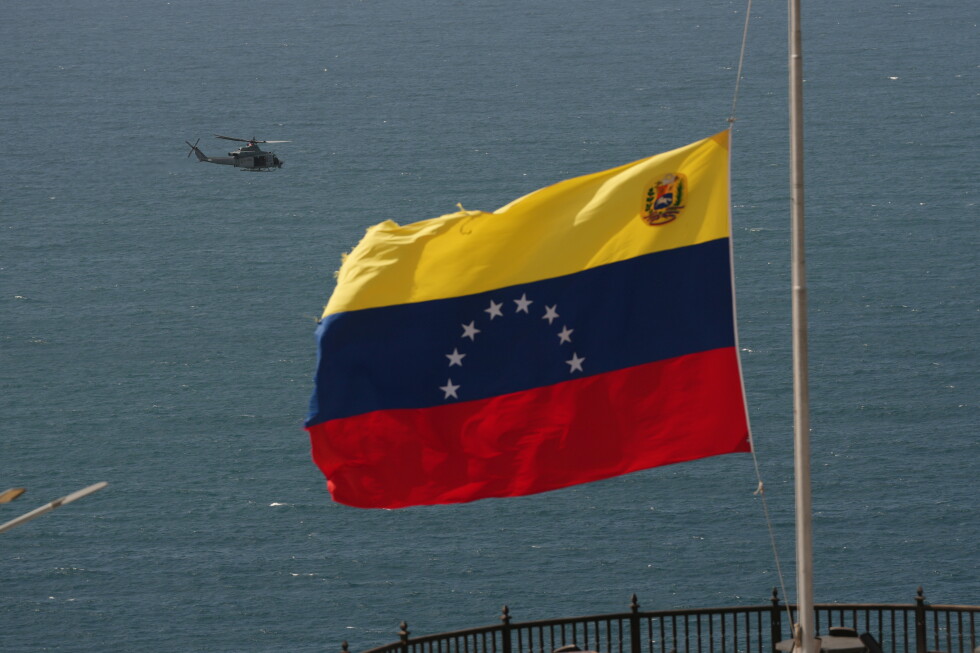
    In a significant diplomatic development, the head of U.S. military operations in Latin America conducted an extended meeting with Venezuelan leadership in Caracas on Wednesday. Marine General Francis Donovan, commander of U.S. Southern Command, engaged in hours of discussions with Venezuela’s acting President Delcy Rodríguez alongside key cabinet members including Defense Minister Vladimir Padrino López and Interior Minister Diosdado Cabello.

    The high-level engagement represents the latest in a series of diplomatic contacts between the two nations following the dramatic capture of former President Nicolás Maduro by U.S. forces weeks earlier. Maduro currently faces drug trafficking charges in the United States after being apprehended in a surprise operation within the Venezuelan capital.

    According to official statements from Rodríguez’s administration published on social media platform X, both nations agreed to establish a bilateral cooperation framework targeting regional security challenges. The proposed agenda specifically addresses combating illicit drug trafficking, terrorism prevention, and migration management throughout the region. The Venezuelan government emphasized that diplomacy remains the preferred mechanism for resolving differences and addressing mutual concerns.

    General Donovan was accompanied by Laura Dogu, the highest-ranking U.S. diplomat currently stationed in Venezuela, alongside Joseph Humire, acting assistant secretary of defense for homeland defense and the Americas. U.S. Southern Command confirmed that discussions centered on hemispheric security considerations and implementation strategies for President Donald Trump’s phased approach toward Venezuela.

    This meeting continues a pattern of elevated diplomatic engagement, following previous visits by CIA Director John Ratcliffe shortly after Maduro’s removal and U.S. Energy Secretary Chris Wright’s recent assessment of Venezuela’s oil infrastructure.

  • Vinicius: Eight years at Real Madrid, 20 cases of alleged racist abuse

    Vinicius: Eight years at Real Madrid, 20 cases of alleged racist abuse

    A Champions League playoff match between Benfica and Real Madrid was suspended for ten minutes following Brazilian forward Vinicius Junior’s report of alleged racial abuse from opposing player Gianluca Prestianni. This marks the twentieth documented incident of discrimination against the 25-year-old during his eight-year tenure with Real Madrid, elevating him to a global symbol of resistance against racism in sports.

    The incident occurred minutes after Vinicius scored what commentators described as a ‘masterpiece’ goal, with teammate Kylian Mbappé confirming he heard racist slurs uttered five times. Prestianni has denied the allegations.

    Benfica manager José Mourinho provoked widespread condemnation by suggesting Vinicius provoked the incident through his celebratory behavior. ‘When you score a goal like that, you celebrate in a respectful way,’ Mourinho stated, further claiming Benfica couldn’t be racist because their legendary player Eusébio was Black.

    This response exemplifies what sociologists term ‘racism without racists’ – a cultural framework that shifts blame to victims for their reactions rather than addressing the root discrimination. Vinicius has faced systematic abuse across Spain and Portugal, including monkey chants, hanging effigies, and social media hate campaigns, with many incidents resulting in minimal judicial consequences.

    A landmark moment occurred in June 2024 when three Valencia fans received Spain’s first prison sentences for stadium racism. Responding to critics who suggest he should ‘just play football,’ Vinicius declared: ‘I’m not a victim of racism. I am an executioner of racists.’ His continued activism pressures football authorities to strengthen anti-discrimination protocols and enforcement measures.

  • Lawmakers will elect Peru’s next president after the latest ouster

    Lawmakers will elect Peru’s next president after the latest ouster

    Peru’s fractured Congress is poised to select the nation’s eighth president within a ten-year period on Wednesday, following the abrupt ouster of former leader José Jerí after just four months in office. The extraordinary political turnover underscores a profound governance crisis stemming from legislative fragmentation and the recurrent application of constitutional provisions to remove sitting presidents.

    Four relatively obscure lawmakers have emerged as contenders for the presidency, with the candidate securing majority congressional votes destined to lead until July 28th, when power will transfer to the winner of April’s general election. The frequent presidential changes result from lawmakers’ broad interpretation of constitutional “permanent moral incapacity” clauses, creating what analysts describe as a revolving-door presidency.

    Jerí’s removal came after revelations of undisclosed meetings with Chinese business owners, including a state contractor, which he characterized as coordination efforts for a Peruvian-Chinese cultural festival. The Public Prosecutor’s Office has initiated two preliminary investigations into allegations of illegal sponsorship of private interests and influence-peddling detrimental to state interests.

    The presidential contenders include María del Carmen Alva, a 58-year-old lawyer from the conservative Popular Action party and former congressional speaker with family ties to agro-export businesses. Héctor Acuña, a 68-year-old engineer representing the conservative Honor and Democracy group, brings private sector experience but limited political exposure and connections to his brother César Acuña’s political machinery.

    Completing the candidate roster are José Balcázar, an 83-year-old former judge from the leftist Perú Libre party, and Edgard Reymundo, a 73-year-old sociologist from the leftist Bloque Democrático. The eventual successor will inherit escalating security challenges including surging murder rates and extortion rackets targeting small businesses and working-class citizens, alongside mounting demands for electoral transparency guarantees for the upcoming general election that will also determine composition of Peru’s bicameral legislature.

  • Peru’s president impeached four months into term

    Peru’s president impeached four months into term

    Peru’s political crisis has escalated dramatically as Congress voted to remove interim President José Jerí from office merely four months into his tenure. The impeachment stems from his failure to disclose multiple unofficial meetings with Chinese businessman Zhihua Yang, who was under government investigation at the time of their encounters.

    The controversy, dubbed ‘Chifa-gate’ by local media after Peruvian-Chinese restaurants, erupted when security footage revealed Jerí conducting off-the-record meetings with Yang—a business magnate with state energy concessions. One particularly damaging video showed the president wearing a hooded top during a late-night visit to one of Yang’s establishments. Compounding the scandal, another attendee at these meetings was a Chinese national under house arrest for alleged connections to illegal timber operations.

    Peruvian law mandates thorough documentation of all presidential activities, yet Jerí maintained no records of these controversial encounters. Despite offering a public apology for the meetings, the former leader vehemently denied any wrongdoing and characterized the impeachment as a politically motivated smear campaign by rivals.

    The congressional vote concluded decisively with 75 lawmakers supporting impeachment against 24 opponents. Ruth Luque, one of the supporting legislators, emphasized the need for leadership prioritizing public interest, stating: ‘We ask to end this agony so we can truly create the transition citizens are hoping for—not a transition with hidden interests, influence-peddling, secret meetings and hooded figures.’

    Jerí’s removal continues Peru’s alarming pattern of political instability, making him the third consecutive president to be ousted and the seventh since 2016. His predecessor, Dina Boluarte, was impeached last October following a tumultuous tenure marked by widespread protests, corruption scandals, and escalating gang violence.

    The interim administration faced immediate challenges upon taking power, with youth-led demonstrations against political corruption and crime turning violent within days of Jerí’s appointment, resulting in one fatality and over 100 injuries.

    With the attorney general having launched a corruption investigation and presidential approval ratings plummeting, pressure for Jerí’s resignation had been mounting steadily. Congress is scheduled to vote on Wednesday for a new interim leader while the nation prepares for general elections in April, hoping to establish stable governance after years of political chaos.

  • Under pressure from Trump, Venezuela’s new president has aces up her sleeve

    Under pressure from Trump, Venezuela’s new president has aces up her sleeve

    Venezuela remains in a state of political limbo following the dramatic extraction of former President Nicolás Maduro and his wife Cilia Flores by US operatives on January 3rd. The couple now awaits trial in Brooklyn’s Metropolitan Detention Center on drug trafficking charges, which they vehemently deny.

    In their absence, acting leader Delcy Rodríguez faces an extraordinary balancing act. The lifelong Chavista must maintain support from her socialist base while implementing policy changes demanded by the Trump administration. Her predicament was visually symbolized by government-sponsored drone displays over Caracas that projected images of Maduro and Flores alongside the message ‘El pueblo los reclama’ (the people want them back).

    Rodríguez’s leadership represents a study in political pragmatism. While publicly condemning ‘US imperialist expansion’ and referring to America as a ‘lethal nuclear power,’ she has simultaneously pursued policies favorable to Washington. These include passing legislation enabling US oil companies to operate in Venezuela and releasing numerous political prisoners—actions the opposition attributes to American pressure rather than genuine reform.

    According to Christopher Sabatini of Chatham House, ‘Trump has implied that Venezuela is now a US protectorate, so she serves at the will of the US president.’ This power dynamic is complicated by Rodríguez’s own vulnerability to US legal action, with DEA investigations hanging over her despite no formal indictment.

    The acting leader must also navigate domestic power structures, particularly the military hierarchy loyal to Maduro. Interior Minister Diosdado Cabello commands significant influence through both formal security forces and paramilitary groups, creating an uneasy alliance that Rodríguez manages cautiously.

    Despite apparent US leverage, some analysts suggest Rodríguez retains more agency than initially apparent. Sabatini notes that President Trump is ‘desperate for the world to see the extraction of Maduro as an unqualified success,’ creating potential bargaining power for the Venezuelan leader. Divisions within the US administration—particularly Secretary of State Marco Rubio’s anti-communist stance—further complicate Washington’s position.

    Venezuela’s profound economic crisis adds another layer to this political calculus. With inflation at the world’s highest levels and 86% of citizens in poverty, Rodríguez potentially benefits from any economic improvement resulting from US engagement. However, with American focus primarily on oil interests, tangible benefits for ordinary Venezuelans remain uncertain.

    The ultimate test may come in determining the timing of new elections. As Sabatini observes, ‘She wants to wait to see the economy lifted so she could potentially run and win.’ This pragmatic approach reflects the core Chavista philosophy described by analyst Phil Gunson: ‘They bend so as not to break.’

  • Warren Buffett’s company invests in the New York Times six years after he sold all his newspapers

    Warren Buffett’s company invests in the New York Times six years after he sold all his newspapers

    In a striking reversal of his previously bearish stance on print media, Warren Buffett’s Berkshire Hathaway has unveiled a substantial $350 million investment in The New York Times Company. The move, disclosed in Berkshire’s quarterly SEC filing covering Buffett’s final quarter as CEO, signals a notable shift in perspective toward media enterprises with successful digital transformation strategies.

    The investment comes precisely five years after Buffett liquidated Berkshire’s entire newspaper portfolio, famously declaring the traditional industry “toast” in 2020. At that time, however, he had acknowledged that nationally recognized brands like The New York Times or Wall Street Journal might still thrive through digital adaptation.

    Northwestern University’s Medill School of Journalism Chair Tim Franklin described the investment as “a full circle moment for Berkshire Hathaway in reinvesting in news and a huge vote of confidence in the business strategy of the New York Times.” Franklin emphasized that the Times has evolved beyond its print origins into a multifaceted digital enterprise, boasting popular assets like Wordle, The Athletic sports platform, and over 12 million digital subscribers.

    The filing also revealed Berkshire’s continued positioning in energy markets, adding approximately 8 million Chevron shares to reach over 130 million shares total. This expansion preceded President Trump’s order for the arrest of Venezuela’s president, which subsequently boosted oil stocks. Chevron, as the only major U.S. oil company with significant Venezuelan operations producing roughly 250,000 barrels daily, has seen its stock surge nearly 19% since early 2026.

    Meanwhile, Berkshire continued reducing positions in previously favored holdings, selling approximately 50 million Bank of America shares while maintaining 81 million, and trimming its massive Apple stake by about 10 million shares while retaining nearly 228 million.

    The quarterly filing doesn’t specify whether Buffett personally authorized the Times investment or if it was executed by one of Berkshire’s other investment managers. Given the $350 million size falls below Buffett’s typical $1 billion threshold for personal oversight, the decision may have originated from his successors. Nonetheless, the move has already influenced market behavior, with Times shares jumping nearly 3% in after-hours trading following the disclosure.

  • Trinidad & Tobago seal ‘operation don’t finish last’

    Trinidad & Tobago seal ‘operation don’t finish last’

    CORTINA, Italy – Trinidad and Tobago’s two-man bobsleigh team has declared their Winter Olympic campaign a resounding success after achieving their primary objective of not finishing last in the highly competitive event. The Caribbean nation finished 25th out of 26 teams with a combined time of 2:51:05, narrowly ahead of Israel who occupied the final position.

    Pilot Axel Brown, a 33-year-old former British athlete who switched allegiance to represent his mother’s homeland, expressed jubilation alongside brakeman De Aundre John. “It’s absolutely mission accomplished,” Brown told BBC Sport. “Me and Dre have been able to do something special together.”

    The achievement becomes particularly remarkable considering the team’s complete lack of state funding. Brown emphasized the significance of their accomplishment: “For little Trinidad and Tobago to do that with no state funding is huge. To beat another nation at the top of their game as well that feels like a win – it is a win.”

    Despite recording their fastest run in the third heat, the team finished outside the top 20 and did not advance to the final round. However, Brown and John will have another opportunity to compete when they participate in the four-man event later this week.

    The competition itself was dominated by German teams who completed a clean sweep of the podium. Johannes Lochner and Georg Fleischhauer captured gold, while legendary pilot Francesco Friedrich with Alexander Schuller took silver. The bronze medal went to Adam Ammour and Alexander Schaller.

    For Brown, simply qualifying for the Games represented a gold medal victory. This marks his second Olympic appearance representing Trinidad and Tobago, having previously competed at Beijing 2022. The former American football player and national-level taekwondo medalist took up bobsleigh at age 21 with the specific aim of reviving Trinidad and Tobago’s bobsleigh program.

    The Caribbean nation had qualified for three consecutive Winter Games from 1994 to 2002, but Brown’s leadership ended a 20-year absence when he guided them to qualification for the Beijing Games. Their previous appearance in the two-man event in China resulted in a 28th-place finish out of 30 teams, placing them above Jamaica and Brazil.

    Qualification for the Cortina Games proved even more challenging as the team had to secure spots in both the two-man and four-man events – a feat they accomplished for the first time in their history.

    Reflecting on their Olympic journey, Brown acknowledged the team’s supporters: “It was very special to stand at the top of the track with Dre. I had my dad on the start line with me and my coach Lee Johnston, who has been the cornerstone of this team and helped us make a team out of a bunch of misfits.”